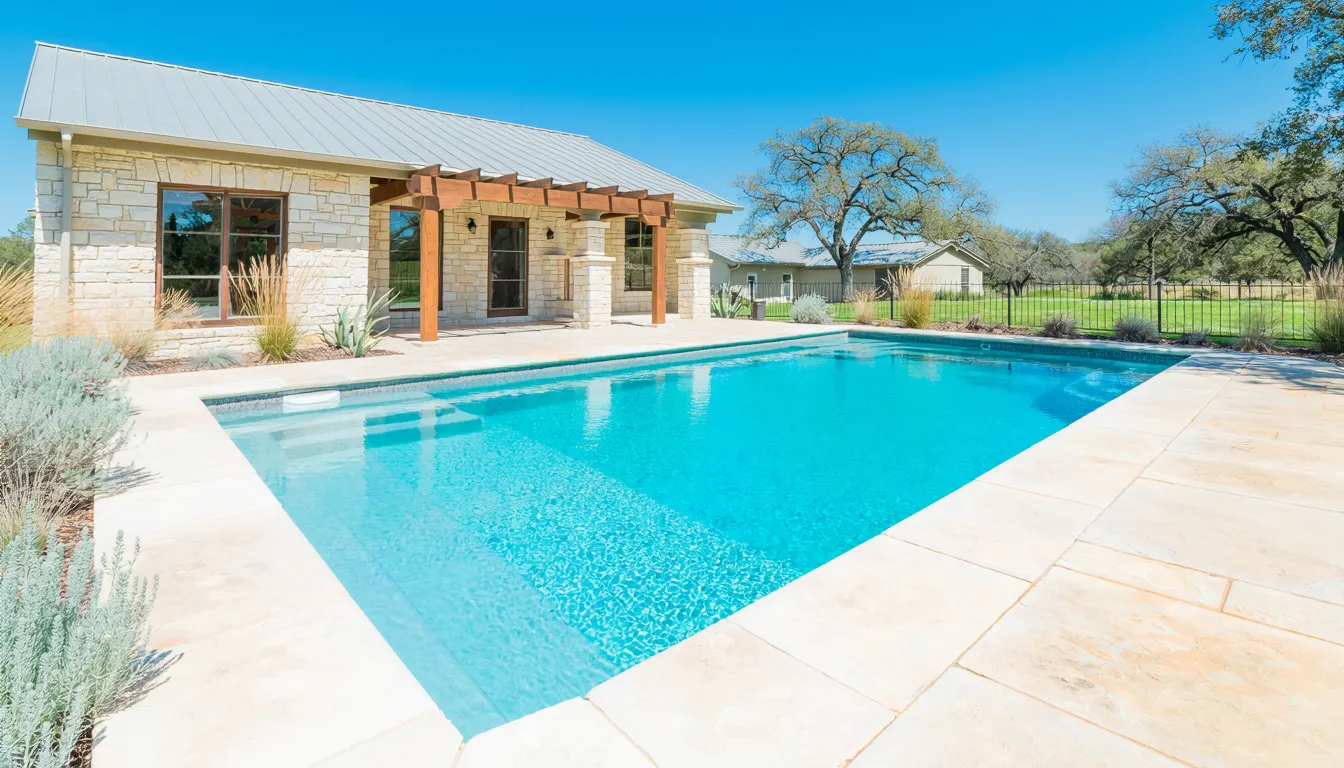
Across Central Texas, a construction defect hidden inside backyard pools is ending home sales before they close. The problem is alkali-silica reaction, or ASR, commonly called concrete cancer. According to Bill Cafferata, a real estate agent with CaffGroup at Keller Williams Realty in Dripping Springs, most buyers and many agents have never heard of it.
“I’m willing to bet 50 percent of real estate agents in the area don’t even know this is a thing,” Cafferata says. “And 95 percent of consumers don’t know it’s a thing.”
Local news outlet KXAN has reported that up to 30,000 Central Texas pools may be affected. Cafferata currently has one listing with an affected pool and is preparing another for market. He has also been involved in transactions where buyers backed out, either because testing confirmed ASR or simply because they suspected it.
What Went Wrong in the Concrete
The at-risk pools were built mostly between 2017 and 2023, with the heaviest concentration during the pandemic construction surge. In many cases, Cafferata says, the concrete mix used for pool shells was missing fly ash, a binding agent that helps concrete cure properly. The resulting concrete is unstable. When moisture reaches it, whether from a leak in the pool or from groundwater beneath, a chemical reaction begins. The shell cracks, the cracks spread, and eventually the shell crumbles.
The name alarms people for the wrong reason. The condition poses no health risk. “Cancer” refers to the fact that the damage can’t be reversed. “The pool has cancer because it’s not curable,” Cafferata says.
No Early Warning, No Repair
By the time an owner can see the problem, it has already spread. The visible signs are spiderweb cracking with a whitish residue along the cracks, which can be hard to spot on light-colored finishes. Before that stage, there are no visual clues. Even experienced pool inspectors can’t diagnose ASR by eye. What they can do is flag a pool as suspect and recommend further testing.
The only definitive test is a core sample: a section drilled out of the pool shell and sent to a lab. It costs $4,000 to $8,000, and results take six to 10 weeks. That is a long wait inside a typical contract timeline.
If the result is positive, the choices are limited. Removing the pool and restoring the yard runs $30,000 to $50,000. Rebuilding it costs well over six figures. Insurance companies aren’t covering the damage, and Cafferata says owners have no recourse against the pool builders or concrete suppliers. For some owners, the cost is enough to put them underwater on their home.
What Buyers and Sellers Should Ask
For anyone buying a Central Texas home with a pool, Cafferata says the first question should be simple: What year was the pool built? Pools from 2017 through 2023 warrant extra scrutiny. That means a pool inspection and, where the inspector recommends it, a core sample. Ideally, the contract should allow enough time to wait for results.
Sellers face the other side of the same problem. A pool built in that window can become the first thing a buyer’s inspector asks about, and an unresolved question mark can stall or end a deal. Cafferata expects ASR to become a bigger factor in Central Texas home sales in the years ahead.
A Market With Little Room for Surprises
The pool issue arrives in a market already reshaped by a long correction. Median sold prices across the Austin metro have fallen roughly 20 to 25 percent since peaking in May 2022. They are still down about 4 percent year over year, though pending sales are rising.
That correction has left buyers with little tolerance for unknowns. In Dripping Springs, a fast-growing Hill Country city 30 to 45 minutes from downtown Austin, buyers expect resale homes to be move-in ready and priced tightly to recent sales. Cafferata calls it “a price war and a beauty contest all at the same time.” In one Big Sky Ranch listing, a $6,000 price reduction produced four showings and a contract in a single weekend, after 60 days with only two showings. In a market that is sensitive to a few thousand dollars, a possible five- or six-figure pool liability can end a deal on its own.
Timing matters too. Dripping Springs demand follows the school calendar, peaking in spring and early summer and slowing after the Fourth of July. Cafferata sees September and October as a favorable window for buyers, since most sellers listing now are doing so out of necessity. “Nobody’s buying or selling for fun right now,” he says. “If your home is listed, it’s listed because you have a need.” For buyers using that leverage, building ASR testing into the timeline is part of getting a good deal rather than an expensive surprise.
About the Expert: Bill Cafferata is a real estate agent with CaffGroup at Keller Williams Realty in Dripping Springs, Texas.
This article is based on information provided by the expert source cited above. It is intended for general informational purposes only and does not constitute legal, financial, or real estate advice. Readers should conduct their own research and consult qualified professionals before making any real estate or financial decisions.