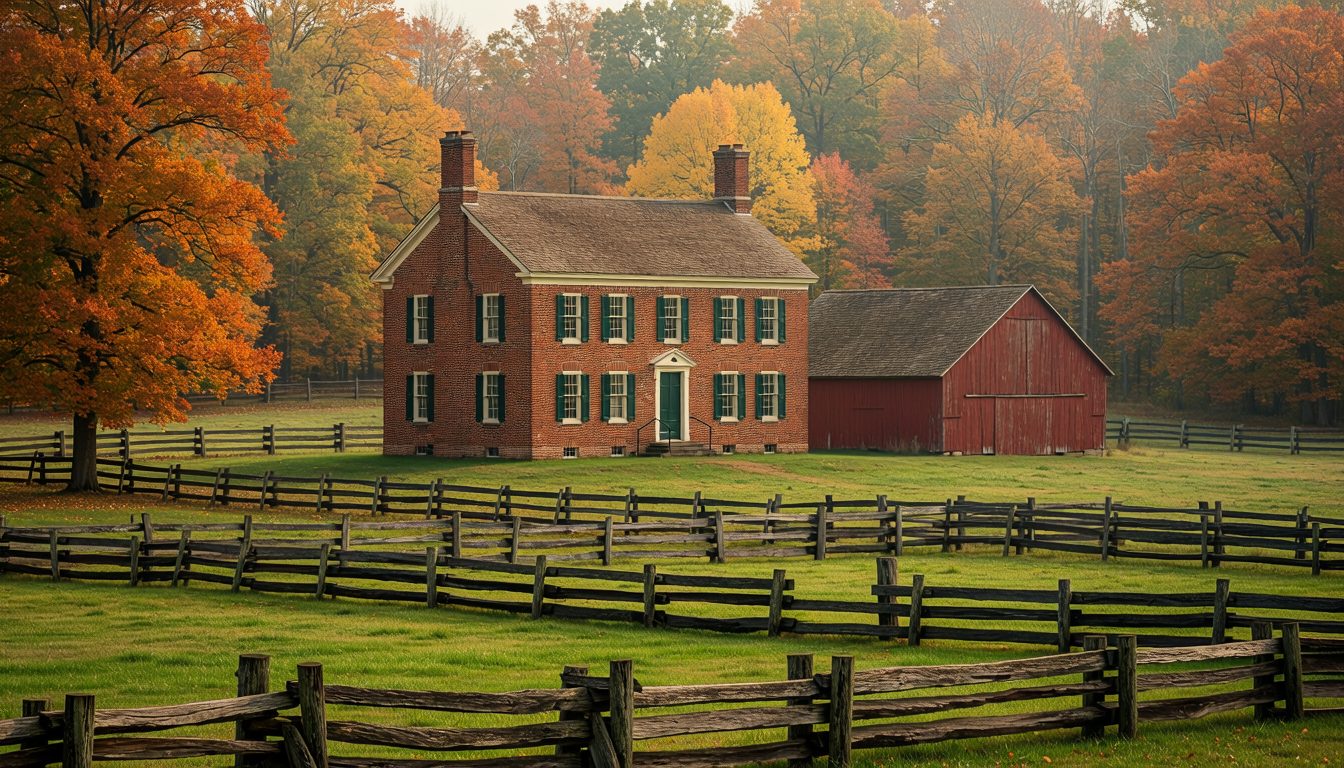
Farmland rarely trades on spreadsheet logic alone. In much of the rural Midwest, the most persistent buyers of available acreage are not outside investors but neighboring farm families, and the price they are willing to pay often reflects a planning horizon measured in generations rather than years.
That dynamic is clearly visible in the farm country around Norwalk, Ohio, according to Frank Van Dresser, a second-generation agent with RE/MAX Quality Realty. “We’re seeing land prices continue to increase. Farm prices have continued to go up. That hasn’t stopped,” he says. “But we have seen a lot of local farmers be successful in buying farms.”
Van Dresser has spent 25 years handling residential, commercial, and agricultural transactions across North Central Ohio, in a territory that extends roughly 60 miles in every direction from Norwalk, between Cleveland, Toledo, and Columbus and about 20 miles south of Lake Erie. In his experience, the reasons farm families keep buying, even when the numbers look stretched, say as much about the local land market as the prices themselves.
A Fixed Pie
The logic behind local demand comes down to succession. A farmer Van Dresser worked with years ago explained it as a pie: when sons or daughters enter the operation, the family’s land has to support more households. Without additional acreage, each share gets smaller. “At the end of the day, it’s the same pie, but you got to cut it in more pieces,” Van Dresser says.
That pressure pushes farm families to bid on land that comes up near them, sometimes at prices above what the acreage alone would justify. “Sometimes it doesn’t always make sense financially for them,” he says.
The cost of waiting is what makes the premium tolerable. In Van Dresser’s experience, farmers often believe that if they pass on a neighboring parcel, it may not come available again for four generations. Seen through that lens, overpaying today can look less like a financial mistake and more like the only chance to secure the farm’s future footprint.
Steady Buyers, Scarce Sellers
The two sides of the farmland market move on very different timelines. Demand is constant. “We’ve got a list of clients that are always looking to expand their holdings, and so they’re constantly looking to buy,” Van Dresser says.
Supply, by contrast, depends on life events. In his territory, farms most often come to market when an owner is retiring and has no successor. “It’s usually they’re retiring, and they don’t have any kids that are going to take over,” he says. The other common trigger is the death of an owner.
Because those events are infrequent and hard to predict, each listing draws attention from buyers who have been waiting, often for years. That standing demand, set against a thin and irregular supply, helps explain why prices in the area have kept rising.
Outside Buyers at the Margins
Energy developers and data center operators have become a national talking point in farmland markets, and both have appeared in Van Dresser’s territory. Energy users have purchased some land in the northwestern part of the region, and one data center project is seeking land in a community near Norwalk.
In both cases, he says, the outside buyers have offered more than local market value. The prospective data center buyer has been “a little on the higher side” of where land pricing sits, and the energy company that has been active in the northwest “paid a little bit more.”
Still, Van Dresser cautions against reading too much into a handful of deals. “We just haven’t had enough of those to be able to share on that,” he says. The data center proposal also faces local resistance: a recent community vote signaled opposition, leaving its future uncertain. Residents’ concerns have focused less on land prices than on possible effects on utility costs, a worry he describes as “probably a rumbling, maybe not a big wave.”
For now, the buyers setting the tone in his market remain the farm families with a generational stake in the land.
A Broader Market Starting to Slow
While farmland prices have held firm, the residential side of Van Dresser’s market is showing early signs of cooling. The area remains undersupplied, but homes that would have gone under contract quickly a year ago, particularly at higher price points, are taking longer to sell. “We’re definitely seeing the market times extend, and we’re starting to see things sit a little bit longer,” he says.
The shift follows six to eight years in which residential listings moved so quickly that Van Dresser’s active inventory leaned toward commercial properties, which naturally take longer to find buyers. Earlier this year, he estimates, roughly 70 percent of his listings were commercial, though residential transactions still account for more of his annual sales volume.
In a rural market, that mix is common. “You don’t have as many commercial-only competitors or experts because there just isn’t maybe as much of that type of business for somebody to just make it their sole practice,” Van Dresser says. He operates as the sole agent on his team, supported by licensed staff, and was ranked the 17th RE/MAX commercial agent nationally among small teams in 2024.
A Community That Invests
The same long-term, local orientation that shapes farmland buying runs through the broader community. Van Dresser handles relocation work for Norwalk’s hospital and other employers, and he says incoming professionals are most often struck by the combination of a low cost of living and access to big-city amenities within about an hour’s drive. Property taxes rarely cause sticker shock: buyers from outside the area are “used to much higher taxes in other communities,” he says.
The story he shares most often with relocating families dates to the 2008 recession. A local furniture manufacturer employing 400 to 500 people closed after its bank called an $11 million loan. After state efforts to keep it open fell short, 10 local families, none of them employees or owners, each put up about a million dollars to buy the loan and reopen the company under new leadership. It has since become employee-owned and, by Van Dresser’s account, has been profitable in all but about one quarter since. “These are people that did not work there,” he says. “They weren’t owners of the company.”
Looking Into 2027
Van Dresser plans to add team members in 2027 to expand capacity. As much of the industry leans further into automation and AI, he expects direct client relationships to become more valuable, not less. “I just feel like this industry is one that will benefit from those who excel and are successful and don’t lose sight of the human contact and the human interaction,” he says.
In a land market where buyers think in generations and sellers come forward only a few times in a lifetime, those relationships carry particular weight. Van Dresser reports that about 90 percent of his business has come from referrals and repeat clients over the past 15 years.
About the Expert: Frank Van Dresser leads the Frank Van Dresser Team with RE/MAX Quality Realty in Norwalk, Ohio. A second-generation agent licensed since 2001, he works across residential, commercial, and agricultural real estate throughout North Central Ohio.
This article is based on information provided by the expert source cited above. It is intended for general informational purposes only and does not constitute legal, financial, or real estate advice. Readers should conduct their own research and consult qualified professionals before making any real estate or financial decisions.