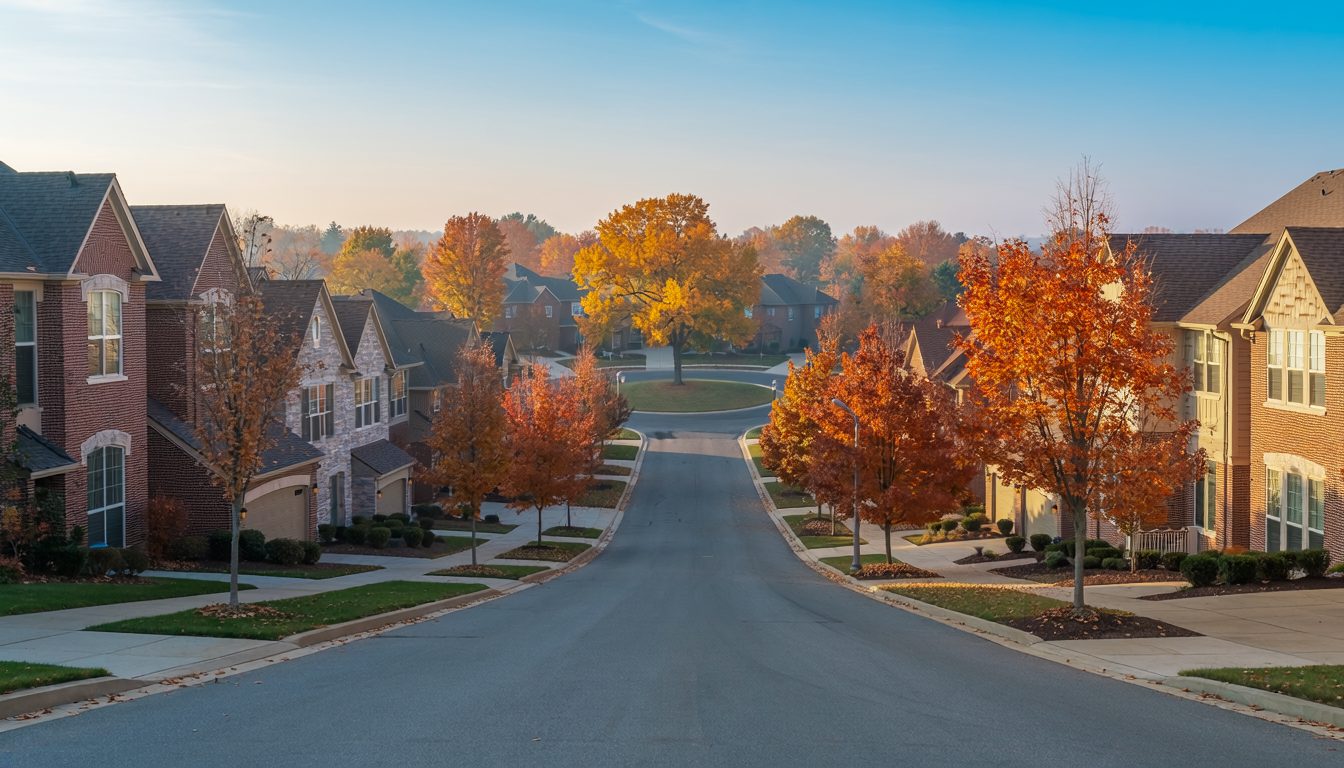
National rankings can make a suburb famous long before its housing supply catches up. Hamilton County, Indiana, has spent years on best-places-to-live lists, and the attention keeps pulling buyers toward a market that cannot absorb them all.
“The biggest problem we have in Carmel is there’s not enough houses for the people that want to move here,” says Brian Wignall, who leads The Wignall Group, a four-person residential team based in Carmel.
Carmel and Fishers anchor that reputation, and demand has followed. Yet this fall brought a slowdown, even in the county’s fastest-moving areas. What caused it, and what is now reversing it, says as much about buyer psychology as about supply.
Buyers Spill Past Carmel
When Carmel is out of reach, buyers do not follow a single path. Noblesville is a little less expensive than the Carmel and Westfield area, Wignall says, while Cicero and Arcadia, still in Hamilton County, offer more affordable prices. Pendleton draws buyers who want more land.
Zionsville, which sits in Boone County but borders Carmel, offers another option with a strong school system, Wignall says. Sheridan, also in Hamilton County, is part of the same in-demand area, in his view.
He resists steering clients toward one fallback. “I normally will kind of cast a wide net because there’s a lot of nice neighborhoods around here,” he says.
The comparison with Marion County to the south follows clearer lines. There, buyers can often get more house for the money. Younger singles tend to look closer to downtown Indianapolis or in neighborhoods like Broad Ripple. Families relocating for schools lean toward Hamilton County, where Carmel, Westfield, and Fishers all rank among the top 10 school systems in the state, according to Wignall. Beyond schools, he points to Carmel’s infrastructure, its leadership under Mayor Sue Finkam, and the range of activities the city offers.
Why Listings Sat Longer
Hamilton County listings typically sell fast. Around September, Wignall noticed homes sitting longer, even in traditionally hot areas. With supply building and demand softening, sellers turned to price reductions.
He points to two factors. Buyers grew apprehensive about the war and wanted to see how it unfolded, and higher interest rates cooled activity.
Rates also weighed on owners. Many who had locked in pandemic-era mortgages grew hesitant to sell and take on a far higher rate, Wignall says. “It kind of cooled things a little bit.”
Policy changes, by contrast, have barely registered. Wignall says Indiana’s new homestead property tax credit has not come up once with clients.
Buyers Accept Higher Rates
That slowdown now appears to be easing. Homes are selling again, Wignall says, not within a day or two as in recent years, but within a reasonable period of time. Activity is picking up even though this is traditionally the slow season.
The shift, in his view, is largely psychological. Buyers have lived with higher rates long enough that they no longer measure the market against pandemic lows. “I think the rate’s been high enough for long enough to where people are more comfortable with it,” he says.
That comfort has held even though rates remain well above where they stood a few years ago.
Wignall takes a longer view. His father bought a house in the early 1980s, when mortgage rates ran into the teens, and bragged about locking in 15 and a half percent.
By that measure, 8% is not historically out of line. The pandemic lows, he argues, were the exception, driven by government policy and a global pandemic. “I think we just had a couple years where we had such low rates that people thought that was a norm, and that was not the norm,” he says. “I don’t think we will ever see rates back in the threes again.”
Relocation Wave Cools Down
During COVID, remote work turned Hamilton County into a destination for out-of-state buyers. No longer tied to expensive metros, many traded small, costly rentals for far more house in central Indiana, Wignall says.
That wave has since slowed. Relocating buyers, whether from other parts of Indiana or other states, now make up a much smaller share of his business than at the pandemic peak, but they have not disappeared. The draw remains. Living costs run lower than in many large metros, the schools are strong, and the region offers big-league entertainment. An international airport puts the rest of the country and overseas destinations within easy reach. Buyers have come from markets like Denver, Illinois, New York, and New Jersey, where comparable real estate costs a lot more. Wignall also cites the area’s safety and strong property appreciation.
That demand carries a cost for locals. “The downside is our prices are starting to appreciate up,” Wignall says. For buyers arriving from markets where they have been priced out, though, the area still offers affordable options.
Seasonal Slowdown Holds Steady
From October through the end of December, the local market historically slows. Properties stay on the market longer unless they are priced aggressively. “Your average buyer is not aggressively looking to move near Thanksgiving or Christmas,” Wignall says.
He sees the pattern as expected rather than a warning sign. “It’s still a very healthy, booming market,” he says.
The Cost of Waiting
Wignall’s sharpest concern is for buyers still holding out for a rate he believes is not coming back. Some clients tell him they plan to wait until rates drop back toward pandemic-era levels before they buy.
The problem, in his view, is that this kind of wait has no natural end. Years from now, the same buyers may still be saying they will buy once rates come down. In the meantime, home values keep rising, so the house they want gets more expensive. The appreciation they miss is value they would have gained as owners, and a lower rate later may not make up for a higher price.
In a county where demand already outpaces supply, he sees little reason to expect prices to pause while buyers wait. “While they’re sitting back waiting for that magical rate, property values continue to keep going up,” he says. “They’re not going down here.”
About the Expert: Brian Wignall leads The Wignall Group, a residential real estate team based in Carmel, Indiana, serving Hamilton County, Marion County, and the greater Indianapolis area.
This article is based on information provided by the expert source cited above. It is intended for general informational purposes only and does not constitute legal, financial, or real estate advice. Readers should conduct their own research and consult qualified professionals before making any real estate or financial decisions.