Higher mortgage rates have not ended bidding wars so much as narrowed where they happen. Across many U.S. markets, buyers are still competing for homes they can move into, while homes that need work are absorbing the price adjustments. With rates near 7%, a renovation bill on top of a larger monthly payment is a cost many buyers are no longer willing to carry.
Morris County, New Jersey, shows both sides of that shift. Chris Baggio, a member of the Crawford, Lorenzo and Baggio Home Selling Team at Keller Williams Metropolitan in Morristown, says well-priced, move-in ready homes are still drawing multiple offers. “When houses are not turnkey and not priced perfectly, then those are the homes that are sitting a little bit,” he says.
That is where price reductions are showing up. Peter Lorenzo, who co-leads the team, says that for the first time in years, the team is advising some sellers to lower their asking prices. The cuts reflect how buyers now weigh condition against cost, a calculation that is reshaping how homes are priced, how buyers set budgets and which parts of the market still feel competitive.
Renovation Math Changes Decisions
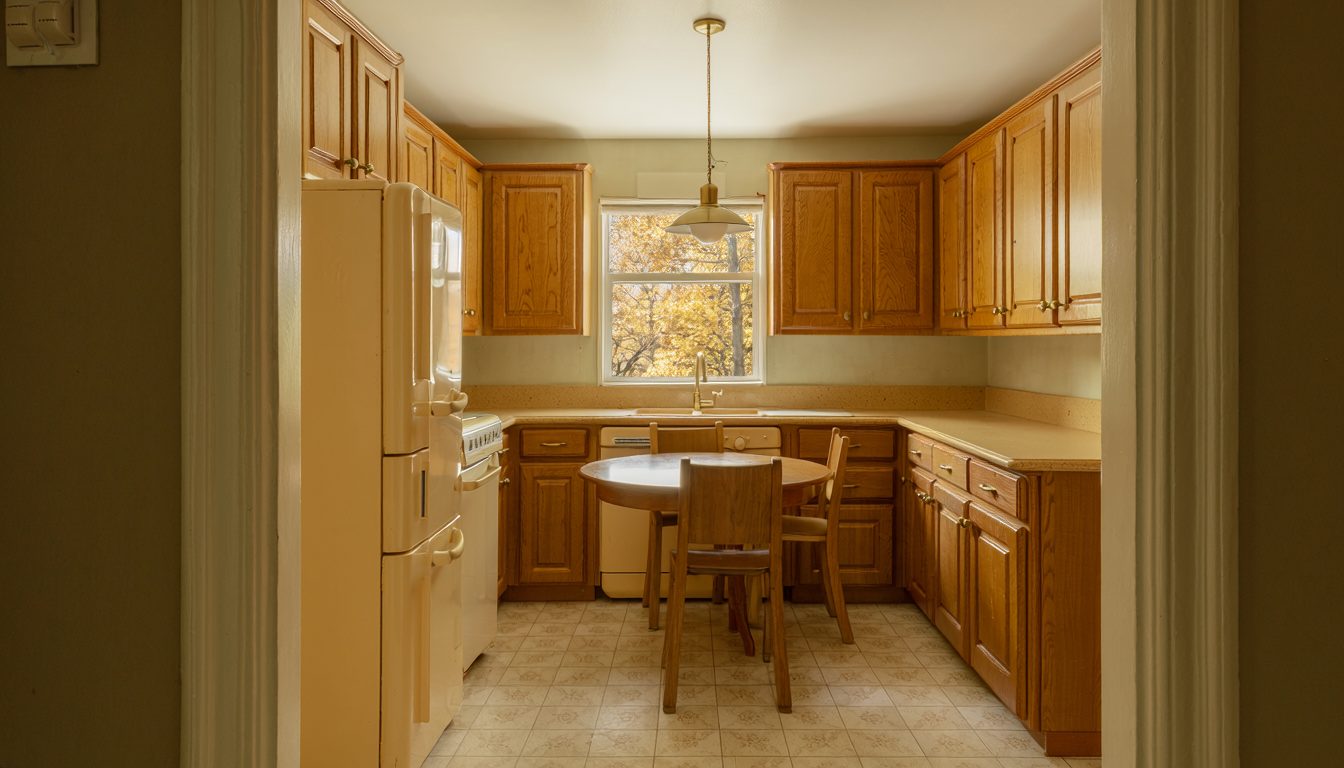
The resistance to homes needing work is mostly arithmetic. Buyers who might once have folded renovation costs into a purchase are now weighing them against a much higher monthly payment, while many of their peers still hold rates of 2.5% to 3%. Lorenzo says first-time buyers feel that gap most. “It’s like a shock to the system,” he says. “They’re kind of waiting.”
The same trade-off is shaping decisions further up the price range, where Lorenzo says many buyers would rather pay more for a finished home than take on a major project.
The other side of that hesitation is opportunity for buyers who can take on a project. “If you’re willing to do the work, you can get some good deals right now,” Lorenzo says.
Luxury Market Sets Direction
The hesitation is less visible at the top of the market. Lorenzo says larger luxury homes along the commuter train line, in towns such as Madison, Chatham and Florham Park, have continued to sell above asking without lingering on the market, even as homes elsewhere sit.
He watches that segment as an early signal for the rest of the market. Buyers at the high end, he argues, tend to treat a home as an asset, timing purchases and sales around market conditions rather than attachment to a particular house. That makes them quicker to react, so pricing shifts tend to show up there first and then filter down. Further down the price range, he says, decisions become more emotional, and both buyers and sellers are slower to adjust.
Pricing Below Expected Value
The team’s listing strategy is built to avoid reductions in the first place. If comparable homes are selling about 5% over asking, Baggio says, the team aims to list about 5% under what it expects the home to bring and let competing offers push the price up.
“I don’t want to price your house here because I think that’s what it’s worth,” he tells sellers. “I want to price it here to generate the most activity so we can negotiate with multiple parties, as opposed to starting too high and hoping to negotiate with one or two.” His summary of the alternative: “Hope is not a strategy.”
On the team’s recent listings, the approach has produced six offers on a home listed in mid-August, a timing Baggio was initially hesitant about, and four on an Essex County multifamily listed about three weeks before the interview.
When a listing starts too high, the correction takes time. Baggio describes one current listing that launched above the market, sat, required a price reduction, and ultimately drew three offers close to the reduced asking price, but not over it. A couple of weeks with few showings and no offers, he says, is the signal to adjust. “Once we list it on the market, the market decides what the home is worth, not me.”
That signal works for buyers too. When a home has been sitting above a buyer’s comfort level, Baggio advises seeing it before the reduction rather than after, since a price cut typically brings more competition.
Buyers Get One Shot
For buyers chasing the turnkey homes that still draw competition, there is often no room to negotiate. Listing agents frequently ask for the highest and best offers by a deadline. Baggio’s guidance is to set a floor based on what it will take to compete, then let the buyer decide how far above it to go.
He uses a simple test: if the home sold for $10,000 more than your offer, would you regret not going higher? If the answer is yes, he tells buyers to raise the number before submitting. “You get one shot, so you really have to put your best foot forward,” he says.
Winning brings its own doubt. Baggio says buyers who beat out several offers often follow the good news with a question about whether they overpaid. His answer is that no one knows what the second-highest offer was, and that the cost looks different over a long stay. “If you really like the house, you’re going to be there a long time,” he says. “An extra 10,000 is not really going to make much of a difference at the end of the day.” He adds that he is careful with that framing, since it is the client’s money, not his.
Covering the Appraisal Gap
Offers well above asking raise the risk that the appraisal will not support the price. On the listing side, Baggio says the team looks for contract language in which the buyer waives the appraisal contingency or commits to covering some or all of the gap between appraised value and contract price, and weighs offers accordingly.
On the buy side, he tells clients that going over asking without that commitment will not be taken seriously. Buyers who lack the means to cover a gap are better served elsewhere, he says, including homes that have been on the market longer and may sell under asking. “Those aren’t the homes we should be trying to compete for,” he says of the most contested listings.
Waiting Has Its Costs
Baggio sees the end of the year as a window for buyers who stay active. Some buyers pause their search over the holidays, which can thin out competition for those still looking. He has seen a similar effect in the last weeks of August, when families are focused on the start of the school year.
He also pushes back on buyers holding out for lower rates. Lorenzo, for his part, says he would not bet on rates falling next year. Baggio’s point is that renting carries its own cost. Every rent payment goes to a landlord, and none of it builds equity, which he compares to paying interest on the full amount with nothing to show for it. He adds that home values in the area have climbed substantially since the pandemic, so buyers who stayed on the sidelines waiting for prices or rates to ease have missed out on that growth. “If you’ve had people on the sidelines waiting for the market to pull back, waiting for rates to come in, you’re just missing out on all this appreciation,” he says.
His view is that buyers planning to stay long term can refinance if rates fall later, while waiting for an ideal moment has a cost that is harder to recover.
About the Expert: Chris Baggio is a real estate agent with the Crawford, Lorenzo and Baggio Home Selling Team at Keller Williams Metropolitan in Morristown, New Jersey. Licensed since 2019, he holds a bachelor’s degree in finance and worked in financial services before entering real estate. He has been with Keller Williams throughout his career and works across Morris County and surrounding areas.
This article is based on information provided by the expert source cited above. It is intended for general informational purposes only and does not constitute legal, financial, or real estate advice. Readers should conduct their own research and consult qualified professionals before making any real estate or financial decisions.