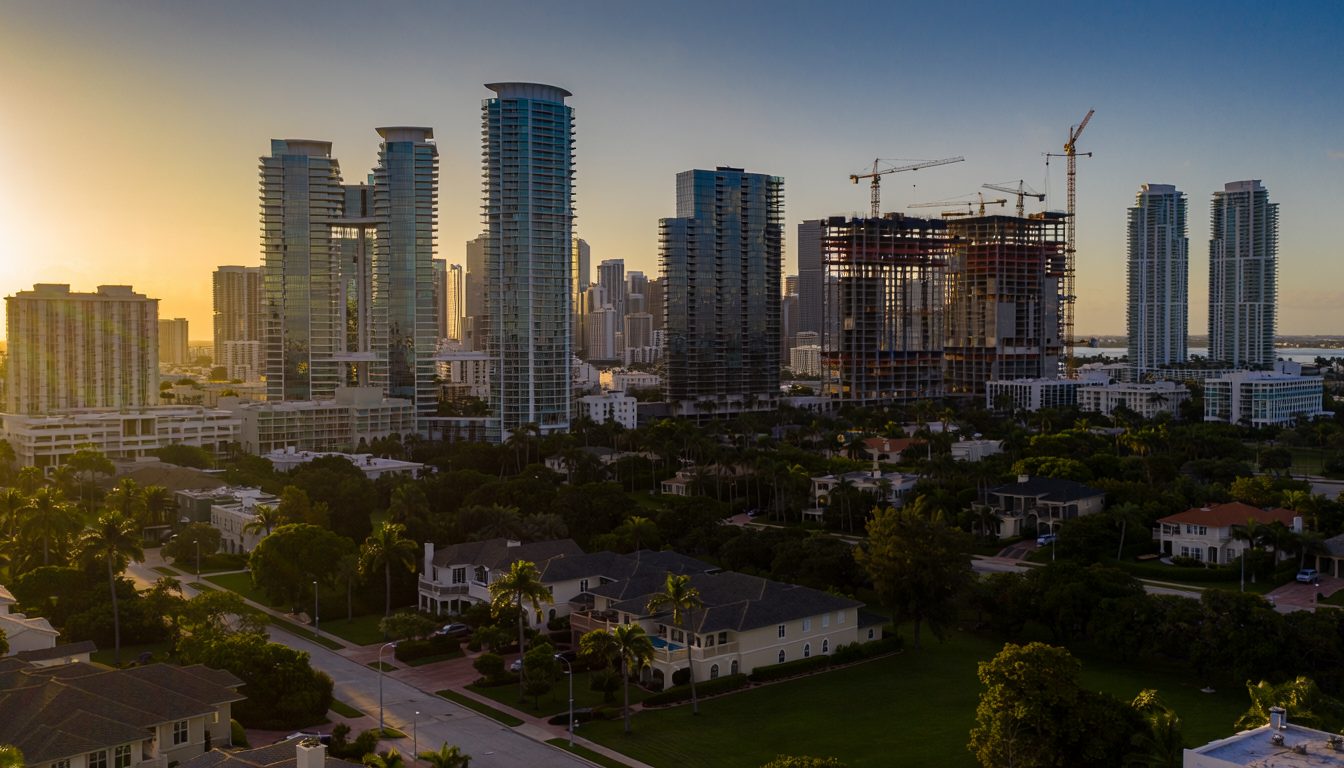
Miami-Dade County’s residential market looks, from a distance, like a single story about luxury wealth and rising prices. Up close, the picture fractures into three distinct segments moving in different directions. Luxury condos and single-family homes are constrained by limited supply, with strong demand from out-of-state cash buyers. The non-luxury condo market – particularly short-term rental units – is heading the opposite direction, weighed down by HOA cost increases and new inventory that could push more owners underwater. For investors deploying capital in South Florida, understanding which market they are actually entering has become the essential first step.
Two Condo Markets Under One Label
The headline narrative that Miami condos are in a buyer’s market is only partly accurate, according to Joanna Jimenez, principal of the Opes Group at Compass. The softness is real, but it sits in the non-luxury tier: below roughly $2 million, elevated supply and the rising cost of owning a condo after the Surfside collapse have pushed prices down.
Above that threshold, luxury condos are seeing a different dynamic entirely. Jimenez says branded residences – Four Seasons, Ritz-Carlton and similar hotel-affiliated projects – are attracting strong interest, with buyers willing to pay a premium, while new construction without a recognized brand has slowed. “If it’s a hotel brand, they’re for the most part doing well. If it’s non-hotel branded, they’re not,” she says.
The Short-Term Rental Trap
The segment facing the steepest challenge is the Airbnb-oriented condo market. Investor demand for short-term rental units has dropped sharply, according to Jimenez, and the math has turned unfavorable. High purchase prices and elevated HOA fees, combined with low nightly rates in a crowded field, mean that rental income often fails to cover carrying costs even when units book frequently. “The return for the investor is just minimal – actually, for the most part, it’s negative,” Jimenez says.
Her assessment echoes broader industry concern. The Real Deal has identified short-term rental condos, especially in Miami’s urban core, as the least stable segment of the region’s newer high-end inventory. Jimenez expects more similar units to come to market in downtown Miami over the next two years, competing against hotels and existing short-term rental inventory. “A lot of those people will be underwater,” she says of buyers in those incoming projects.
In her assessment, these units make financial sense only as a personal vacation property. Buyers who use the unit for part of the year and treat rental income as a way to offset overhead can come out ahead. Buyers who expect rentals alone to generate positive cash flow are unlikely to break even.
The Cash Advantage
Miami-Dade’s single-family market still favors sellers, but not evenly. The dividing line, Jimenez says, is how buyers pay: neighborhoods where deals close in cash are holding firm or rising, while those that depend on mortgages are feeling the drag of higher rates.
This split tracks with the wealth migration Jimenez describes. She says buyers from New York, California and Washington state are a major presence at the top of the market, often arriving with enough capital to skip financing altogether. That is why the luxury end keeps setting records even while borrowing stays expensive: the Miami Association of Realtors reported this fall that Miami-Dade had already broken its annual record for top-tier home sales before the year was out. In neighborhoods that depend on mortgages, the same rates are slowing activity directly.
Where the Investment Case Points
For investors evaluating single-family opportunities, Jimenez’s advice is to follow the wealth: land in established neighborhoods where both out-of-state buyers and well-off locals want to live, such as Pinecrest and Palmetto Bay, is where she expects values to keep climbing.
One emerging trend Jimenez flags is buyers assembling family compounds, purchasing adjacent lots or neighboring homes so children or parents can live next door. In a city where distances between neighborhoods have become a daily friction point, the model addresses a practical problem. “I think a family compound is genius,” she says, adding that she expects more buyers to pursue the house next door.
The broader picture across all three segments comes back to one variable: where the cash is flowing. Luxury condos and single-family homes in cash-heavy neighborhoods are appreciating because their buyers do not depend on financing conditions. Non-luxury condos and short-term rental units are softening because their buyers and investors do. For anyone entering the Miami market, the first question is not whether prices are rising or falling. It is which of these three markets they are actually buying into.
About the Expert: Joanna Jimenez is the principal of the Opes Group at Compass, a team serving Miami-Dade and Broward counties. After several years in private wealth management, she opened Opes Real Estate Group in 2015, and the team joined Compass in 2021.
This article is based on information provided by the expert source cited above. It is intended for general informational purposes only and does not constitute legal, financial, or real estate advice. Readers should conduct their own research and consult qualified professionals before making any real estate or financial decisions.