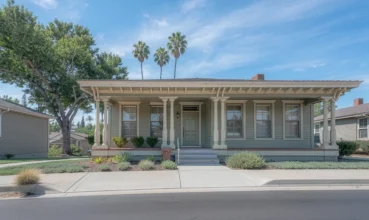
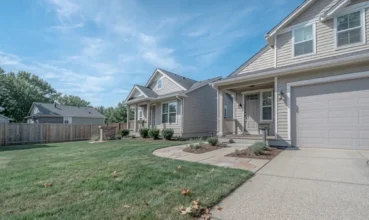
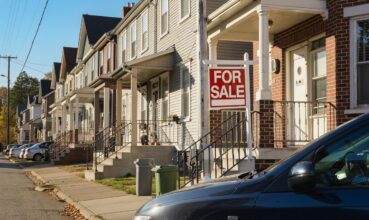
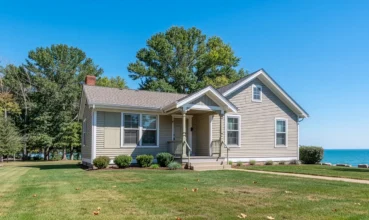
Tucked into the northeastern edge of Washington’s Olympic Peninsula, Sequim occupies an unusual position in the Pacific Northwest real estate landscape. While neighboring markets have experienced sharp swings in pricing and demand, this small retirement-oriented community of roughly 33,000 residents has maintained a quiet steadiness that is drawing attention from buyers well beyond its traditional base.
A combination of geographic quirks, lifestyle appeal, and demographic tailwinds has kept Sequim’s market relatively stable even as broader economic pressures mount. For professionals tracking where residential real estate holds its value, the market offers some instructive patterns.
A Geographic Anomaly That Drives Demand
Sequim’s appeal begins with something few markets can claim: genuinely unusual weather. Sitting in what locals call a “blue hole,” the area receives roughly 17 inches of rain annually, a striking contrast to Seattle’s 37 inches just two hours away and the Olympic rainforest’s 120 inches on the other side of the same peninsula. Average summer highs hover around 72 degrees; winter highs rarely dip below 42.
That weather consistency, combined with views of the Olympic Mountains and the Salish Sea toward Victoria, British Columbia, has made Sequim a consistent draw for retirees seeking a low-maintenance lifestyle. “It’s just a very beautiful green area with very nice weather year-round,” says Michael McAleer, Team Leader and Managing Broker at Team McAleer (RE/MAX Prime), whose family has been selling real estate in the area since 1991.
Increasingly, though, the buyer pool is broadening.
Remote Work Reshaped the Buyer Profile
The pandemic introduced a meaningful change in who is moving to Sequim. When Seattle’s major tech employers sent workers home in 2020, some began asking why they were paying urban prices for a lifestyle they no longer needed. Sequim, with its elbow room, minimal traffic, and high-speed internet access, became a viable answer.
The arrival of Starlink has reinforced this trend, making remote work feasible even on larger rural parcels that lack traditional broadband. One-acre, five-acre, and twenty-acre lots are common in the area, and the bulk of the surrounding county is Olympic National Park, keeping density low and the landscape open.
McAleer notes that the average buyer age dropped noticeably during this period. “For the first time, we’ve got young professionals that live here, as opposed to just the retirees,” he says.
The buyer geography has also evolved. Through the early 2000s, California was the dominant source market. Today, the primary buyer pool runs along the Interstate 5 corridor, Seattle, Bellevue, Tacoma, Snohomish, Kirkland, with California still a meaningful second. The change reflects how Pacific Northwest urban centers have grown more expensive and congested, pushing buyers to search farther afield.
Pricing Has Held, But the Dynamics Are Changing
Sequim’s median home price is around $575,000, and prices have been essentially flat since roughly 2022, following an extended run-up. That plateau has not tipped into decline, but the conditions underneath it have changed noticeably.
Buyers today carry more negotiating leverage than they did two or three years ago. Days on market are rising. Sellers who price aggressively or skip preparation are sitting on the market longer. “We are advising them that there are real pitfalls to overpricing your home in 2026,” McAleer says, a notable contrast to the recent period when comparable sales analysis was often supplemented with an additional five percent simply to account for upward momentum.
Well-prepared listings still move quickly. A property listed the prior week had drawn multiple offers above the asking price, including two escalation clauses, by the time of the interview. The divergence between listings is sharpening: turnkey properties priced correctly and marketed well continue to perform. Properties in manufactured home parks on leased land, units with high condominium fees, and homes needing significant work are taking longer and facing more resistance.
Insurance and Climate Risk: A Relative Advantage
One factor that has complicated residential markets across California, Florida, and parts of the Mountain West is insurance availability. Sequim has largely avoided that pressure. The area experiences no hurricanes or tornadoes and minimal wildfire exposure due to moisture levels in the surrounding national park.
McAleer says the area has attracted buyers he describes as climate refugees, people leaving markets where coverage costs have spiked, or policies have become difficult to obtain. Insurance companies find Sequim desirable to operate in, which gives buyers relocating from higher-risk markets one fewer variable to worry about.
What Investors Should Consider
For investors evaluating the Sequim market, the fundamentals point toward a selective opportunity rather than broad speculation. Waterfront and high-view properties represent the clearest long-term case: both are finite resources in a market where the physical setting is a primary driver of demand. Olympic Mountain views combined with water views of the Strait of Juan de Fuca are genuinely uncommon, and buyers relocating from larger metros consistently react to them with surprise.
Income-producing properties that pencil at current rents offer another avenue, particularly as the renter population grows alongside the broader community. The market’s retirement orientation means demand for lower-maintenance housing is structural, not cyclical.
McAleer is candid about the broader risks. National debt levels, potential AI-driven labor displacement, and a widening wealth gap are headwinds he watches without claiming to predict. “I know a whole lot about very little. I know Sequim and Port Angeles real estate,” he says. He expects that Sequim will outperform the national average through any correction, given the durability of its lifestyle appeal and the absence of the speculative excess that has made other markets more vulnerable.
A Referral-Driven Market Reflects Community Character
How real estate moves in Sequim also says something about the community itself. Despite significant production, McAleer ranked in the top 1% of RE/MAX agents across North America last year; his business relies primarily on referrals. Clients who have bought or sold through the team consistently direct friends, family, and neighbors to do the same.
That pattern reflects something about Sequim beyond any single agent’s approach. Relocating buyers are often surprised by how genuinely friendly the community is; neighbors wave to strangers, people hold doors, and the pace is unhurried. It is a quality that is difficult to quantify but shows up consistently in people’s reasons for staying.
For a market that rarely makes national headlines, Sequim is doing something quietly notable: holding value, attracting a widening demographic, and offering a lifestyle that is becoming harder to find at its price point. Whether that continues depends partly on forces well outside the peninsula’s control. But the underlying conditions, the weather, the geography, the insurance stability, and the growing remote-work population remain firmly in place and suggest the market’s resilience has structural roots rather than speculative ones.
About the Expert: Michael McAleer is a Team Leader and Managing Broker at Team McAleer (RE/MAX Prime), serving the Sequim and Port Angeles area on Washington’s Olympic Peninsula. His family has been selling real estate in the area since 1991, and he ranked in the top one percent of RE/MAX agents across North America in the prior year.
This article is based on information provided by the expert source cited above. It is intended for general informational purposes only and does not constitute legal, financial, or real estate advice. Readers should conduct their own research and consult qualified professionals before making any real estate or financial decisions.