The conventional narrative about commercial lending pullback focuses on big banks and headline-grabbing office defaults. But in the Mid-Atlantic’s middle market, deals between $2 million and $15 million, the tightening is showing up in subtler, more consequential ways: shorter interest-only periods, lower leverage ratios, and a new insistence on seasoned cash flow that extends timelines for borrowers who thought they were ready to refinance.
The Squeeze From Above
Institutional and semi-institutional players are moving down-market in the Mid-Atlantic, compressing opportunities for the owner-operators who have traditionally occupied that space.
According to Marc Tropp, Senior Managing Director at Eastern Union‘s Mid-Atlantic office in Bethesda, Maryland, deals that would have traded at an eight cap are now selling at six and a half caps because REITs and large family offices are buying them. Those buyers historically looked at $30 million and above. Now they’re competing for deals in the $10 to $15 million range.
For borrowers working in that middle band, competition for assets has intensified at the same time that financing terms have tightened. Community banks, which remain the primary lending partners for these operators, are pulling leverage back from 75% to the 65–70% range and cutting interest-only periods from 12 to 24 months down to six to 12.
Syndication sponsors face additional scrutiny. Tropp says lenders now want to see that the person signing on the loan has 15 to 20% of the equity personally invested in the transaction, a sharp increase from the 3 to 5% that was common previously.
Replaced Business Plans
The most significant underwriting shift involves how banks evaluate stabilized properties. Borrowers who completed value-add projects and expected to refinance after showing three to six months of performance are finding that timeline insufficient.
Banks now want to see at least one year of tax returns supporting the cash flow, according to Tropp. If tax returns aren’t available, they want a profit-and-loss statement covering nine to 12 months minimum.
This creates a painful gap for sponsors who entered projects two to three years ago expecting a faster path to permanent debt. Tropp’s office, which closed between 112 and 114 deals last year across a seven-person team, is seeing this play out repeatedly: clients who stabilized properties but can’t yet satisfy lender requirements to refinance and return capital to investors. The result is that borrowers wait an extra six to nine months beyond when they expected to capitalize on the value they built.
For investors in syndicated deals, this means longer hold periods and delayed returns – even when the underlying property is performing as planned.
A Cautionary Case
The District itself has become notably difficult for loan placement. Incomplete return-to-office adoption, reduced government contractor presence, and political signals around rent policy are giving lenders pause, even on well-priced assets.
Tropp described a client who found a multifamily deal at $75,000 per door in D.C., against replacement costs he estimated at $225,000 to $250,000 per door. Even at that basis, bank appetite was limited. “Your cash flow may not be going anywhere after the next year or two, and that’s the real big concern with the local lenders around here,” he said.
The incoming mayor’s platform emphasizing affordable rents has added uncertainty. Banks are pricing in the possibility of rent freezes – a scenario where expenses rise while revenue stays flat. Mixed-use buildings with office or retail above ground-floor space have become particularly difficult to finance, as tenant demand for upper-floor commercial space remains weak.
Meanwhile, suburban office in the region is performing better than many expected. Tropp attributes this partly to workers preferring shorter commutes over returning to downtown D.C.
Where Activity Is Concentrating
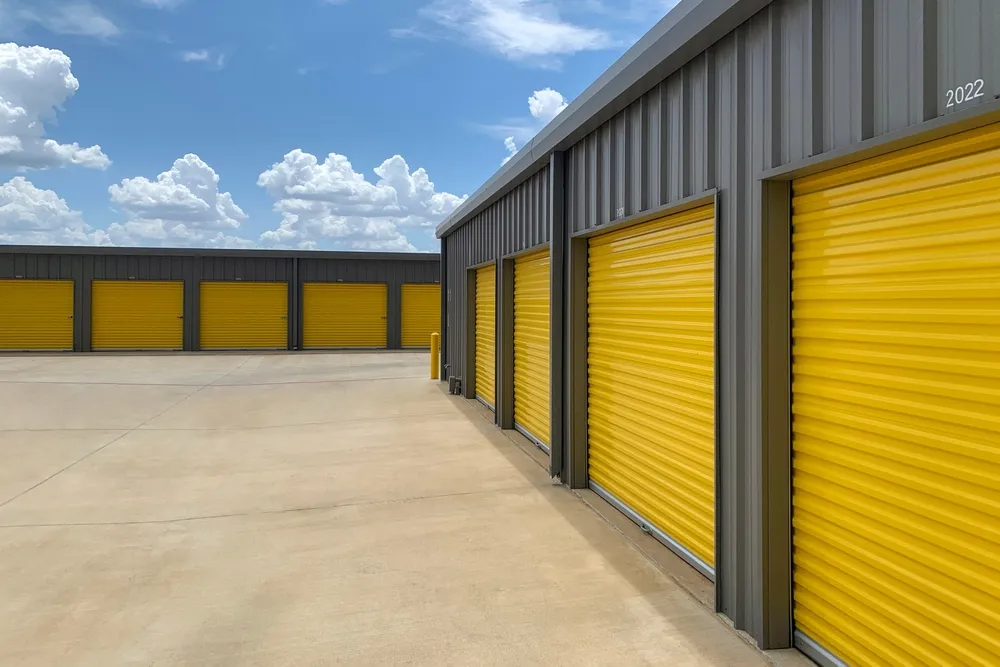
Against this backdrop of caution, certain asset classes are drawing consistent lender interest. Mobile home parks, self-storage, and industrial outdoor storage are where both borrower enthusiasm and bank willingness converge.
Mobile home parks benefit from what Tropp called “the last affordable housing in America right now.” Many parks still have below-market rents because original or second-generation owners never pushed them aggressively, leaving room for new buyers to grow revenue. Potential regulatory changes around HUD compliance for manufactured housing could expand financing options available to buyers in that space, though the timeline for such changes remains unclear.
Self-storage remains active for both construction and acquisition. The Eastern Union team attended a national self-storage conference recently and came away with a generally optimistic read from operators and lenders. Industrial outdoor storage, used by landscaping companies, boat and RV owners, and plumbing companies storing equipment, rounds out the asset classes seeing strong demand.
For buyers evaluating these sectors, the common thread is straightforward cash flow: each generates revenue that banks can underwrite without relying on speculative lease-up assumptions.
What Borrowers Should Expect
The forward view depends heavily on interest rates. Early 2026 saw an uptick in deal flow as borrowers anticipated rate cuts. That momentum has stalled as rates moved the other direction, and the possibility of a Fed rate increase, driven by inflation Tropp cited as above 4%, could further dampen activity.
One development Tropp is watching: whether banks begin moving more aggressively to foreclose on distressed assets rather than continuing to extend loans. “I personally believe that this is going to be the year that they really start taking them back,” he said. His office hasn’t yet seen significant off-market deal flow from bank-owned commercial properties, mostly single-family homes in weaker locations, but he expects that to change if rates rise further.
A wave of bank-owned commercial assets coming to market would create acquisition opportunities for well-capitalized buyers, but it would also signal that lenders have exhausted their patience with underperforming loans, which could tighten credit further for everyone else.
For borrowers navigating this environment, Tropp’s advice is direct: come to the table with documented cash flow, meaningful personal equity, and demonstrated experience in the asset class. Properties with strong existing income still get financed. Projects that depend on future performance face a longer, harder path than at any point in the past several years.
About the Expert: Marc Tropp is Senior Managing Director at Eastern Union’s Mid-Atlantic office in Bethesda, Maryland, leading a seven-person team that closed between 112 and 114 deals last year across the middle-market commercial lending space.
This article is based on information provided by the expert source cited above. It is intended for general informational purposes only and does not constitute legal, financial, or real estate advice. Readers should conduct their own research and consult qualified professionals before making any real estate or financial decisions.