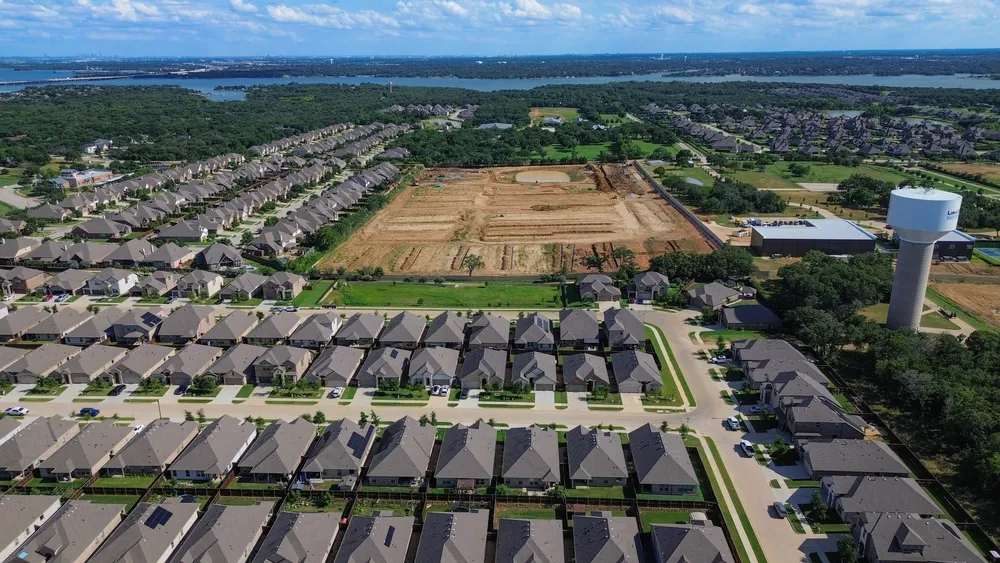
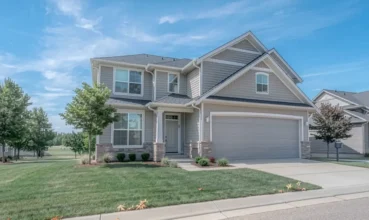
Homeowners who bought during the 2022–2023 building boom in parts of southern Dallas-Fort Worth are discovering an uncomfortable reality: the new homes going up next door are priced at or below what they paid. For sellers who need to exit, the math often doesn’t work. Some are coming to the table with cash beyond their mortgage payoff just to close. Others can’t close at all.
The dynamic is concentrated in areas like Crowley, Midlothian, and Venus, communities on the southern fringe of the metro where new construction was heaviest during the post-pandemic surge. Lauren Kerschen, team leader of DFW’s Finest Real Estate Group, says the core problem is straightforward: appreciation hasn’t materialized in many of these neighborhoods, and builders can offer financing incentives that individual sellers cannot match.
“The new construction builders are able to offer rates that we cannot offer as an individual seller,” she says.
The Resale Trap in Builder-Heavy Corridors
When a buyer can get a brand-new home at roughly the same price as a two-year-old resale, with a builder-subsidized rate on top, the resale seller has almost no leverage. Kerschen says she’s seen deals fall apart because the seller simply couldn’t produce the cash needed to close after accounting for their remaining mortgage balance and closing costs.
This condition is concentrated in specific corridors where construction volumes were highest. For investors considering southern DFW, Kerschen’s guidance is direct: avoid new construction areas unless you’re pursuing a buy-and-hold rental strategy on a property that needs minimal work. The better opportunities, she says, are in established neighborhoods where long-term owners have built up equity and deferred maintenance, homes that haven’t been updated in decades and sit in areas where surrounding properties have already been renovated.
“Those people tend to have a ton of equity in the home and are flexible,” she says.
A Tax Complication That’s Slowing Deals
In Midlothian, a separate problem is compounding the new-construction squeeze. Tax appraisal values on many listings have run well above actual sale prices. Kerschen describes a pattern where buyers walk into a purchase knowing that until they can contest the assessed value, which in many cases can’t happen until the following year, they’re paying taxes based on a valuation far higher than what they actually paid for the home.
She cites an example: a home listed at $550,000 with a tax appraisal of $675,000. In Texas, where there is no state income tax and property tax rates are among the highest in the country, that gap creates a meaningful monthly cost difference. “The buyers are hesitant about that because they’re walking in knowing that until they can contest that tax amount, they’re paying this much higher tax rate than they need to be paying,” Kerschen says.
High property taxes are also affecting buy-and-hold investors. Where southern DFW once attracted out-of-state capital through 1031 exchanges into rental properties, Kerschen says that activity has slowed. The carrying costs have made it harder to hold single-family rentals profitably, even though renter demand remains strong.
A Market That Moves at Two Speeds
Beyond the new-construction corridors, the broader southern DFW market is split. In some neighborhoods, parts of Mansfield, certain sections of Arlington, and areas like Carrollton to the north, homes move so quickly that buyers with standard work schedules struggle to tour them in time. In others, listings sit for 60 days or more with no competitive offers.
The dividing line, according to Kerschen, is condition. “When you see houses in these areas that are not selling quickly, it’s because the price is matching the houses with great condition and that house does not have great condition,” she says. “Matching price to condition is extremely important right now.”
For sellers competing against new construction, her advice centers on giving buyers a reason to choose a lived-in home at a comparable price, whether that means finishing upgrades, offering concessions that can be applied to rate buydowns, or partnering with lenders who offer grant programs. The financing angle matters most: concessions Kerschen’s sellers offer are typically applied toward buying down the buyer’s interest rate, directly countering the builder-subsidized rates that new construction communities advertise.
Buyer Psychology Has Shifted
After three years of elevated rates, Kerschen says the waiting game has largely ended. Buyers have stopped holding out for a return to lower rates and are instead sizing their purchases around what they can afford at current monthly payments.
“They’re feeling a little bit more clear on this being the market,” she says. “They’re going to look for a house that they can afford the monthly payment on instead of sitting around and waiting for some dream house to magically become affordable.”
That shift hasn’t reduced buyer volume, but it has changed what buyers will tolerate. Kerschen says more contracts have fallen through recently than usual, largely because buyers, with more inventory to choose from, are walking away from deals where sellers refuse to negotiate on repairs or concessions. With 16 other houses available to make an offer on, as Kerschen puts it, buyers have less reason to compromise.
Investor buyers, meanwhile, have become a more prominent part of the market. Kerschen says she’s working with more investor buyers than in past years. After a listing sits for 60 days, sellers who might have initially resisted a lower offer are more willing to accept cash deals that close quickly.
Infrastructure Now, Payoff Later
Across the Arlington area, ongoing infrastructure investment, new transit systems, highway improvements, commercial development, and park upgrades are creating short-term friction that Kerschen expects to benefit the market over time. Right now, construction disruptions are turning off prospective buyers who drive through the area to tour homes.
“I think the area is making itself into a better state for buyers in the future,” she says. “But it’s affecting us negatively right now in the sense that people drive over here to look for houses and they’re like, the traffic is terrible.”
Corporate relocations continue to bring new residents to the metro, a trend Kerschen says has persisted for at least a decade. Combined with the area’s proximity to DFW Airport, particularly in neighborhoods near Euless on the north side of Arlington, that pipeline of relocating workers gives the area a demand floor that outlasts any single market cycle. For sellers stuck in builder-heavy corridors today, the challenge is surviving the gap between current carrying costs and the improved infrastructure that hasn’t yet translated into higher values.
About the Expert: Lauren Kerschen is the team leader of DFW’s Finest Real Estate Group, covering southern Dallas-Fort Worth, Texas.
This article is based on information provided by the expert source cited above. It is intended for general informational purposes only and does not constitute legal, financial, or real estate advice. Readers should conduct their own research and consult qualified professionals before making any real estate or financial decisions.