A declining median price usually signals a cooling market. In Northeast Dallas, the story is more complicated. The number of homes selling in 2026 has actually increased compared to 2024 and 2025, according to Cindy Dunnican of The Dunnican Team at Coldwell Banker Apex, who has worked the Northeast Dallas market since 1998. But the mix has shifted. More transactions are closing below the luxury threshold, which pulls the median down even as the broader market stays active. For buyers or investors relying on headline data to time a purchase, the distinction matters.
Dunnican puts it plainly: “If you have more homes selling under $750,000, then you’re going to have a lower median price.” Values are not eroding across the board. The composition of what is trading has changed.
Condition Is Sorting Winners From Losers
The northeast Dallas market is not uniformly slow. It is split along a clear dividing line: homes that are clean, well-maintained, and priced at or just under market are still moving fast. Everything else is sitting.
Dunnican describes a recent listing in the Waterview community that drew multiple offers twice in its first two weekends – despite being priced at the top of its range. The home did not have a recently renovated kitchen, but it was clean, had no carpet, featured an updated primary bath, and included a pool. It sold above list price within 11 days. That outcome, she notes, is not the norm right now. Multiple-offer situations have become uncommon.
What separated that listing from properties languishing on the market was presentation. Buyers today expect move-in readiness. “They feel like they’re not going to have to go in and replace carpet or repaint,” Dunnican says. The work sellers need to do is not an expensive renovation; it is deep cleaning, touching up paint, and addressing cosmetic wear. Sellers who skip that step are finding their homes expire. In some submarkets, Dunnican says, one in three listings are doing exactly that.
Concessions Have Changed Purpose
Closing-cost concessions are common across the median price range and below, but the way buyers are using them has shifted. In previous cycles, Dunnican saw concession dollars go directly toward closing costs buyers could not otherwise cover. Now, buyers are redirecting that money toward interest rate buydowns.
“They’re not necessarily using the money for closing costs. They’re using it for rate adjustments to bring the rate down,” she says. In the luxury segment, concessions are less prevalent; those buyers are less sensitive to rate, and the negotiating dynamics differ.
For sellers pricing homes in the median range, this shift means concession requests are not a sign of buyer weakness. They are a financing strategy, and understanding the distinction can prevent sellers from misreading the negotiation.
The Suburbs Are Not Performing Equally
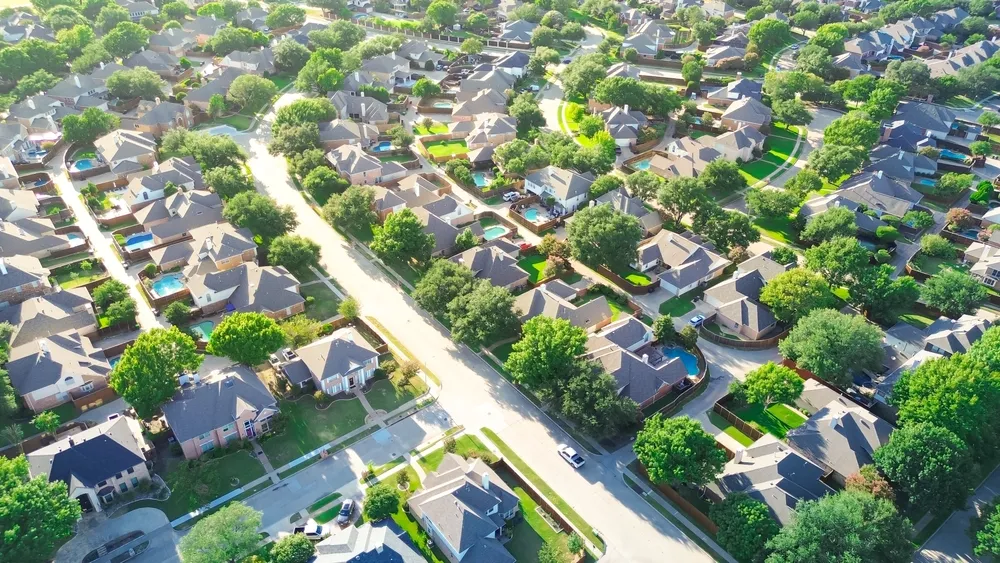
Northeast Dallas operates in concentric tiers radiating outward from the urban core. The closer a submarket sits to DFW Airport and the inner-ring cities, Plano and Richardson in particular, the more stable the demand. The outer rings, where buyers moved during the remote-work era, are now under pressure as employers call workers back to the office.
The furthest-out suburbs face an additional structural problem: new construction. Builders in third-tier suburbs have deep inventories and the financial capacity to offer rate incentives that resale sellers cannot match. Dunnican frames the buyer’s calculus directly: “I can buy a new build right now and get a 4.99 interest rate, or I can buy an existing home for the same price and get a 6.75% interest rate. Which one are you going to buy?”
Homeowners who purchased two or three years ago in those outer rings and now need to sell are finding they cannot compete with the builder down the street.
Where the Investment Opportunity Sits
For investors evaluating northeast Dallas, Dunnican’s read is specific: avoid the luxury segment and the distant suburbs, and focus on first-tier and possibly second-tier suburban homes in the first-time buyer price range. The best candidates are properties that have been sitting on the market, or have already expired, and need cosmetic rather than structural work.
The opportunity is the price gap between updated and non-updated homes in older neighborhoods. That gap, Dunnican says, is often wider than the actual cost of renovation. But she adds a caution: an updated home still needs neighborhood-level support for its price. She describes a recent appraisal in a first-tier suburb that came in $60,000 below contract price on a home that had been updated, because the surrounding neighborhood could not justify the number.
“You do have to be careful,” she says. “The neighborhood didn’t support the price.”
What Algorithms Miss in a Non-Disclosure State
Texas does not publicly disclose sale prices, which means automated valuation tools are working with less data than in most other states. Dunnican argues this makes headline statistics particularly unreliable at the local level. “An algorithm doesn’t walk into a house and say the house is dated, so it’s going to bring less,” she says. Condition, updates, and micro-neighborhood dynamics, the factors currently driving the gap between homes that sell in days and homes that expire, are invisible to automated models operating on averages.
In a market where the median price trend does not reflect the underlying activity, that blind spot compounds the risk of acting on national headlines. “If someone says sale prices are down 7% year over year, my immediate question is, well, what sold?” Dunnican says. The answer, in northeast Dallas, is that more homes are selling, just at lower individual price points. The market is not retreating. It is redistributing.
About the Expert: Cindy Dunnican is with The Dunnican Team at Coldwell Banker Apex, and has worked the northeast Dallas market since 1998.
This article is based on information provided by the expert source cited above. It is intended for general informational purposes only and does not constitute legal, financial, or real estate advice. Readers should conduct their own research and consult qualified professionals before making any real estate or financial decisions.