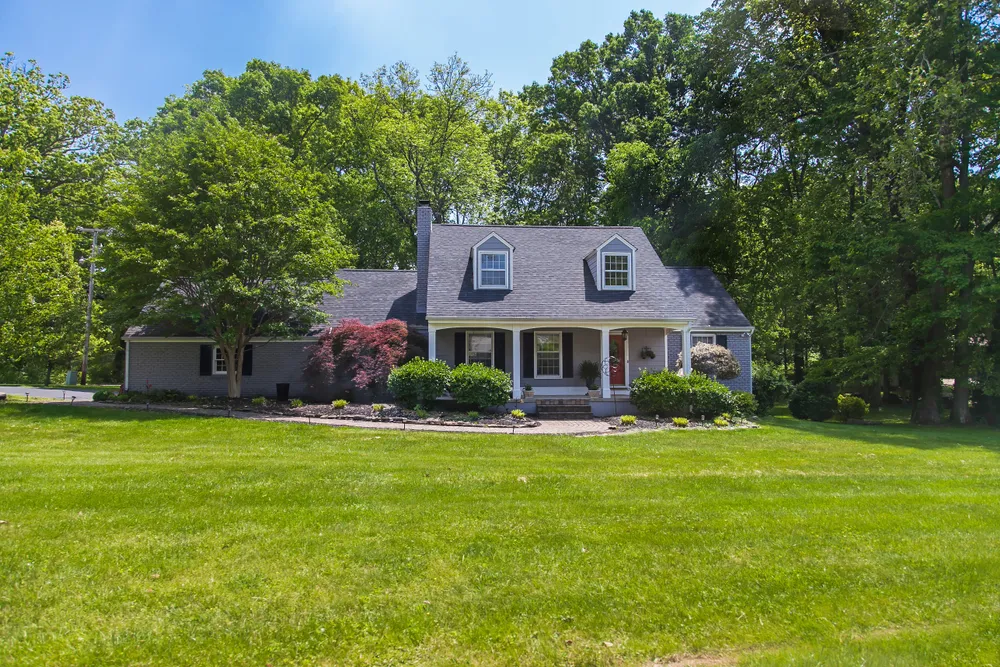
Williamson County, Tennessee, one of the Nashville metro’s most sought-after suburban markets, has not seen the inventory correction or price decline affecting other parts of Middle Tennessee. But stability has not meant ease. The market has entered a phase where pricing precision and property condition separate homes that sell within weeks from those that sit for months.
Active inventory in Williamson County is virtually unchanged year over year, 327 units this year compared to 325 last year, according to Dee Russell, a luxury listing agent with Compass Real Estate who has worked the Brentwood and Franklin areas for nearly 30 years. New contracts have dipped from 80 to 68 over the same period, while average sale prices have edged up slightly, from the $182,000 range to roughly $184,700. Those numbers describe a market with steady supply, slightly softer demand, and prices that have held, but only for sellers who read the current environment correctly.
List-to-contract timelines now average around 60 days, Russell says, and overpriced homes take far longer. “You have to get the price right in the beginning, or you’re going to become a stale listing,” she says.
Two Kinds of Misread
The friction in this market is not one-sided. According to Russell, both buyers and sellers are operating on outdated assumptions, from opposite directions.
Sellers who anchored to the prices they saw during the COVID-era surge, when out-of-state capital, particularly from California, pushed values well above historical norms, are finding no takers. “The sellers who are pricing with the 2020 pricing, those people are not getting their home sold,” she says. Some have been on the market six months or longer.
Buyers, meanwhile, are making the opposite mistake. Some assume the market resembles the 2008 crash and submit offers well below what sellers will accept. “The buyers who think that this is 2008, where the market is crashing, they are not getting a property because they’re making their offers too low,” Russell says. There are no fire sales in Williamson County, but fair deals are available for buyers willing to meet the market where it actually is.
The sellers who have had to make concessions or accept price reductions are, in Russell’s experience, the ones who started out overpriced.
Why Schools Are the Primary Driver
What sustains demand in Williamson County, even as parts of neighboring Davidson County cool, comes down to schools. Russell describes the dynamic in her own neighborhood of Indian Point in Brentwood, which sits within Crockett Park and has two elementary schools and a college-prep high school, Ravenwood, about a mile away.
“When you start to see people with their kids getting school age, many times you’ll see them moving toward Williamson County for the schools,” she says. She recently sold a home in the neighborhood to a young couple relocating from East Nashville specifically because Davidson County’s schools did not compare.
That school-driven demand creates a floor under pricing in neighborhoods throughout the county. Russell says she could not single out specific pockets that are outperforming, because Williamson County schools “have really good report cards” across the board.
Condition as a Pricing Lever
Many of Williamson County’s established neighborhoods are more than 30 years old, and Russell says condition has become a decisive variable in what a home can command. Her team offers what she calls a “mini flip” for listing clients – painting the entire interior a single color, swapping out light fixtures, door handles, and hinges, staging with her own furniture and accessories, and sometimes repainting cabinets or the exterior.
The service comes at no additional cost beyond materials. “If you want the premium price, you have to do that,” she says. “You can’t put a premium price on a house that you haven’t done anything to in 10 years and definitely in 30 years.”
Russell began staging listings during the 2008 downturn, when marketing had to work harder to generate any interest at all. She notes that the refreshed presentation tends to attract younger buyers, who she says are the predominant purchasing demographic for these homes.
Investment Landscape
For investors considering the Nashville metro, Russell points toward new construction and luxury flips as the stronger plays. Rental returns are harder to achieve given current price levels. “You can still get a decent ROI on rental, but you can get a better ROI if you’re backing someone in the business,” she says.
The broader Nashville economy continues to draw corporate relocations; Russell cites In-N-Out Burger and Oracle’s campus as recent examples, and she describes the area as historically resilient through downturns. Nashville was the last market to decline in 2008 and the first to recover, she says, largely because of the diversity of industry in the region.
The one variable she is watching is the current midterm election cycle, which she describes as unusually contested and polarized. Presidential elections typically slow the market, she notes, but midterms usually do not. “This midterm election I’m watching because it is so contested and so polarized that it could affect our market,” Russell says. “So far it has not.”
For sellers entering this market, the calculus is straightforward: price to current conditions and invest in the home’s presentation, or risk joining the six-month listings that Russell sees across the county. For buyers, the opportunity lies in recognizing that the market is neither 2020 nor 2008, and that reasonable offers on well-priced homes are being accepted.
About the Expert: Dee Russell is a luxury listing agent with Compass Real Estate who has worked the Brentwood and Franklin areas of Williamson County, Tennessee, for nearly 30 years.
This article is based on information provided by the expert source cited above. It is intended for general informational purposes only and does not constitute legal, financial, or real estate advice. Readers should conduct their own research and consult qualified professionals before making any real estate or financial decisions.