Salt Lake City is in the middle of a sustained growth cycle; corporate relocations, new professional sports franchises, Olympic preparation for 2032, and expanding university campuses are all drawing people and capital into the metro. But the valley where most of this activity is concentrated has a physical constraint that is becoming harder to ignore: it is running out of buildable land.
Nick Booth, a real estate agent based in Salt Lake City who works primarily in the Salt Lake Valley, says planners he speaks with estimate the valley will be largely built out within the next 20 years. That timeline, paired with continued investment in infrastructure and amenities, creates a straightforward supply-and-demand tension for anyone buying or investing in the area today.
“The people who are thinking that the Salt Lake market is going to be crashing or dipping down and they’re just going to wait a few years to buy or invest, I tell them the best time to buy was 10 years ago,” Booth says. “Let’s get something going right now because the house prices are just going to continue to rise.”
A Buyer’s Market With a Seller’s Constraint on the Horizon
Despite the long-term supply picture, the current market favors buyers. Booth describes a market where listings are plentiful, but buyer activity has slowed, partly due to affordability concerns and interest rate sensitivity. Some homes sell within a day or two. Others sit for over 100 days.
The difference comes down to condition and pricing. Homes that are well-presented and priced in line with actual comparable sales move fast. Homes where sellers hold firm on aspirational pricing linger. Booth notes that buyers today are less interested in fixer-uppers than previous generations were. He cites a study indicating the average first-time buyer home is now 2,800 square feet, compared with 1,200 square feet 30 years ago. Expectations have shifted, and sellers who have not adjusted are feeling it.
“As soon as we understand that we’re in a buyer’s market and we’re able to price it correctly and make it present really well, those are the houses that are selling,” Booth says.
Who’s Buying and Where They’re Coming From
The Salt Lake buyer pool splits roughly into two groups: relocators and long-term residents trading up. California accounts for a significant share of inbound moves, along with buyers from North Carolina and New York. Many are relocating for work or choosing Utah because remote work lets them pick where they live.
Local buyers, meanwhile, are often moving up from starter homes. Booth describes a typical pattern: a couple buys a small two-bedroom home, builds equity over several years, then sells and moves into something larger. One current client, a young married couple, bought in Eagle Mountain, about an hour from Salt Lake, because it was affordable. Now, with children and two jobs in the city, they need to be closer. The commute at rush hour can stretch to two and a half hours.
That transaction required a home sale contingency; the couple needed to sell in Eagle Mountain before they could close on a home in Salt Lake. Booth says the key to making that contingency palatable to the seller was presenting a full marketing proposal alongside the offer, showing exactly how the existing home would be sold.
The Neighborhood Tradeoff
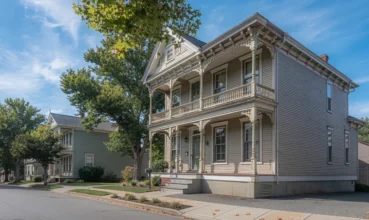
Salt Lake’s neighborhoods vary enough that buyers who browse listings online frequently misjudge what they are getting. Booth uses the Avenues, the historic neighborhood above the state capitol, as an example. Homes there date to the 1880s and 1890s. Many have three or four bedrooms but only one bathroom, no basement, and a series of small, compartmentalized rooms rather than the open floor plans buyers now expect. Prices start around $600,000 to $700,000.
For the same price in Eagle Mountain, a buyer gets 4,000 to 5,000 square feet of new construction with large rooms, yard space, and modern finishes, but an hour-plus commute. Canyon proximity adds another layer: areas like Cottonwood Heights, Sandy, and Murray attract both owner-occupants and investors because of their access to ski resorts. Booth says investors buy homes in those areas and rent them to skiers who want to be close to the mountains. “If you’re all the way out west and it’s going to take you an hour and a half to get up the canyon, I’d rather live right next to the canyon,” Booth says.
Where the Investment Opportunity Is
For investors, Booth is direct about what to avoid: short-term rentals. He says many areas in and around Salt Lake are moving to outlaw Airbnb and VRBO-style rentals. While some zones are still technically legal, the regulatory direction suggests that window is closing.
The stronger option, in his view, is medium-term rentals – three to nine months – serving traveling nurses, temporary workers, and families in town for extended stays. Hotels and short-term platforms get expensive over those periods, and a furnished rental fills a gap in between.
For long-term rentals, he points to Murray, Cottonwood Heights, Taylorsville, and West Valley. Many homes in those areas were owner-occupied for 30 or 40 years, sit on solid foundations, and need only cosmetic updates to become functional rentals. Renting regulations in those cities are relatively lenient. “You’re able to go in, do just minimal work, and fix it up to be a good rental,” Booth says.
What Comes Next
Growth is not confined to the valley itself. Booth says Utah County, south of Salt Lake, is expanding rapidly, and development is pushing further outward as the central valley fills in. The 2032 Olympics, a new NHL franchise, a potential MLB stadium, and continued corporate arrivals are all adding infrastructure and population pressure simultaneously.
For buyers weighing whether to wait for a dip, Booth’s assessment is blunt: finite land, rising demand, and sustained institutional investment point in one direction.
“Salt Lake is growing like crazy, but the areas around it are growing even crazier,” Booth says. “Everything down in Utah County is just exploding, and that’s just going to keep going further and further out.”
About the Expert: Nick Booth is a real estate agent based in Salt Lake City, Utah, working primarily in the Salt Lake Valley.
This article is based on information provided by the expert source cited above. It is intended for general informational purposes only and does not constitute legal, financial, or real estate advice. Readers should conduct their own research and consult qualified professionals before making any real estate or financial decisions.