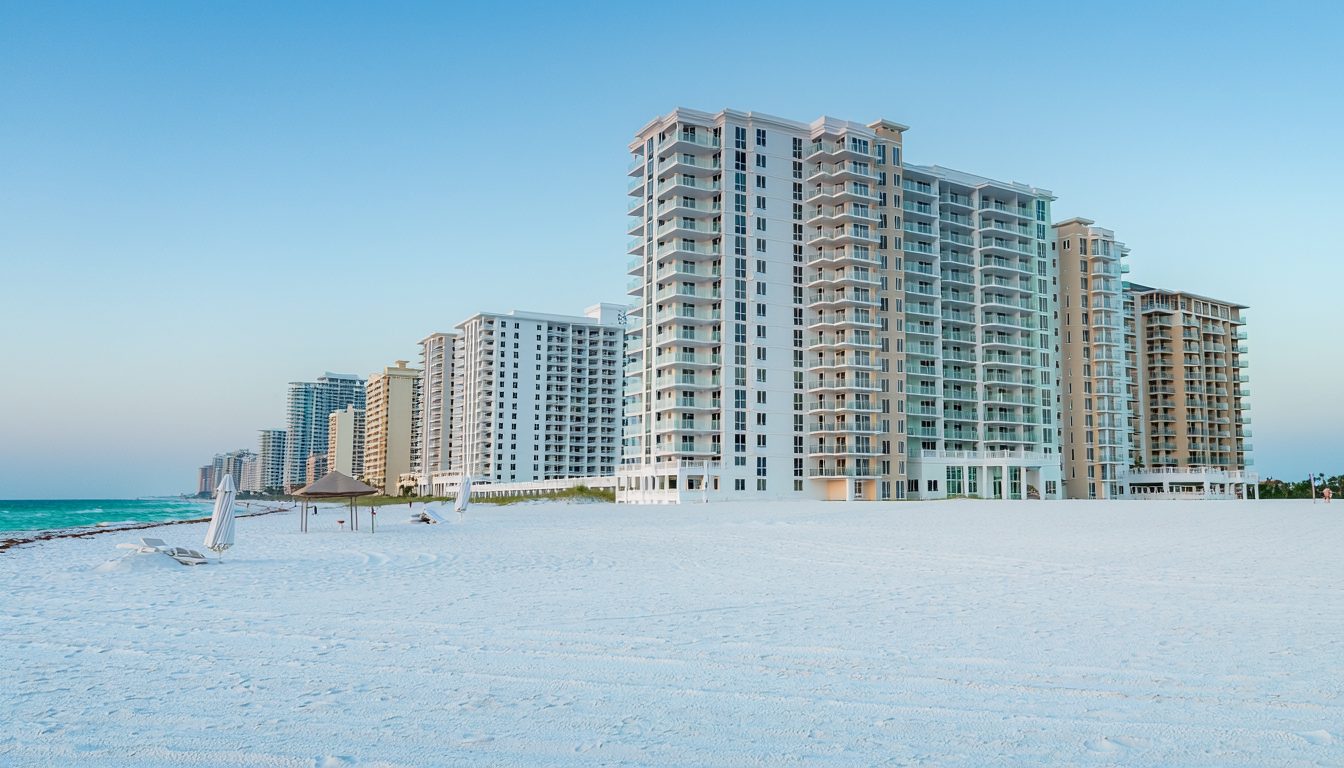
Most coverage of Florida’s condo market treats the post-Surfside regulatory wave as an ongoing financial burden for buyers. In Panama City Beach, a vacation rental market built heavily on investor-owned condominiums, the picture looks different. The milestone inspections, structural integrity reserve studies, and large special assessments triggered by new state rules hit existing owners hard. But much of that cost has already been paid, according to Trish Wheeler and her daughter, Taylor Wheeler Sauls, who co-founded Salty Marlin Realty, a brokerage that now has about 45 agents. Wheeler, a broker, spent nearly a decade as a real estate paralegal before becoming an agent. For buyers entering now, the financial landscape looks materially different than it did at the height of the compliance push.
The Assessment Cycle Has Largely Run Its Course
The new compliance requirements landed alongside a sharp rise in interest rates. Owners faced large assessments to bring buildings into compliance while financing costs climbed, compressing both demand and pricing. Wheeler Sauls calls it “a recipe for disaster.”
But the bulk of that cycle appears to be behind the market. Most associations faced a December 31, 2025, deadline to complete their structural integrity reserve studies, though buildings coordinating them with a milestone inspection have until the end of 2026, and compliance statewide has lagged. In Panama City Beach, Wheeler Sauls says the owners who held units during the compliance push absorbed the cost. “All of those homeowners got hit with these massive assessments. They’ve already paid them mostly in our area,” she says. “Buyers who are coming into the market now have a clean slate.”
That clean slate applies to the one-time assessments, not to reserves. Under Florida law, associations must now fund reserves for structural components based on their studies, cannot waive those contributions, and must repeat the studies every 10 years. Buyers should expect reserve funding to remain part of their monthly dues.
HOA dues, which rose alongside the assessment wave, have also started to stabilize. For investors running acquisition numbers, the expense side of the ledger has improved, though Wheeler Sauls stresses that buyers still need to weigh rental income against current dues before any purchase. “You’ve got to make sure that everything is going to pencil out,” she says. “That’s the main thing.”
Financing Requires Specialized Knowledge
Many Panama City Beach condos are non-warrantable, meaning the project doesn’t meet Fannie Mae and Freddie Mac guidelines, which rules out standard conventional financing. Common triggers include pending litigation involving a building’s safety, structure, or habitability, and hotel-style operations such as an on-site check-in desk or transient rental programs- the profile of what the industry calls a condotel. Heavy investor ownership can also push a project outside agency guidelines.
What fills the gap are portfolio loans held in-house by lenders and DSCR loans, short for debt service coverage ratio. With a DSCR loan, the property’s projected rental income, rather than the borrower’s personal income, determines qualification. An appraiser evaluates comparable rental income, and if it covers the mortgage and expenses at the required ratio, the buyer can secure financing without proving personal income. Wheeler Sauls says these loans often require 20 to 25 percent down and a decent credit score, though lenders’ published guidelines for non-warrantable and short-term rental condos commonly run higher, between 25 and 35 percent.
That structure makes the market accessible to self-employed buyers and investors whose tax returns don’t reflect their full financial capacity. It also makes condo transactions a specialty within the business. “It’s such a deep topic that most people are never taught,” Wheeler Sauls says.
The Investment Case Is About Taxes, Not Cash Flow
Wheeler frames condo investment in Panama City Beach as a lifestyle purchase, one that owners can’t necessarily depend on to cover 100 percent of its expenses. Wheeler Sauls frames it more directly as a tax strategy.
The argument: even a unit that roughly breaks even on operations produces value through depreciation write-offs and appreciation. For a high-income earner, the after-tax cost of owning such a property may compare favorably with the tax bill it offsets. “Why pay that to the government and light it on fire when you could go invest it into real estate?” Wheeler Sauls says.
Wheeler adds that cost segregation, a strategy in which a specialist identifies building components that can be depreciated on a faster schedule, can further improve the tax position for investors.
For buyers evaluating Panama City Beach condos purely on rental yield, the numbers may not pencil cleanly. For higher-income earners weighing ownership costs against taxes they would pay regardless, the calculus shifts.
Due Diligence Starts With the Association Paperwork
Wheeler says the first step in evaluating any condo purchase is understanding what the HOA fees cover, such as electricity, water, garbage, and common areas, and how those costs affect the overall financial picture. Beyond that, she recommends requesting minutes from recent HOA meetings to identify planned expenses: elevator repairs, building painting, roof replacement, balcony work, or pool renovation.
Wheeler Sauls adds that buyers and their agents should call the community association manager or HOA president directly and ask whether any future assessments are under discussion. “The biggest one would be: are there any talked-about future assessments?” she says. Wheeler notes that some buyers don’t think to ask about upcoming assessments, a gap their agents should fill.
Slow Market, but Early Signs of Stabilization
The broader market remains sluggish. The Salty Marlin team compares year-over-year statistics at its monthly meetings, and for an extended period the data moved in one direction: days on market up, prices down, sales volume down. Over the last six months, Wheeler Sauls says, that trend has started to shift, with prices holding steady, days on market starting to come down and sales volume going back up.
Local MLS data for the third quarter of 2026 points the same way on activity: condo sales rose year over year, and units sold faster. Prices tell a softer story, with condo values still below year-earlier levels and inventory up sharply, giving buyers more choice.
She cautions against reading too much into the improvement. Rates eased slightly, then rose again a few weeks ago. “The market is so volatile right now,” she says. “There is no solid way to answer the trends question, because it keeps going back and forth like a game of tug of war.”
Wheeler expects pent-up investor demand to tighten inventory quickly once conditions settle. “There’s so much pent-up demand right now for investment property that when the markets do get stable again, and the interest rates come down a little bit, there’s going to be a frenzy and we’ll run out of inventory quick,” she says. For buyers willing to act before that happens, current conditions offer more negotiating leverage than they are likely to find later.
About the Experts: Trish Wheeler and Taylor Wheeler Sauls are a mother-daughter team and the co-founders of Salty Marlin Realty in Panama City Beach, Florida. Wheeler, a broker, has 25 years in real estate and nearly a decade of experience as a real estate paralegal, and previously held a mortgage license. Wheeler Sauls has 15 years of experience in real estate.
This article is based on information provided by the expert source cited above. It is intended for general informational purposes only and does not constitute legal, financial, or real estate advice. Readers should conduct their own research and consult qualified professionals before making any real estate or financial decisions.