In many high-priced suburbs, the challenge for buyers is less about how many homes are for sale than about whether those homes match what buyers can pay. In Westport, Connecticut, much of the available supply sits at the luxury end while many active buyers are shopping well below it, according to Kim Harizman, a partner on the KMS Team at Compass in Westport.
“A lot of our buyers we’re trying to get into the market can’t afford the luxury price point,” Harizman says, “and that’s where the majority of our inventory lies.”
Financing sits at the center of that mismatch. Higher interest rates have shrunk budgets for buyers who borrow, while cash buyers continue to account for a large share of deals, Harizman says. In her view, Westport remains more of a seller’s market than a buyer’s market, but it is not immune to the softening seen in the broader housing market.
A Broader Buyer Pool
For years, Westport’s buyer base was dominated by young families drawn by strong public schools and, as Harizman describes them, relatively low property taxes. That group is still active, but the pool has broadened. Parents of those young families are now buying nearby, sometimes as a second home and sometimes full-time, to be close to their grandchildren.
A significant share of buyers already live in Westport and are upsizing or downsizing within town. Some want to be closer to the beach with less maintenance, some are trading a large family home for a condo, and others need more space for a growing family.
“A big percentage of our buyers actually are from within,” Harizman says. “We have people who are choosing to stay rather than move out after their kids go to college.”
The result, in her words, is “probably more of a balanced town than we’ve ever had before,” with a wider mix of life stages than when the market was driven mainly by families with school-age children.
Waterfront Carries Regulatory Weight
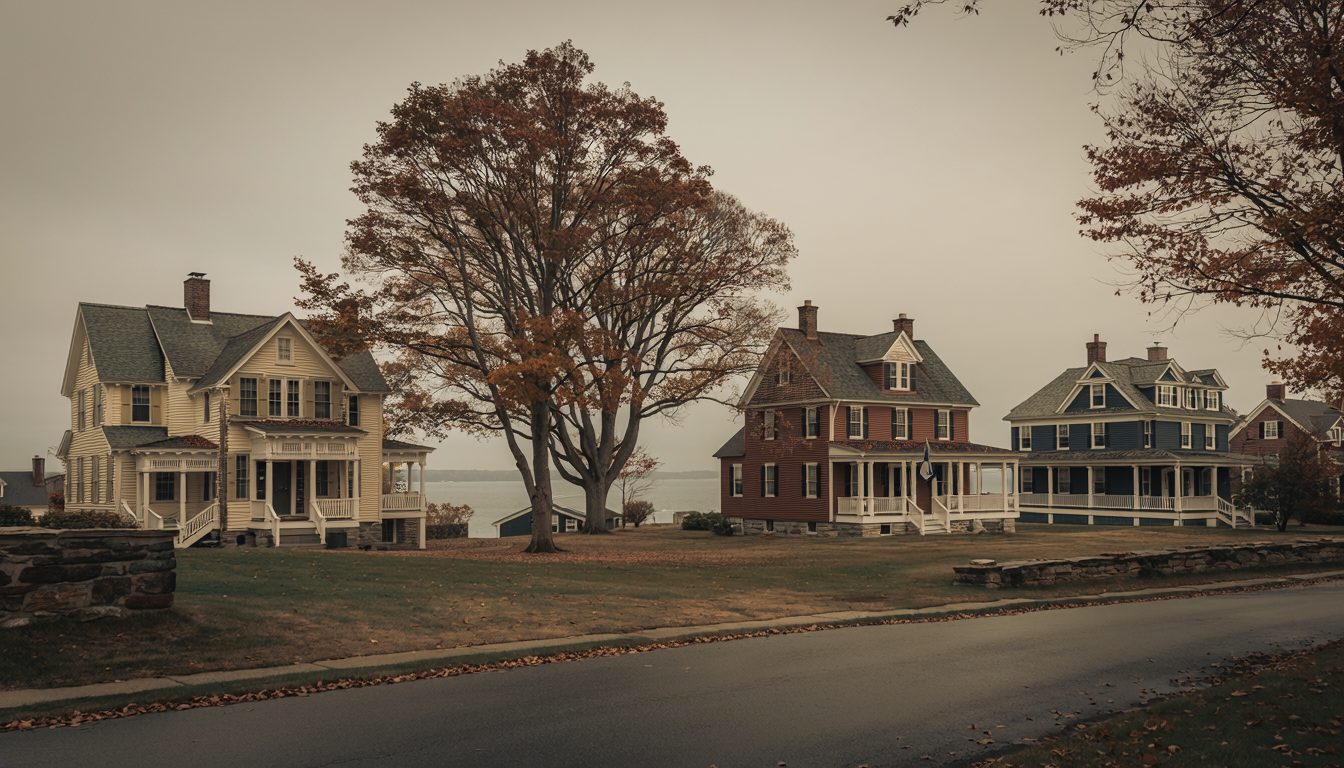
Westport sits on Long Island Sound, and buyers pay a premium for waterfront, Harizman says. The category is varied: some properties have boat docks, and some do not, and some face the Sound while others sit on lagoons or rivers. Homes in the flood zone bring their own complications.
Flood rules shape what a buyer can do with a waterfront home. In Westport, a major renovation of a non-compliant house in the flood zone triggers a requirement to bring the whole structure up to current flood standards. Harizman says the town does not want owners to over-invest in non-compliant homes, so many buyers of these properties plan from the start to rebuild rather than renovate.
She describes a transaction that followed that pattern. A couple whose children were finishing high school wanted to leave their family home in a more country setting and find a waterfront property where they could keep their boat. At the same time, another set of her clients wanted to downsize from their non-compliant waterfront home into something turnkey. Harizman paired the two. The buyers concluded that rebuilding made more sense than renovating, then demolished the house and built a new one. The sellers moved into a smaller home with water views.
Flood insurance pricing has also changed. FEMA now sets federal flood insurance premiums based on each property’s own characteristics rather than its mapped flood zone, an approach Harizman calls “a sensible way to assess flood risk.” Mapped zones still determine whether lenders require flood insurance and which building standards apply, but premiums can now differ between neighboring homes, which puts more weight on property-level due diligence.
Luxury Condos Sold Out
Harizman represented the developers of Bankside House, a riverfront condominium building in downtown Westport that she describes as the town’s first luxury condo building. Earlier condominiums in town were mostly townhouse-format units.
The buyers wanted single-floor living with less maintenance, and they came from several directions: downsizers from Westport and surrounding towns, along with buyers from Greenwich, New York City and Florida. Most bought as second homes, though a few live there full-time.
The developer’s units are sold out, Harizman says, and she regularly hears from prospective buyers who want to get into the building.
How the Market Shifted
Westport is roughly 50 miles from Manhattan. Harizman describes it as a commuter suburb with a self-sustaining town feel, with enough restaurants, shopping, and amenities that residents rarely need to leave for daily needs.
Before the pandemic, she says, the town was more depressed from a real estate standpoint than much of the country. She describes roughly 2008 through 2019 as a challenging buyer’s market, a period when many buyers prioritized convenience over space and homeownership.
The pandemic reversed those priorities. Buyers began placing more emphasis on the home itself, on outdoor space and on community, Harizman says. Pent-up inventory sold within a year or two, and Westport and the surrounding Fairfield County towns have operated in a low-inventory environment since.
That seller’s advantage remains, but the balance has shifted. Buyers paying cash continue to move at the upper end, according to Harizman, while those who depend on financing face higher borrowing costs and few homes priced within reach. “Real estate has become more and more hyperlocal,” she says.
About the Expert: Kim Harizman is a partner on the KMS Team at Compass in Westport, Connecticut. She joined the team in 2015, and KMS later became the founding team of Compass’s Westport office.
This article is based on information provided by the expert source cited above. It is intended for general informational purposes only and does not constitute legal, financial, or real estate advice. Readers should conduct their own research and consult qualified professionals before making any real estate or financial decisions.