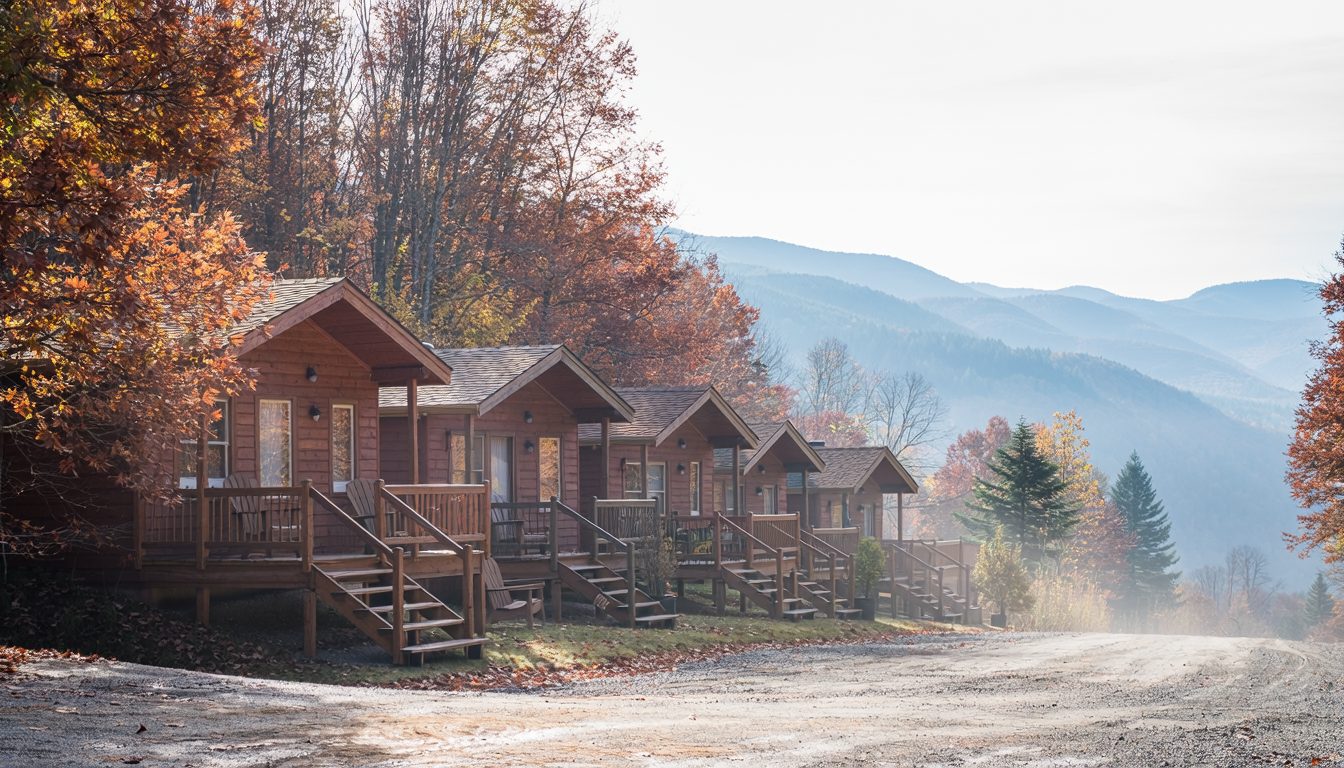
A pandemic-era rush into mountain cabins left Fannin County, Georgia, with more rentals than renters could fill. In this Blue Ridge Mountains county of about 25,000 full-time residents, roughly 75 to 80 percent of real estate business involves vacation homes, second homes, and investment properties. So, most people who buy here buy a cabin to visit part-time or to rent out. When pandemic buyers arrived, many put their new cabins straight onto rental programs, and the result was a glut in rental supply.
Steve Tucker of the Tucker Silva Team at Engel & Völkers North Georgia Mountains has worked the Blue Ridge market for about 12 years. He says the surplus cut into rental income, and cabin prices have adjusted downward as a result.
Supply Outran Demand
During the pandemic peak, the Tucker Silva team received as many as 28 offers on a single listing. That pace did not last. As rental inventory climbed, investors who had expected a gross return of roughly 10 percent fell short. A buyer who paid $600,000 for a cabin would expect about $60,000 a year in rental income, but that buyer now competed with far more cabins for the same pool of renters.
Management companies, meanwhile, grew selective about which properties they would take on. They turned away cabins without a view or creek frontage because they lacked the staff, cleaners, and maintenance crews to service the expanded inventory.
According to Tucker, most owners who are not hitting their return targets are now trying to sell. Some have shifted to long-term rentals, but outright sales are the more common response. The exits show up in the listing data: AirDNA counted nearly a third fewer active short-term rentals in Blue Ridge in August 2026 than a year earlier, a sign that the surplus has started to shrink.
What Newcomers Overlook
Beyond rental economics, many buyers arrive unprepared for how mountain properties work. A large share of buyers in the Blue Ridge market come from Florida. They are drawn by the area’s four-season climate, its low population density, and its access to national forest land, which covers roughly 40 percent of the county and is open to hunting, fishing, and kayaking.
But the infrastructure differences between a Florida suburb and a north Georgia mountain community catch many newcomers off guard. Public water and sewer are scarce here, so buyers have to vet systems that a suburban town would maintain for them. Drinking water is the first test. The area has six different sources: public water, private wells, shared wells, spring heads, shared spring heads, and community water systems. Each carries different upkeep and different risks, so buyers need to know which one serves a property before they commit. Not even public water is a sure thing: the November flooding of the Toccoa River left McCaysville without safe drinking water.
Septic systems are the second adjustment. Of the hundreds of properties the Tucker Silva team has sold over the past 12 years, Tucker estimates fewer than a dozen were connected to public sewer. Virtually everything else runs on septic, and on raw land, the viability of a purchase can hinge on a soil evaluation. Properties on lakes or in floodplains sometimes require pumping the septic drain field uphill, away from the water, to meet regulatory requirements. Tucker says that when selling raw land, the first question is whether the soil evaluation will support a septic tank, and sometimes it will not.
Retirees Steady the Market
While investors retreat, retirement buyers are holding the market up. Tucker estimates that about a quarter of purchasers plan to retire in the area, and that segment has weathered the downturn better than the rest. Tucker, who is nearly 65, remembers financing his first home at 14 or 15 percent. Buyers his age, he says, won’t let a rate near 7 percent stop a move they have planned for years.
Investors face harder math. Borrowing at 3 percent made a 10 percent return on a rental cabin manageable. At 7 percent, the numbers get much harder to make work, especially for cabins that can’t command premium nightly rates.
“The interest rates are the biggest headwind that we have at the current time,” Tucker says. He expects activity to pick up if rates fall below 7 percent, a threshold the national average had not crossed as of mid-November. Until financing gets cheaper, the buyers keeping Blue Ridge moving will be the ones buying a place to live, not a rental to run.
About the Expert: Steve Tucker is a real estate agent with the Tucker Silva Team at Engel & Völkers North Georgia Mountains in Blue Ridge, Georgia. He works with buyers and sellers across the Blue Ridge market in Fannin County.
This article is intended for informational purposes only and does not constitute legal, financial, or investment advice. The views and opinions expressed herein reflect those of the individuals quoted and do not represent an endorsement of any company, product, or service mentioned. Readers should conduct their own due diligence and consult qualified professionals before making any investment decisions.