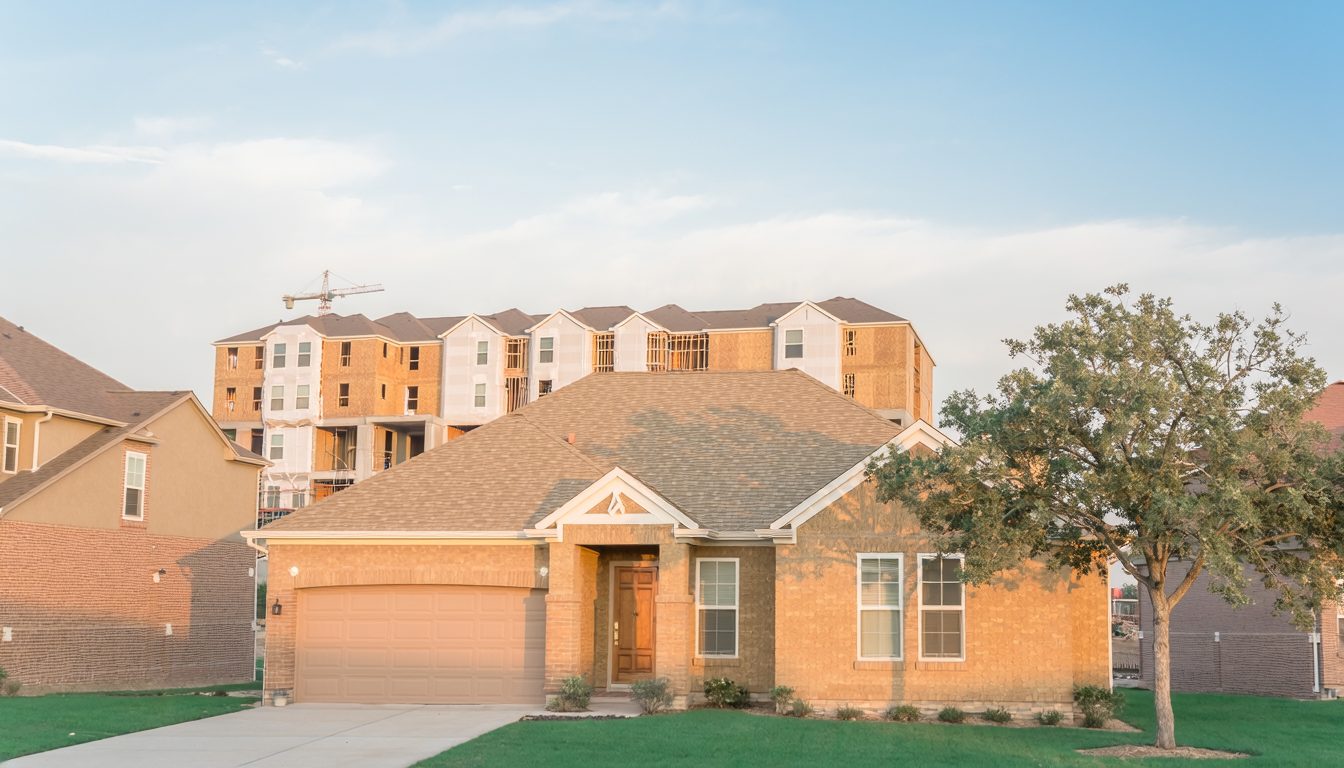
For years, single-family rentals in North Texas followed a dependable formula: buy a house, rent it for about 1% of the purchase price each month, and hold. That formula is under strain. Rents have stalled as a wave of new apartments competes for tenants, while homeowners with low-rate mortgages are staying put, leaving fewer properties to buy.
James Spence, who leads The Spence Team with StepStone Realty in Mansfield, Texas, says the result is a more selective investor class. Among established operators, “everyone’s just being a little bit more cautious,” he says.
The Rental Math Broke
In Spence’s rental portfolio, a long-standing rule of thumb held that a property is a good deal when its monthly rent is high enough relative to what the investor paid for it. When rent is strong compared with the purchase price, the income can cover the mortgage, taxes, insurance, and upkeep and still leave a return. His team used to hit that benchmark consistently. Now, he says, rents have not really increased, and some face downward pressure, while purchase prices have not fallen to match. As a result, more homes fail the test, and fewer deals make financial sense on paper.
Two forces are behind it. The first is supply: multifamily construction has surged across North Texas and around the country, adding units that compete for the same renters. The second is preference: Spence says renters from the millennial generation and younger tend to choose apartments for their amenities and activities, rather than paying more for a single-family home as earlier generations did.
“Either rental rates are going to have to increase, or property values are going to have to decrease,” Spence says. For now, “it’s not clear which is going to happen.”
Sellers Are Staying Put
On the acquisition side, the pipeline is thin. Many homeowners who might have sold over the past couple of years held on because they have “a really comfortable interest rate on a long-term mortgage,” Spence says.
Downsizing often does not change that calculation. Even when owners buy a less expensive home, higher rates can leave the new monthly payment roughly the same as the old one, removing the financial reason to move.
Uncertainty about the Federal Reserve’s next moves on interest rates compounds the problem. Investors are left with fewer properties to choose from and less clarity on where financing costs are headed.
Caution Becomes the Strategy
The investors who remain active are changing how they operate. Spence, who runs a monthly DFW investor meetup and belongs to national groups including the American Association of Private Lenders, says less experienced operators, particularly wholesaling-only entities, have largely been pushed out.
Established firms with employees and overhead cannot simply stop doing business. Spence says his team’s response is to be “more cautious and a lot more disciplined” across buying, rental operations and lending. He compares the shift to how banks behave when money tightens: lenders charge more because they are less certain of repayment.
He sees the pullback as probably a good thing. Talking with investors in other states also helps, he says, because markets tend to be cyclical, and what happens elsewhere often signals what is coming to Texas.
Creative Financing Has Limits
Elevated rates have pushed creative financing into the spotlight as a way to keep deals moving when conventional loans are expensive. Instead of taking out a new mortgage, the buyer takes over or builds on the seller’s existing loan. The appeal is that many older mortgages carry far lower rates than anything available today, which can make a deal work for both sides.
His team uses these tools regularly, and he compares them to golf. Most shots call for a few favorite clubs, “but it’s nice to have a full bag” for the unusual ones.
In one recent deal, a seller moving out of the country wanted to maximize his cash at closing. Spence’s team reached his number through a temporary subject-to arrangement on his existing mortgage, completed a quick renovation, and relisted the home. The original loan will be paid off when the property sells to an end buyer.
In another, a seller wanted rental income without landlord duties. The team bought the home through a wrap, handled by an attorney’s office with full disclosure to all parties, then offered seller financing to a buyer who could not yet qualify with a traditional lender. Spence says that buyer is now working to refinance.
Spence is wary of newcomers who treat creative financing as their only way to acquire property. It works, he says, “as long as it’s a completely transparent process,” run through a law firm or an experienced title company. He suspects some operators are unaware of recent changes in Texas, and while “I’m not seeing a wholesale change in how people are doing those transactions,” he believes “it should be changing the way people do things.”
The stakes are real. If a deal goes wrong and ends up in court, he says, judges are “not going to look very favorably at somebody that didn’t use the resources that were available to them.”
Knowing Both Sides Matters
A tighter market also raises the cost of blind spots. Many agents, Spence says, either over- or underestimate what improvements cost, which leads to inaccurate pricing. Many investors, meanwhile, do not understand what is normal, customary, or negotiable in a standard transaction.
In the past, he says, some agents took the easy way out by asking sellers to fix every flaw before listing, in effect asking the seller to do the agent’s job. Going forward, he expects to see “the advent of the hybrid agent who kind of does both.”
Dual roles carry legal limits. Under Texas rules, Spence notes, once he offers to list a home, he is restricted from buying it as an investor. His team walks sellers through both paths, a discounted cash sale with a certain closing date or an MLS listing that typically brings a higher price on a less certain timeline, and lets them choose.
Where Opportunity May Surface
Looking to 2027, Spence expects distressed multifamily assets to come to market. Syndicators who bought with bridge financing, planning to stabilize properties and refinance into long-term debt, may have to sell at a discount if they cannot meet those requirements.
He also points to opportunity zone investments nearing the 10-year mark, when holders can avoid tax on their gains. He expects many of those properties to be sold at that point, adding liquidity to the market.
Two wildcards remain: energy prices and data centers. Spence frames the oil question as whether crude climbs toward $150 a barrel or settles back near $70, and he sees potential in land tied to data center projects despite national pushback. He expects a clearer picture on both in the first half of 2027.
About the Expert: James Spence leads the Spence Team with StepStone Realty in Mansfield, Texas. With his wife, he runs fix-and-flip, rental, and lending businesses in the Dallas-Fort Worth metroplex.
This article is based on information provided by the expert source cited above. It is intended for general informational purposes only and does not constitute legal, financial, or real estate advice. Readers should conduct their own research and consult qualified professionals before making any real estate or financial decisions.