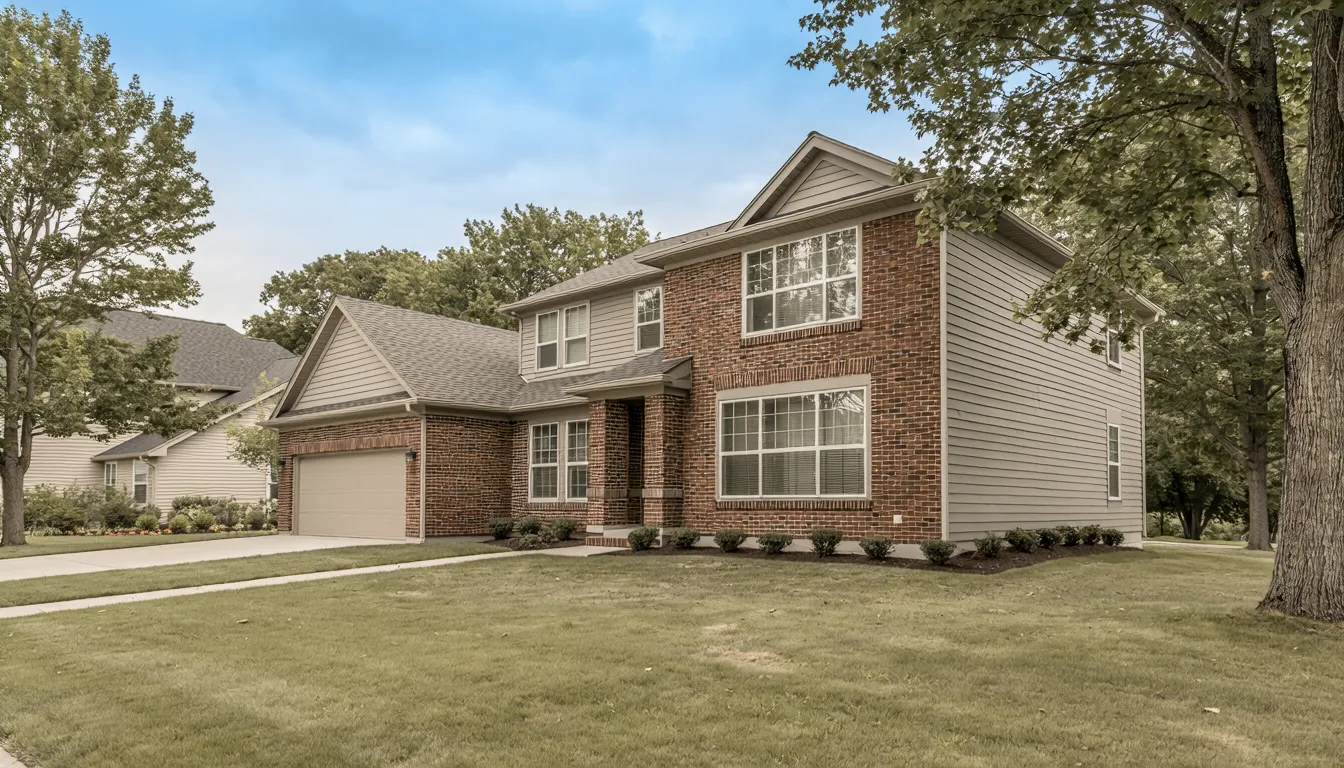
When home buyers evaluate Chicago’s western suburbs, many default to a simple rule: the closer to downtown, the more expensive. But that logic misses what actually drives prices in this part of the market, according to Sean Zhu of Frog City Realty LLC. Zhu works across the western and northern Chicago suburbs. He says the suburbs that draw the most competitive offers are not necessarily the closest to the Loop. Instead, they have express commuter rail, self-contained commercial districts, and consistent school quality from elementary through high school.
As of fall 2026, the broader Chicago market is shifting toward more balanced conditions after years of strong seller activity. In this market, knowing what supports prices in specific towns matters more than it did when all prices were rising.
Express Rail Shortens Commutes
The Metra commuter rail system serves dozens of suburban stations, but not all lines operate the same way. Zhu points to a practical difference that many out-of-market buyers overlook: “They provide express trend during the peak time. Not every train line does.” Express trains run from Naperville and Aurora into downtown Chicago. That service shortens commutes enough to make these towns functionally closer to the city than nearer suburbs served only by local-stop trains.
For buyers choosing between two similarly priced suburbs, express versus local service affects daily schedules, childcare logistics, and willingness to take a job downtown.
A Self-Contained Downtown
Express rail gets buyers to the city faster. But Zhu says the bigger draw is that Naperville residents do not need to go into the city as often. Naperville’s dense commercial center, with restaurants, bars, and shops, works as a destination on its own. “You don’t have to go back to the city during the weekend,” Zhu says. Buyers can meet friends, eat out, and run errands without leaving town.
This self-sufficiency sets Naperville apart from suburbs whose main appeal is proximity to downtown jobs. According to Zhu, the combination of express rail and a walkable downtown draws buyers who could afford to live elsewhere.
Consistent Schools, All Grades
The third factor supporting Naperville’s prices is its school districts. Zhu says few western suburbs match their strength across every grade level. He notes that the area has strong ratings “not only for high school but from the elementary school.” Consistent quality across all grades matters for families making a long-term housing decision. A suburb with a strong high school but weaker elementary options creates a mismatch for families with younger children.
Zhu acknowledges that northern suburbs such as Vernon Hills and Buffalo Grove have comparable school quality. But he says buyers tend to stay in the area they already know. Families renting on the west side rarely cross over to consider the north side, and vice versa. As a result, the western and northern suburbs function as somewhat separate markets, even when their amenities overlap.
Balanced Market Sharpens Comparisons
Zhu says the Chicago market is moving toward more balanced conditions after at least five years as a strong seller’s market. Inventory is slowly returning, and interest rates remain elevated. With more time and options, buyers can now see the differences between individual suburbs more clearly.
Not every western suburb shares Naperville’s combination of express rail, a walkable downtown, and top-rated schools at every level. Pricing also varies within the northern suburbs, Zhu notes. Buffalo Grove offers newer construction and larger lots at lower prices, while Vernon Hills offers more established neighborhoods. According to Zhu, an agent’s job is to match a buyer’s budget to specific needs. For some buyers, that means a newer home with a bigger yard. For others, it means a traditional neighborhood with established streets and mature trees.
Chicago Prices Keep Rising
Zhu sees the Chicago metro area as undervalued relative to coastal cities. According to Zhu, markets in New York, Los Angeles, and San Francisco have seen price corrections over the past two years, while Chicago home prices have kept rising. He credits part of that strength to commercial activity. New entrepreneurs, warehouse buyers, office tenants, and retail business owners are adding jobs and economic activity. Zhu says that growth will support home values over time.
For buyers weighing the western suburbs, Zhu’s experience points to a clear takeaway. Naperville’s prices rest on three lasting, location-specific features: express commuter rail, a self-contained downtown, and consistent school quality across all grade levels. These features do not carry over to neighboring towns, even ones that look similar on a map.
About the Expert: Sean Zhu is with Frog City Realty LLC, working across commercial and residential transactions in the Chicago suburbs.
This article is intended for informational purposes only and does not constitute legal, financial, or investment advice. The views and opinions expressed herein reflect those of the individuals quoted and do not represent an endorsement of any company, product, or service mentioned. Readers should conduct their own due diligence and consult qualified professionals before making any investment decisions.