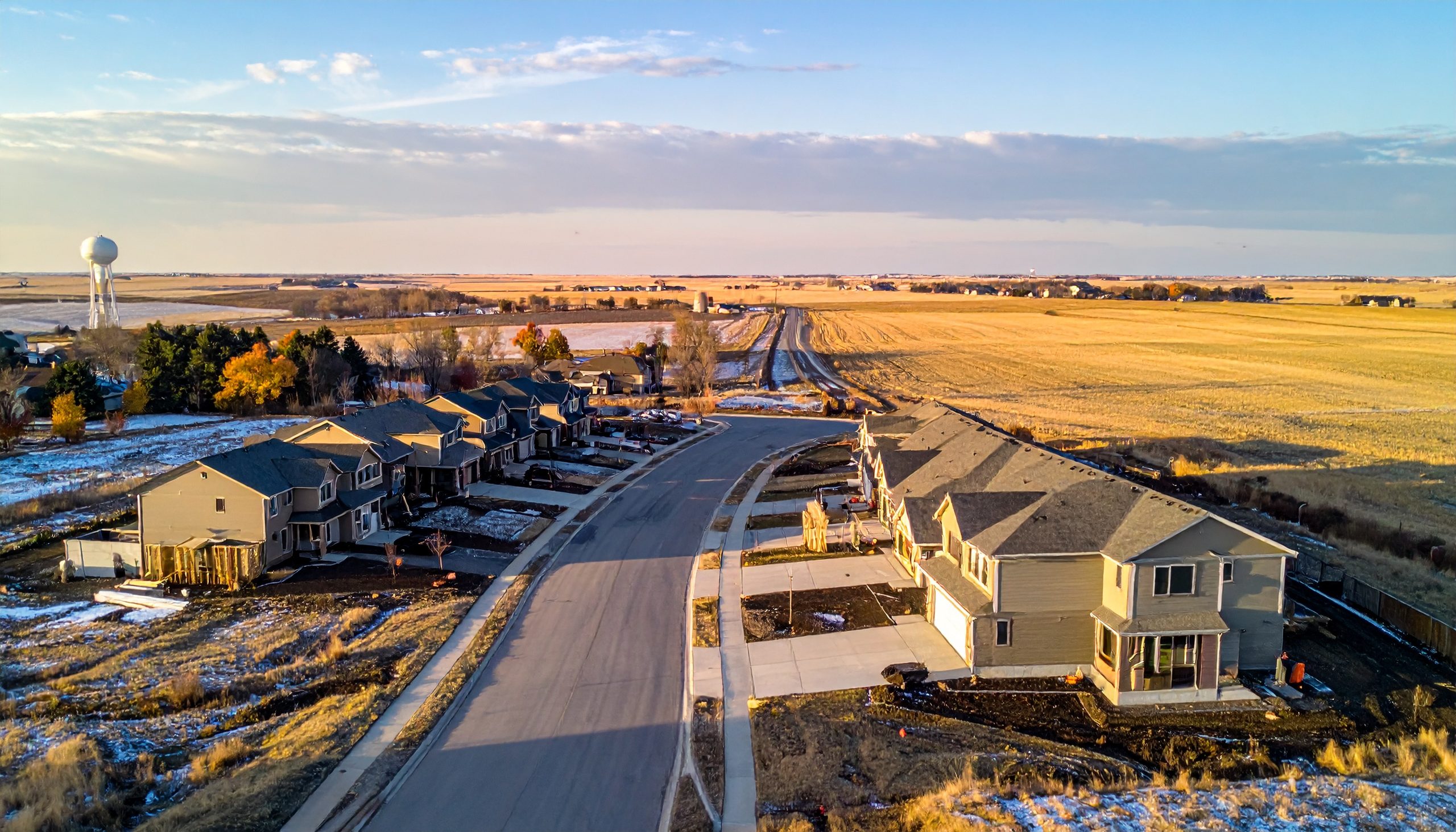
Two North Dakota cities a short drive apart on Interstate 29 are giving buyers and investors very different experiences. In Grand Forks, inventory is so tight that multiple offers are routine and sellers rarely help with closing costs. In Fargo, buyers are winning repairs, credits, and concessions they haven’t seen in years, such as sellers covering closing costs or paying for problems found during inspection, according to Jim Rentfrow, a member of the leadership team at The Elm Group brokered by REAL.
The team works in both cities, which gives Rentfrow a side-by-side view of how differently they behave. Rentfrow, who also works as an agent and coaches the team’s agents, says the local factors behind the split are unlikely to change soon.
Grand Forks Falls Behind
Grand Forks has a structural housing shortage anchored by the University of North Dakota and Grand Forks Air Force Base. Both bring a steady stream of students, staff, and military families who need somewhere to live, but construction hasn’t kept pace. Rentfrow says the city would need several years of much faster building just to catch up, a gap a regional housing study also documented. With so few homes available, rentals rarely sit empty and prices keep climbing, he says.
The competition is fierce. Rentfrow recently helped a couple buy in Grand Forks only after they lost several earlier bids, even though they had offered well above the asking price each time. Buyers often waive inspections and pay for items sellers would usually cover, such as radon mitigation systems, which vent a naturally occurring radioactive gas out of the home. In Fargo, he says, many sellers chip in toward buyers’ closing costs, the fees due when a sale is finalized. In Grand Forks, that kind of help is far less common.
High land costs also limit new construction. Rentfrow says a small number of families own much of the land around Grand Forks, which pushes prices up. The same house, he says, costs noticeably more to build in Grand Forks than in Fargo, largely because of the price of the lot. “You can’t go up and build four duplexes side by side and make it pencil out in Grand Forks,” he says. Investors who buy brand-new homes or duplexes to rent out can sometimes make the numbers work in Fargo, especially with builder discounts for buying several at once, but rarely in Grand Forks.
Fargo’s Special Assessment Problem
Fargo buyers have more room to negotiate, but special assessments, the charges that pay for streets, sewers and other infrastructure in newer areas, vary sharply by neighborhood. Some areas carry none. Others carry tens of thousands of dollars in assessments, which homeowners typically pay off over many years on top of their property taxes. Rentfrow says that can add hundreds of dollars to a monthly payment, enough to change what a buyer can afford.
Neighborhoods without assessments tend to see higher demand and faster sales. Rentfrow’s team raises the issue early with buyers relocating from other states, since many have never encountered charges this large. Local buyers often already know which areas to steer clear of, he says, naming Horace as one where assessments can run higher.
Builders are adding pressure. With a lot of new construction unsold, some builders are offering sizable incentives to close sales, Rentfrow says. That can slow sales of nearly new homes nearby. One of his South Fargo listings is competing with builders who can put up almost the same house a few blocks away, sometimes for less once promotions are factored in.
For buyers weighing Fargo against Moorhead on the Minnesota side, the comparison gets more complicated. Moorhead home values are lower, Rentfrow says, but Minnesota’s higher income taxes and the lack of North Dakota’s property tax credit can make owning there cost more than the price suggests.
A Credit Worth Knowing
North Dakota’s Primary Residence Credit takes a fixed amount off the yearly property tax bill for homeowners who apply and live in the home as their main residence. Lawmakers more than tripled the credit last year using earnings from the state’s oil-funded Legacy Fund, and for tens of thousands of households it wiped out the property tax bill entirely, according to state figures.
Rentfrow says his own bill dropped by more than a third, and he estimates the savings would be similar for a typical Fargo home, a meaningful cut to one of the highest ongoing costs of ownership. Many buyers don’t know the credit exists, so his team brings it up with first-time buyers and relocating clients.
State Help for Buyers
First-time buyers are getting older. When Rentfrow started in real estate, he says, most first-time buyers were young adults just starting their careers. Today, many are well into their thirties or older by the time they buy.
North Dakota’s first-time homebuyer program helps offset that for income-qualified buyers. Run by the state’s housing finance agency, it offers mortgage rates noticeably below what conventional lenders are quoting, Rentfrow says, along with help covering the down payment and closing costs. That assistance is forgiven entirely if the buyer keeps the home and makes payments for several years. He expects the program to keep drawing buyers to the North Dakota side of the border.
The Ground Beneath Homes
The region sits on an ancient lake bed, and that shapes due diligence. Rentfrow says radon turns up in nearly every home from Grand Forks to Fargo, and foundations, especially block foundations from the 1950s, commonly shift an inch or two. An hour east in Fergus Falls, Minnesota, he says, a block foundation of the same age is often in near-perfect shape.
Relocating buyers need that context early, along with more time. One Grand Forks relocation Rentfrow just closed started six months before the move, because buyers can no longer count on finding a home within a few weeks of arriving.
Looking Ahead to 2027
Rentfrow expects Grand Forks to stay short on inventory for the next three to five years, even with some new building underway. In Fargo, he expects special assessments and high payments to remain hurdles. “Sellers are going to have to offer more and do more repairs in order to get things in line with what a buyer is expecting,” he says.
The calendar matters too. The stretch from Thanksgiving through January is the slowest time of year, he says, with temperatures that can fall to 40 or 50 below zero.
For investors, the two cities offer different trade-offs. Grand Forks pairs low vacancy and strong appreciation with aggressive bidding. Fargo offers more room to negotiate, as long as buyers account for special assessments that vary from one neighborhood to the next.
About the Expert: Jim Rentfrow is a member of the leadership team at The Elm Group brokered by REAL, based in Fargo and Grand Forks, North Dakota. In real estate since 2014, he works as an agent, coaches the team’s agents and helps lead marketing and daily operations.
This article is based on information provided by the expert source cited above. It is intended for general informational purposes only and does not constitute legal, financial, or real estate advice. Readers should conduct their own research and consult qualified professionals before making any real estate or financial decisions.