
Move-In Ready Homes Command a Growing Premium in O'Fallon, Illinois


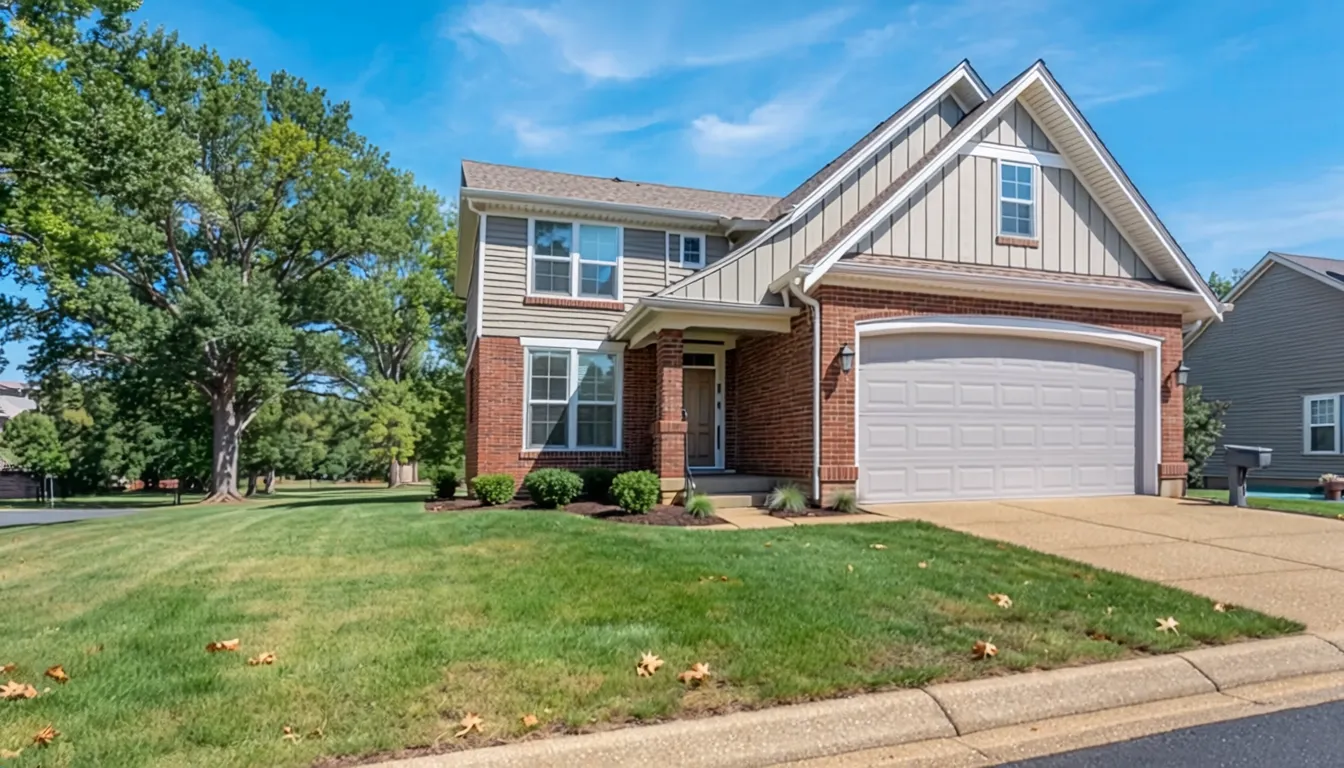
In parts of the Midwest where the housing market still favors sellers, a split is emerging that has less to do with location than with condition. Two houses can sit side by side in the same neighborhood, built around the same time, and sell at noticeably different prices. The difference, according to Jean Lewis, who leads a five-person team serving the O’Fallon and Edwardsville markets on the Illinois side of St. Louis, is whether the home needs work. Buyers squeezed by higher rates, rising insurance, and Illinois’s steep property taxes have no financial room left for renovation after closing.
Lewis says the conversations with buyers have shifted noticeably over the past year. Buyers are no longer focused on just the mortgage number. They are looking at the full monthly obligation – principal, interest, taxes, and insurance – and that fuller picture is changing what they are willing to buy.
Why the Total Payment Matters More Now
With mortgage rates in the sevens, property taxes in Illinois running higher than most states, and insurance costs climbing, the monthly housing bill has grown well beyond the mortgage itself. In the O’Fallon market, where the average home price runs around $330,000 according to Lewis, those added costs eat into what a household can afford after move-in.
“People are more focused on not just what their mortgage is going to be, but what the full payment’s going to be,” Lewis says. That awareness has a direct effect on which homes attract offers and which sit. When the monthly obligation is already stretched, there is nothing left for a new roof, updated kitchen, or deferred repairs.
The Renovation Budget Has Disappeared
In a lower-rate environment, a buyer might absorb a home’s flaws and plan to fix them over time. At today’s costs, that math does not work for many households. Lewis says buyers at the price points she works in “don’t have that extra 20, 30, $40,000 to do renovations.” The result is a growing premium on homes that are ready to live in from day one.
This pattern is especially pronounced among military families stationed at nearby Scott Air Force Base, many of whom know they will be reassigned within a few years. They lack both the time and the budget to take on a project. But Lewis says the preference for move-in ready homes extends beyond military buyers. Across her market, buyers are choosing to pay more for a home in strong condition rather than save on purchase price and face repair bills they cannot fund.
Sellers who have let maintenance slide – not dramatic neglect, just the slow accumulation of deferred updates – are discovering that their homes sit longer and eventually require price reductions. Lewis notes that buyers “are willing to pay for a home that’s in better condition, even though it might be right next door to a home that’s fine, just hasn’t been updated.”
What Sellers Face in a Selective Market
Lewis says the O’Fallon market still has limited inventory – roughly 2.3 to 2.5 months of supply, according to her tracking, up from about 1.6 months a year earlier. That is still a seller’s market by traditional standards. But the increase means buyers have just enough choice to be selective, and they are using that leverage to avoid homes that will cost them money after closing.
Well-priced, well-maintained homes still move within days, Lewis says. The homes generating price reductions are not in bad neighborhoods or undesirable locations. They simply need work that today’s buyers cannot afford to take on. Sellers who still expect their homes to sell within a week regardless of condition are, in Lewis’s words, “very disappointed and panicked” when that does not happen – and price reductions are following quickly.
The gap between move-in ready and everything else is financial, not cosmetic. Today’s total housing costs leave almost no cushion for post-closing expenses. For sellers preparing to list, the cost of deferred maintenance is no longer just a lower offer. It is weeks of extra time on the market followed by a price cut that may exceed what the repairs would have cost.
About the Expert: Jean Lewis leads Jean Lewis Homes at Keller Williams Pinnacle, covering the Metro East side of St. Louis, including O’Fallon and Edwardsville, Illinois, and has worked the market for 29 years.
This article is intended for informational purposes only and does not constitute legal, financial, or investment advice. The views and opinions expressed herein reflect those of the individuals quoted and do not represent an endorsement of any company, product, or service mentioned. Readers should conduct their own due diligence and consult qualified professionals before making any investment decisions.
Similar Articles
Explore similar articles from Our Team of Experts.


So you’re moving to a new city, and the research has already begun. You can learn a metro’s prices, tax rates, and school ratings from a thousand miles away. What the research can’t show you is which neighborhood fits the life you’ll actually lead there. Helping you close that gap is now central to a ...

The Department of Veterans Affairs has narrowed the list of property conditions that can hold up a VA-backed purchase. Under an update to the VA’s Lender’s Handbook, appraisals ordered from May 1, 2026, no longer require repairs for peeling paint on homes built in 1978 or later, or for defects in detached sheds and garages. ...
When 60 to 70 percent of buyers in a market are spending accumulated real estate wealth rather than current earnings, the market operates by different rules than national economic indicators suggest. In Santa Barbara, that disconnect between price levels and income-based affordability is not a temporary distortion – it is the market’s defining feature, according ...
In most of Bucks County, Pennsylvania, the housing market runs on familiar suburban logic: limited inventory, competitive bidding, and first-time buyers stretching to qualify. In Pipersville, at the county’s northern edge, the math works differently. Farms outnumber listings, acreage is measured in dozens rather than fractions, and the buyers who show up are coming from ...
Prospective homebuyers waiting for mortgage rates to fall may be waiting for conditions that only a major global crisis would create. Current 30-year fixed mortgage rates of about 7.25% are not an anomaly, according to Jason Huerkamp of Huerkamp Home Group in the Twin Cities. That figure matches the historic 50-year average. The low rates ...