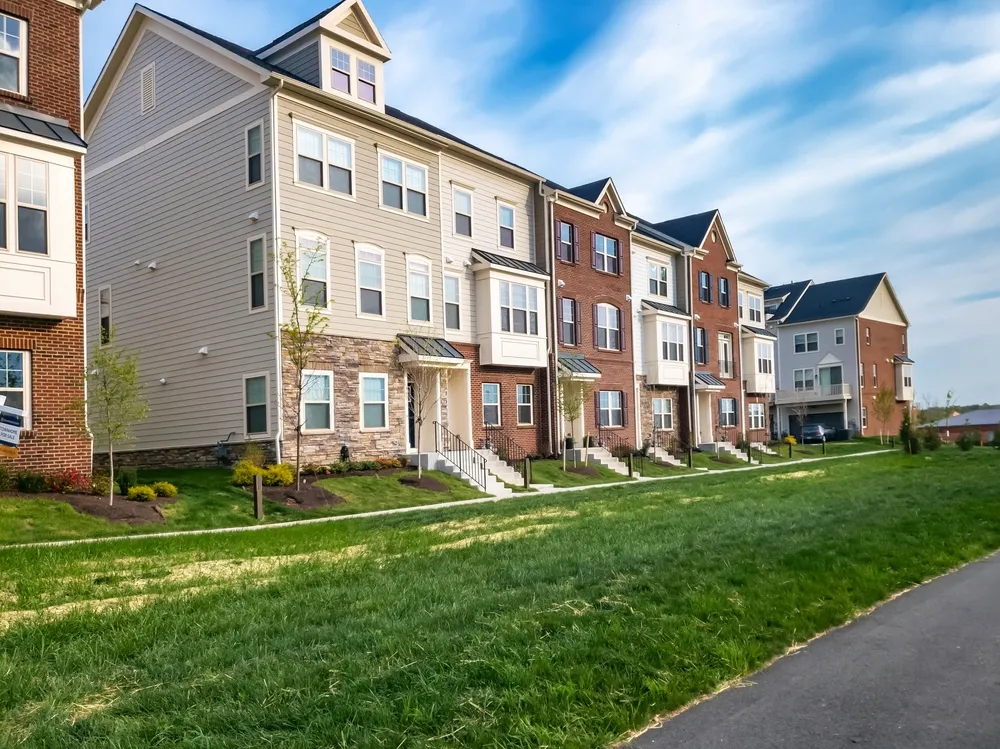
The Washington, D.C. metro housing market has long benefited from a structural floor most American cities lack: a permanent federal employment base, a growing tech sector, and a steady pipeline of military and government-adjacent relocations. But that stability hasn’t insulated the region from a growing tension between what sellers believe their homes are worth and what buyers are willing to pay, particularly when a property falls short of move-in condition.
Amanda Jones, team lead at Long & Foster Real Estate and a 35-year veteran of the Northern Virginia market, describes a buyer pool that has become unusually demanding about finish quality. “You would think that HGTV would teach people to see the potential, but they need to be shown the potential more than ever,” she says. “They want to see it staged and perfect, all the finishes perfect, and they don’t want to do anything.”
Jones attributes part of this to economics: with area home prices high enough that buyers stretch to close, few have renovation budgets left over. The result is a market where condition functions as a gating mechanism, properties that present well move, and those that don’t sit longer than they would have two years ago.
Sellers and Buyers Disagree on Where the Market Stands
Average days on market in the D.C. metro area have stretched to around 35 days, according to Jones, up from the single-digit timelines that characterized the post-pandemic period. Homes priced under roughly $900,000 still tend to move quickly, while properties above $2 million have become less predictable, with some selling fast and others lingering.
The disconnect runs deeper than pace. “The sellers still feel that it’s a seller’s market. The buyers think it’s a buyer’s market. It’s probably somewhere in between, but the buyers and sellers aren’t on the same page on what the market is really doing,” Jones says.
Buyers pause because interest rates remain higher than what felt normal during the pandemic years, while sellers resist price reductions because they recall a market where multiple offers arrived in days. Jones says she resists dropping prices prematurely, preferring to explore staging adjustments or other presentation changes before concluding that price is the issue.
Equity Positions Have Changed Seller Behavior
One structural difference Jones highlights between the current cycle and earlier ones – particularly the mid-2000s – is the depth of homeowner equity. “I think this may be the highest time of my entire career where the majority of people have more than 20% invested in their home,” she says. “We’ve got a huge population that has completely paid off their home, which is so unlike previous years where people were getting in for 0% down, maybe interest only, where they had zero equity, maybe negative.”
That equity cushion changes seller behavior. Homeowners aren’t forced to sell, which limits distressed inventory. But it also means many owners who might otherwise move, because they want more space, or less, remain locked in by reluctance to trade a low mortgage rate for a higher one. Jones notes that some have opted for construction or HELOCs to stay in place, though HELOC rates that aren’t fixed have made that calculus less attractive over time. “People are finally letting go of those very low Covid interest rates to really get the house they want,” she says.
For buyers, this means fewer homes hitting the market than demand would otherwise produce, and the ones that do appear carry higher price expectations from owners who aren’t under pressure to sell.
Staging as Active Market Intelligence
Rather than treating staging as a one-time setup, Jones describes an iterative process where she adjusts presentation based on buyer reactions observed during showings. On one listing, she added new carpet in a couple of rooms, painted a fireplace, brought in additional artwork, and installed a candy bar in an underutilized space, all after watching how the first wave of buyers moved through the home. “That has completely changed the reactions in all of those spaces,” she says.
On another property, homeowners had kept a house staged with their own furniture and maintained perfectly, but after they moved out and professional staging went in with fewer pieces, the first showing produced an offer.
Jones says she attends every showing on larger listings specifically to observe buyer reactions and make targeted adjustments. The approach treats presentation not as a fixed marketing decision but as an ongoing feedback loop between the property and its audience.
Where Investors Might Look
For capital looking to enter the D.C. metro area, Jones points to the condo market as a potential opportunity. “The prices on condos are down across the board, and I think they will come back in value if they’re willing to ride it out and rent them,” she says. Condos rent well in the region, and cash buyers in particular may find favorable entry points, especially in buildings about to undergo renovations, where financing complications deter other purchasers.
Jones cautions, however, that special assessments in condo buildings have become a source of deal failure. In one building she describes, a large percentage of owners haven’t paid a special assessment, making units difficult to sell and forcing owners to rent instead. For investors, that dynamic depresses entry prices but introduces risk that requires diligence before committing capital.
Government Employment Still Sets the Rhythm
The market’s dependence on federal employment creates a vulnerability most regions don’t share. A government shutdown last November hit the market noticeably, with the townhouse segment absorbing particular impact. Jones says the effect extended beyond federal employees themselves. “Even if you’re not employed by the federal government, knowing that federal employees weren’t getting paid, whether or not you were employed, you knew people that weren’t getting paid heading into the holiday season.” Non-federal buyers pulled back out of general uncertainty, and the market recovered only once employees returned to work and received pay.
Jones says her team watches for signals from government employment and interest rate policy, and works with lenders to identify programs that can improve affordability. “A small decrease in rates increases the affordability a lot,” she says. In a region where prices are already high, even modest rate movement determines whether buyers at the margins can act, or continue waiting.
About the Expert: Amanda Jones is team lead at Long & Foster Real Estate, a 35-year veteran of the Northern Virginia real estate market.
This article is based on information provided by the expert source cited above. It is intended for general informational purposes only and does not constitute legal, financial, or real estate advice. Readers should conduct their own research and consult qualified professionals before making any real estate or financial decisions.