

In Metro-West Boston, Transit Access May Matter More Than Lot Size


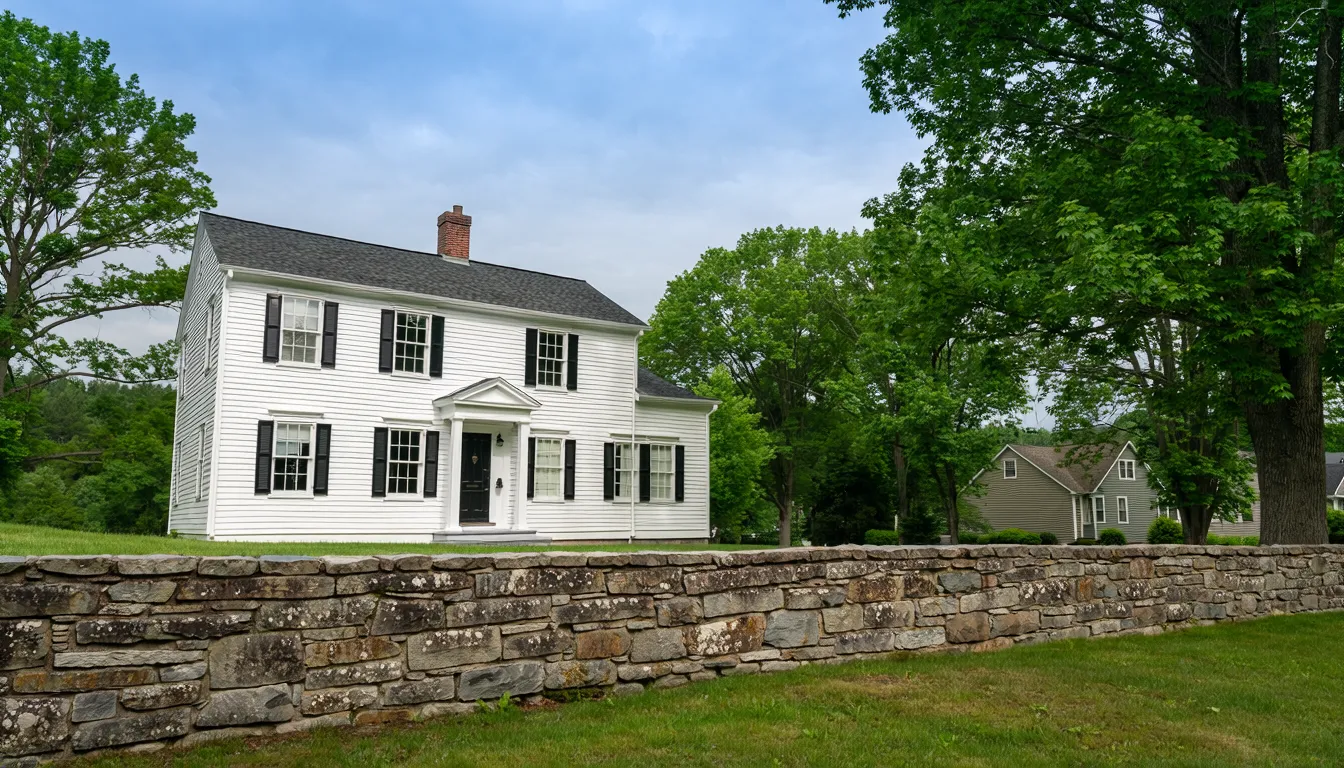
When buyers relocate to the suburbs southwest of Boston, the instinct is often to chase space: a bigger yard, a quieter street, and more room to spread out. But in towns such as Westwood, Dover, and Norwood, the homes that hold their value best are not always the ones on the largest lots. They are the ones near a train station or bus line, according to Tammy DeWolfe, founder of the DeWolfe Group. DeWolfe has sold homes in all three Massachusetts towns for more than two decades.
She sees a consistent pattern in how transit access protects home values. The three towns sit within minutes of one another, yet each offers a very different living experience.
Three Towns Compared
Westwood sits directly on a highway and has both commuter rail and bus service. Norwood, just to the east, has multiple train stations and access to two highways. Dover, a few miles to the west, has large parcels, riding trails, and some of the lowest property taxes in the area. But it has no rail station and no direct highway access. Dover residents must pass through another town to reach either.
“To get to the highway or to a train, you need to go to another town,” DeWolfe says of Dover. That affects more than commute times. It also affects home values when the broader market softens.
DeWolfe has watched this pattern repeat across market cycles. Towns with commuter rail or bus service “always seem to hold their value a little bit higher,” she says. When markets dip, the gap becomes more visible. Towns without transit tend to drop further than their transit-connected neighbors. “When we see a dip in the marketplace, those towns dip a little bit more,” she says.
The Trade-Off Buyers Miss
Dover has real appeal. It shares a top-ranked regional school district with Sherborn. Its large parcels attract equestrian buyers, and its countryside character is hard to find this close to a major city. But Dover’s average home price runs well above Westwood’s. Its lack of transit access also creates a risk that is easy to overlook in a rising market.
Norwood sits at the other end of the spectrum. It is more densely populated and has more modest home prices. Its commuter access helps drive strong rental demand. DeWolfe handles a steady volume of rentals in Norwood, where rents range from $2,500 to $4,400. She describes demand there as constant. Transit access helps keep Norwood’s values steadier during downturns.
Relocating Buyers’ Common Mistake
Buyers moving to the area from other parts of the country often experience sticker shock, according to DeWolfe. As they compare towns, many try to get the most square footage and land for their money. That approach naturally pulls them toward towns farther from rail lines.
Westwood’s inventory tells part of the story. The town typically has only 15 to 25 homes for sale at any time, and DeWolfe says that has been true for about a decade. That scarcity supports prices. But DeWolfe argues transit access is a lasting advantage beyond low inventory. Rail, bus, and highway access make commuting easy, so the pool of potential buyers stays larger in any market.
This does not mean buyers should rule out towns without transit. Buyers who plan to stay long-term and don’t commute may still find Dover’s land, privacy, and schools hard to beat. But for buyers comparing towns, a train station is more than a convenience. It affects pricing, and that effect shows most clearly when the market turns.
Where Westwood Demand Concentrates
In Westwood, the fastest-selling homes are priced between $1.1 million and $1.5 million, according to DeWolfe. Those homes typically sell for about 3% over asking price. Homes priced above $2 million sit longer, partly because buyers at the higher end can afford to wait and be selective.
DeWolfe says Westwood’s condos near the train station are especially sought after. The town has very few condos, so the ones near transit carry added value. Sellers are also adjusting to current conditions. DeWolfe says she is seeing sellers offer closing cost credits and home warranties, concessions she had not seen in several years.
For relocating families, the question is not only which town offers the most house for the money. It is also which town’s home values are most likely to hold if they need to sell sooner than planned.
About the Expert: Tammy DeWolfe is the founder of the DeWolfe Group, covering Westwood, Massachusetts, where she has been a resident for more than 20 years.
This article is intended for informational purposes only and does not constitute legal, financial, or investment advice. The views and opinions expressed herein reflect those of the individuals quoted and do not represent an endorsement of any company, product, or service mentioned. Readers should conduct their own due diligence and consult qualified professionals before making any investment decisions.
Similar Articles
Explore similar articles from Our Team of Experts.


So you’re moving to a new city, and the research has already begun. You can learn a metro’s prices, tax rates, and school ratings from a thousand miles away. What the research can’t show you is which neighborhood fits the life you’ll actually lead there. Helping you close that gap is now central to a ...
The Department of Veterans Affairs has narrowed the list of property conditions that can hold up a VA-backed purchase. Under an update to the VA’s Lender’s Handbook, appraisals ordered from May 1, 2026, no longer require repairs for peeling paint on homes built in 1978 or later, or for defects in detached sheds and garages. ...
When 60 to 70 percent of buyers in a market are spending accumulated real estate wealth rather than current earnings, the market operates by different rules than national economic indicators suggest. In Santa Barbara, that disconnect between price levels and income-based affordability is not a temporary distortion – it is the market’s defining feature, according ...
In most of Bucks County, Pennsylvania, the housing market runs on familiar suburban logic: limited inventory, competitive bidding, and first-time buyers stretching to qualify. In Pipersville, at the county’s northern edge, the math works differently. Farms outnumber listings, acreage is measured in dozens rather than fractions, and the buyers who show up are coming from ...
Prospective homebuyers waiting for mortgage rates to fall may be waiting for conditions that only a major global crisis would create. Current 30-year fixed mortgage rates of about 7.25% are not an anomaly, according to Jason Huerkamp of Huerkamp Home Group in the Twin Cities. That figure matches the historic 50-year average. The low rates ...

