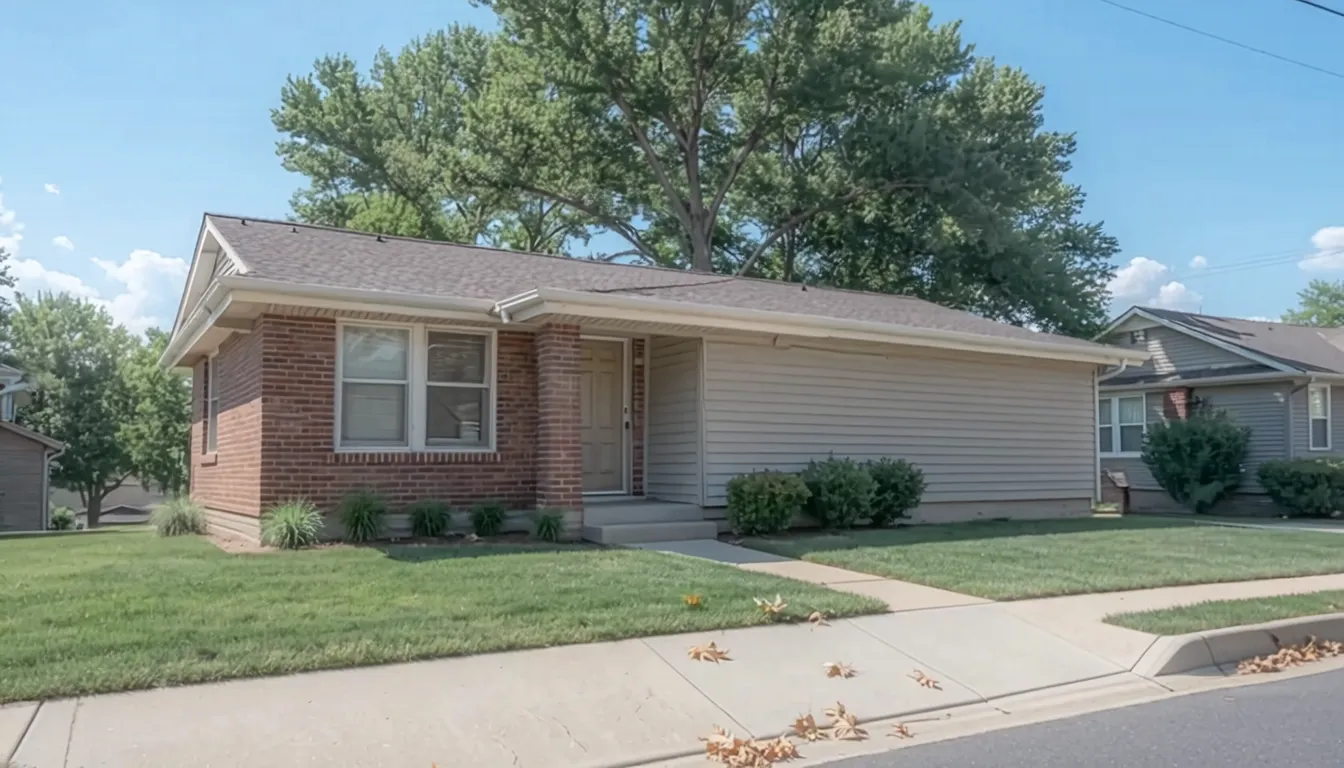
In small towns where the housing stock is old and buyers are stretching to qualify, a deal’s success often depends on whether the seller is willing to pitch in on repairs. In Chester, Illinois, a Randolph County town where most homes were built decades ago and new construction is scarce, that willingness is now the single biggest factor separating transactions that close from listings that cycle back onto the market.
Robin Bert, a real estate agent with Worth Clark Realty who focuses on the Chester area, has watched this play out across roughly 65 transactions so far in 2026. The buyers showing up to look at these older properties are often using government-backed loans – FHA, VA, or USDA – that carry strict property-condition requirements most aging homes cannot meet without work.
That mismatch between what lenders require and what the homes actually look like is where deals live or die.
When Inspections Become Deal-Breakers
A first-time buyer finds a home they can afford, often listed below $150,000. The inspection turns up outdated electrical panels, peeling paint, an aging roof – issues that are nearly universal in homes built decades ago. If the buyer is using an FHA or VA loan, the lender or insurance company may refuse to move forward until those issues are corrected.
At that point, the transaction lands on the seller’s shoulders. Bert described one recent deal where the insurance company flagged a 60-amp fuse box and refused to issue coverage until the electrical system was upgraded. The sellers offered a $2,000 credit. The buyer added $1,000 of their own because they wanted 200-amp service. The deal closed with a brand-new circuit box.
That kind of give-and-take keeps transactions alive. But not every seller participates. “If the seller isn’t willing to do a lot, then the deal is just going to die for those people,” Bert said.
Why Government-Backed Buyers Need More Help
The tension is sharpest with government-backed loans because those programs exist for buyers with limited cash. FHA and VA loans attract first-time buyers with low or no down payments – buyers who do not have thousands of extra dollars for surprise repairs. When a lender flags a roof or an electrical panel, the buyer often cannot absorb the cost alone.
Bert says she sets expectations early. She tells sellers upfront that while cash and conventional buyers are the smoothest path, many active buyers are using government programs because of the better terms. The trade-off is that the property may need work before the lender signs off.
Some sellers get creative. Bert described deals where the purchase price is adjusted upward slightly to offset a repair – a new roof, for instance – because the home will appraise higher once the improvement is made. The buyer pays more on paper but gets a home with a functional roof and a loan that actually closes. The seller moves the property instead of watching it sit.
Others refuse. And in a market where Chester has roughly 20 active listings and no flood of competing offers, a listing that goes back on the market may sit for 60 to 90 days or longer before the next interested buyer appears.
The Cost of Holding Out
Chester does not attract the kind of buyer traffic that forces bidding wars. Properties take 60 to 90 days to move in the current rate environment, according to Bert, and contingencies – especially buyers who need to sell one home before purchasing another – can push timelines to three or four months.
A seller who loses a buyer over a $2,000 repair credit may wait months for the next offer, with no guarantee that offer will be easier to close. Meanwhile, the listing ages, and aged listings tend to attract lower offers.
Bert acknowledged that some deals are not meant to close. A buyer who feels overwhelmed by a long repair list may be better off walking away: “Don’t want somebody to buy something that they’re going to worry continually after they’re in there or have buyer’s remorse.” But she draws a clear line between a deal that falls apart because the home is not right for the buyer and one that falls apart because the seller would not budge on a fixable issue.
For sellers in Chester – where the average home price hovers around $138,000, according to Zillow data Bert cited – the math on a small repair credit often favors closing the deal in hand. The pool of buyers who can pay cash or qualify for conventional financing without any repair conditions is smaller than many sellers assume, especially where first-time buyers using government loans make up a significant share of demand.
About the Expert: Robin Bert is a broker with Worth Clark Realty, covering Chester and Randolph County, Illinois, who has sold in the area for ten years.
This article is intended for informational purposes only and does not constitute legal, financial, or investment advice. The views and opinions expressed herein reflect those of the individuals quoted and do not represent an endorsement of any company, product, or service mentioned. Readers should conduct their own due diligence and consult qualified professionals before making any investment decisions.