Baltimore remains one of the top cash-flow markets in the country, ranking alongside Cleveland, Philadelphia, and St. Louis, according to Andrea Mann, an agent with Iron Valley Real Estate Charm City who works primarily with investors. But the city’s investment landscape punishes assumptions – particularly the assumption that a renovated property will sell for whatever comparable listings suggest it should.
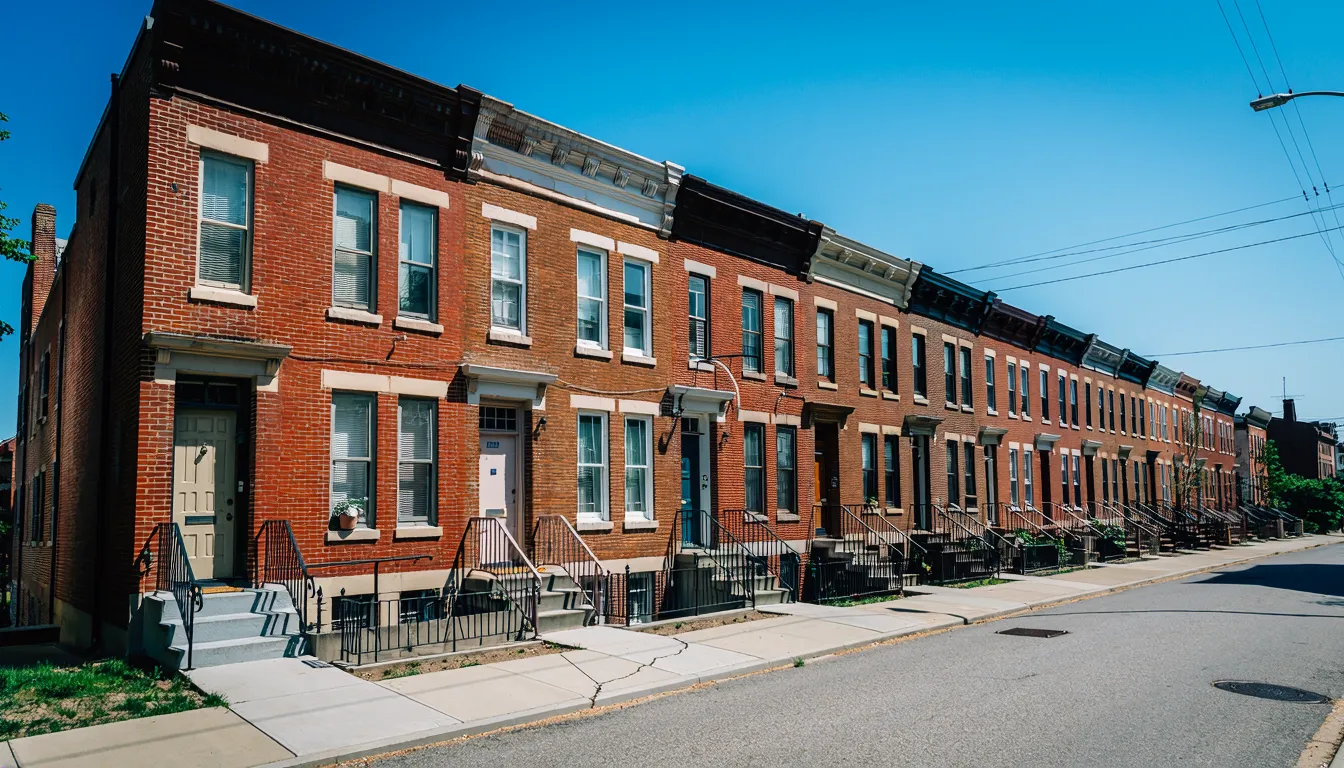
The distinction matters because Baltimore’s neighborhoods don’t transition gradually. “You can drive along one city block, and it’s absolutely gorgeous,” Mann says. “You turn the corner, and you feel like you need to lock your windows because it just hasn’t even started yet.” Investors are renovating houses next door to properties with no roof – something Mann says wouldn’t have happened years ago, but the math now justifies it.
That block-by-block variance is what makes Baltimore attractive to investors willing to do the work – and dangerous for those who aren’t.
Listing Price Is Not a Comp
The most common and costly mistake Mann sees among investors is treating active listing prices as evidence of value. She describes a property she sold early last year for $80,000 in a rough neighborhood. The buyer converted it from a three-bedroom, one-bath into a four-bedroom, two-and-a-half-bath, then listed it far above what the market could support.
As of the interview, the property was no longer even listed. The investor couldn’t sell it and couldn’t get out. The error, Mann says, was straightforward: the buyer saw nearby homes listed at high prices and assumed those prices represented actual market value. The homes up the street hadn’t sold at those prices either.
“Just because something is listed, that’s not a comp,” she says.
The problem compounds when investors are using hard money loans. They can’t afford to let a property sit indefinitely, but they’ve already spent more than the neighborhood will return. Mann says she’s seeing this pattern frequently – properties lingering on the market for months, with sellers unable to reduce prices because they’ve already overinvested. Some sellers respond to lowball offers by raising their asking price, a reaction Mann calls a disconnect she encounters regularly.
Rental Neighborhoods vs. Rehab Neighborhoods
One of the less obvious dynamics in Baltimore’s investment market is the distinction between neighborhoods suited for fix-and-flip and those suited for buy-and-hold rental. The two require different finish levels, different pricing assumptions, and different exit strategies. Mann says investors need to identify which category a neighborhood falls into before they buy – not after renovations are complete.
She describes an investor who renovated a property not far from Hopkins Hospital but too far to benefit from Baltimore City’s live-near-your-work program. The investor wanted to sell at $160,000, but the neighborhood didn’t support that price for a homeowner purchase. Mann recommended pivoting to a rental, and the investor ended up collecting $2,000 a month – a better return than a discounted sale would have provided.
A property currently under contract in Mann’s pipeline illustrates the rental side: a $65,000 purchase expected to generate $1,600 to $1,800 a month in rent after improvements. “That 1% rule is very much in play in Baltimore,” she says, referring to the investor benchmark where monthly rent equals at least one percent of the purchase price.
Mann also points to adjacent property conditions as a factor that can determine whether a rental qualifies for city housing vouchers. A house flanked by two vacant properties, for instance, won’t receive voucher approval because the vacancies diminish the home’s assessed value.
The Inventory Lock and Disappearing Concessions
Baltimore’s broader residential market is feeling the same inventory pressure affecting cities nationwide. Units sold are down about 8%, according to Mann, and new listings have thinned. Homeowners locked into low mortgage rates – Mann cites examples as low as 2.3% – have little incentive to sell into a market where replacement financing could be significantly higher.
The result is that sellers with listed properties hold more leverage than they’ve had in years. Mann says seller concessions have largely disappeared at the higher end. “If you’re selling a half-million-dollar, a million-dollar home, you’re probably not giving anything back,” she says. In earlier years, sellers routinely built concessions of $10,000 or more into pricing.
For buyers, this means the negotiating room that once existed at the top of Baltimore’s market has closed. Sellers who do list are pricing firmly and holding.
The Education Gap Among New Investors
Beyond pricing errors and neighborhood misreads, Mann identifies a more fundamental problem: investors entering the market with no capital and no strategy beyond what a seminar or television show suggested. She describes receiving calls from aspiring investors who want her to write a hundred offers without having earnest money or any understanding of the process.
“You need to have some skin in the game if you’re going to play this real estate investment game,” she says.
She also flags out-of-state investors as particularly vulnerable. One buyer from Los Angeles purchased a Baltimore property through a company that promised to renovate it and place a tenant. The company requested additional funds multiple times. When Mann visited the property, no work had been done. Her advice: stop sending money and get a lawyer.
Mann’s recommendation for new investors is to connect with local real estate investor associations, which offer contracts, classes, and access to professionals who understand the specific market. “You want to learn from people who are successful where you are,” she says, “not from somebody in a whole different market.” The gap between what national gurus promise and what local conditions actually support is where most new investors lose money – and where local knowledge has its highest practical value.
About the Expert: Andrea Mann is an agent with Iron Valley Real Estate Charm City, who works primarily with investors in the Baltimore metro area.
This article is based on information provided by the expert source cited above. It is intended for general informational purposes only and does not constitute legal, financial, or real estate advice. Readers should conduct their own research and consult qualified professionals before making any real estate or financial decisions.