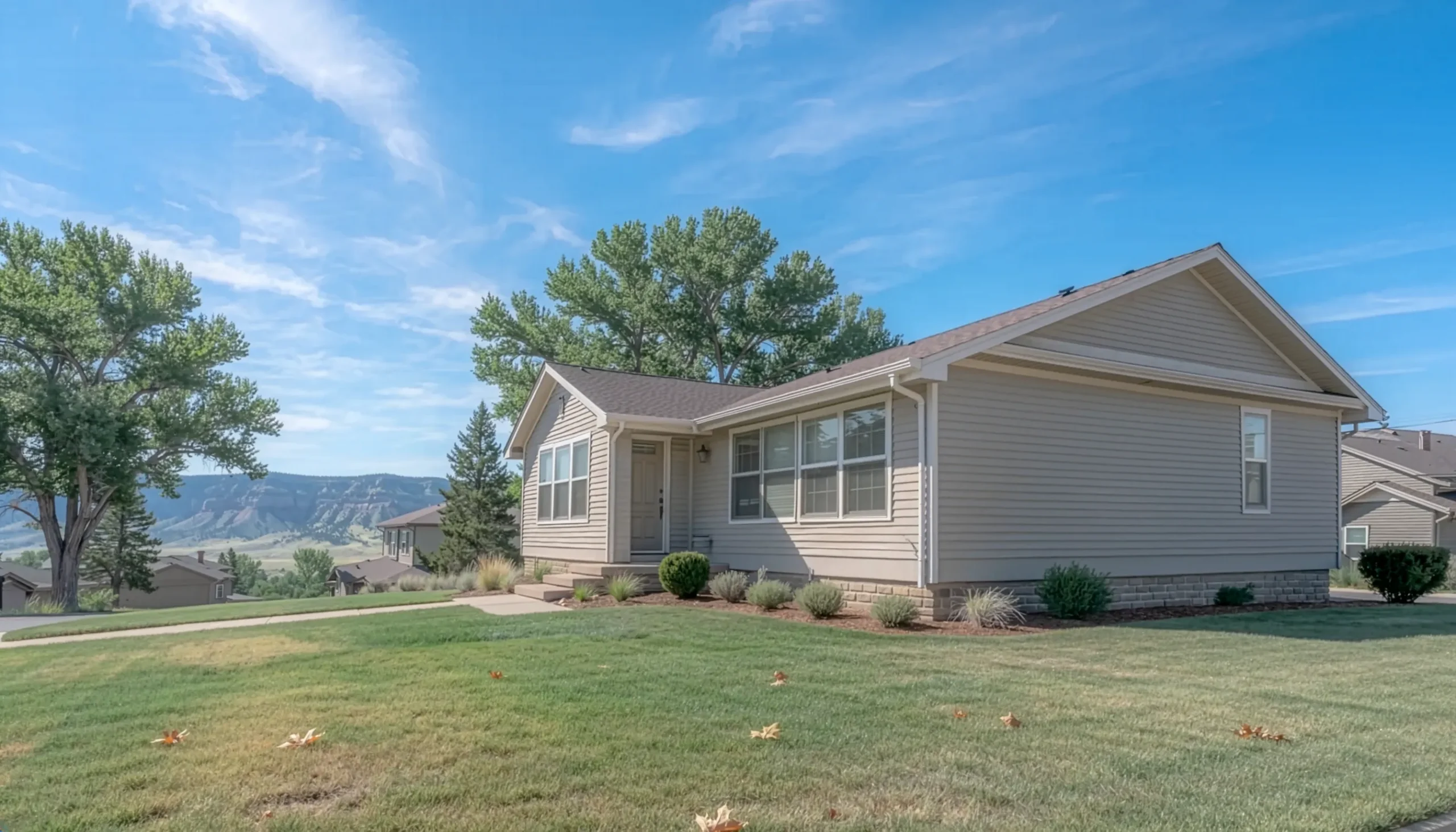
The average home in Billings, Montana, now costs around $385,000, and in the view of Damian Forrester, who leads Forrester Group Real Estate, brokered by eXp Realty of Montana, a buyer needs something close to two household incomes to purchase one. New construction starts around $450,000 and climbs from there, putting it out of reach for many first-time buyers. The market is splitting along income lines: resale sellers are cutting prices and offering concessions, while builders sell mostly to relocators with cash and existing homeowners moving up.
Forrester sees that split in his own listings. About half of his 11 or 12 current listings have taken price reductions or are offering concessions, including rate buydowns and commission incentives for buyers’ agents. With interest rates rising, he says, Billings is “turning into more of a buyer’s market.”
“A lot of sellers are looking to meet the buyers halfway now,” Forrester says. “Homes that have been on the market for a while, you’re seeing these large price cuts.”
For buyers looking for affordability, which Forrester says many are, where they look in Billings makes a substantial difference. The west end, growing outward until it nearly touches the neighboring town, runs $400,000 and up. The Heights on the east side averages in the $380,000s. The south side remains the most affordable area, with homes just under $300,000. Midtown, between 1st and 24th streets, sits around $400,000. Relocating buyers willing to look a little outside the metro area, he adds, can still find fair deals.
New Construction Serves a Different Buyer Pool
New construction sits largely above that range. Builders in Billings are active and expanding, but rising prices have come with a tradeoff: new homes are sometimes getting smaller. Homes in the Shiloh area and points west run from $550,000 to $650,000 and higher, and among homes selling above $500,000, the average spend is between $600,000 and $700,000. Buyers at that level are typically existing homeowners using accumulated equity to move up, or out-of-state arrivals with cash.
Builders are offering incentives, including closing cost help, extra finished space such as a basement room, and mortgage rate buydowns. One national builder, Forrester says, is offering very large down payment incentives.
“A lot of the new constructions that are being built right now are anywhere from 450 up, which is out of the price range of a lot of individuals that are first-time home buyers,” Forrester says.
Because new construction and resale largely serve different buyers, Forrester doesn’t see builders making things harder for resale sellers. Many would-be buyers of new construction, he says, are simply priced out of it.
Relocation Is Reshaping Demand
Relocation is a growing part of Forrester’s business, and who relocates depends on where in Montana they land. In Billings, much of it is tied to industry: the city’s large healthcare sector draws traveling nurses and physicians, and its mining, coal, and refinery operations draw blue-collar workers. Bozeman, two hours west, is a different market with far higher prices. In Big Sky, average home prices reach $2 million to $3 million, and buyers include celebrities and corporate business owners who fly in and out.
Many relocating buyers come from Washington, Oregon, and California, for reasons ranging from politics to economics, and some arrive with sticker shock.
“They’re coming in with the mindset they’re going to take a large sum of money and purchase a home for cash, and it’s not that way anymore,” he says.
Many underestimate what Montana housing costs today, which is why Forrester treats the buyer consultation as essential: a chance to explain local conditions and help buyers write a strong offer. Beyond pricing, his consultations cover the climate, how longtime residents may receive newcomers, and how to negotiate and write offers.
Early Signals of Distress
Forrester sees potential foreclosures and short sales ahead. He bases that on conversations with local mortgage lenders and, most recently, with a client who works with the Montana Board of Housing. She told him she expects more short sales and foreclosures and mentioned more than 10 homes that may be headed that way, though Forrester says he isn’t sure of the exact figure.
“A lot of people are having trouble right now in our economy,” he says. Having worked through 2007 to 2009 and the pandemic, he says he is ready to pivot and adjust.
Forrester expects that pressure to draw more investors to Montana, as a possible cycle of short sales and foreclosures creates buying opportunities. He points them toward the state’s clearest gap: affordable housing. Across Montana’s largest cities – Kalispell, Missoula, Bozeman, Billings, Helena, and Great Falls – affordable residences are scarce, and he sees room for investors to buy homes to flip or hold. He also cautions that taxes in the state are high.
“Hopefully come in and work with our communities to help make more affordable homes for those individuals that can’t afford them right now,” Forrester says.
Montana’s Insulation Has Limits
Forrester describes Montana as historically insulated from national downturns. During the 2008 crisis and the pandemic, he says, the state took a hit, but not as hard a hit as the country as a whole.
The current market does expose a vulnerability: prices have risen far enough that many local buyers cannot keep up. Many also lack down payment money, Forrester says, and agents are pricing listings more aggressively to meet them halfway. Strong lending partners can help some buyers work through financing obstacles.
His answer to the timing question has shifted over the years. “When’s the right time to buy? I always used to say now,” Forrester says. “Now I say it’s when that buyer is ready, willing, and able.”
About the Expert: Damian Forrester leads Forrester Group Real Estate, brokered by eXp Realty of Montana, covering Billings, Montana.
This article is based on information provided by the expert source cited above. It is intended for general informational purposes only and does not constitute legal, financial, or real estate advice. Readers should conduct their own research and consult qualified professionals before making any real estate or financial decisions.