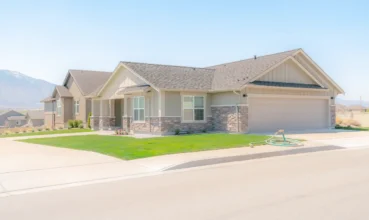
Florida’s post-pandemic real estate correction has played out unevenly across the state, and the Treasure Coast, spanning Martin and St. Lucie counties along the southeastern Atlantic shore, offers a clear window into how that cooling is unfolding at the ground level. What was once a straightforward seller’s market has given way to something more layered, where price point, location, and property type each tell a different story.
Natalia Rhinehart, a residential agent with eXp Realty working primarily across Martin and St. Lucie counties, has spent seven years building a practice rooted in relocation. Her client base – largely drawn from the Northeast, Texas, and South Florida – provides a useful lens for understanding both the region’s continued appeal and the friction points shaping buying decisions today.
Treasure Coast Still Attracts
The region’s draw is straightforward: relatively moderate temperatures by Florida standards, access to water recreation, strong public school systems in both counties, and a geographic position that puts Orlando, Miami, and Palm Beach each within two hours. For families leaving denser metro areas, the lifestyle trade-off is clear.
“A lot of out-of-state families move to these areas because of the schooling and the lifestyle,” Rhinehart notes. “It’s a lot slower, calmer, and you’re smack in the middle, so you can do day trips easily.”
The influx isn’t limited to out-of-state buyers. A growing share of Rhinehart’s clients are relocating from South Florida, trading the density and cost of the Miami-Palm Beach corridor for something more manageable. That internal migration has added a steady layer of demand even as the broader Florida market has cooled from its pandemic highs.
Educating Buyers
For buyers arriving from the Northeast, the learning curve begins well before any offer is written. Florida’s closing process operates on a notably faster timeline; financed transactions can close in 30 days, compared to the 60-to-90-day attorney-driven process common in New York and New Jersey. That difference alone requires significant upfront education.
Taxes tend to generate the most immediate reaction. St. Lucie County carries the highest millage rate in Florida, which can produce sticker shock for buyers expecting a low-tax environment. By Rhinehart’s calculations, the effective property tax burden can exceed Miami’s in some cases, requiring careful explanation. The ongoing legislative discussion around potential property tax reductions in Florida has added another layer to those conversations, keeping the topic active with buyers trying to model their total cost of ownership.
Rhinehart’s standard practice is to walk buyers through their Lender’s good faith estimate before any offer is placed, plugging in specific property addresses to generate realistic tax and insurance projections. Given how significantly insurance costs have risen across Florida in recent years, that front-loaded transparency has become critical to keeping transactions on track.
A Market Divided
The most telling pattern in the current Treasure Coast market is how differently properties perform depending on price. The middle of the market, roughly $450,000 to $650,000, is carrying the heaviest inventory burden, with homes sitting longer regardless of county or specific location. Sellers in that range face real competition and, in many cases, extended days on market.
At the lower end, under $300,000, the dynamic flips. Rhinehart recalls a recent buyer in that budget range: “Every time we looked at a home, it was gone in a week, gone in less than a week, under contract.” Constrained supply at entry-level price points is keeping that segment competitive.
Above $700,000, demand picks back up for different reasons. Larger homes, gated communities, and properties near the water tend to attract more serious, less price-sensitive buyers, generating stronger showing activity and faster movement than the crowded mid-range.
Sellers Still Overpricing
One of the clearest behavioral changes from the pandemic era is how slowly buyers are moving. Where offers once needed to be submitted within hours, buyers today are taking 30, 60, even 90 days to commit. “Not a single person I have is in a rush,” Rhinehart says. That pace is affecting how markets actually function, even in areas where the data suggests seller-favorable conditions.
Certain pockets, like Palm City, technically qualify as a seller’s market based on inventory data, according to Rhinehart, but buyer behavior tells a different story. Without urgency on the demand side, these areas function more like balanced markets in practice.
On the seller side, overpricing remains a persistent problem. Many sellers are still anchored to peak-era valuations, listing 5% or more above where comparable homes are actually closing. The result is predictable: extended time on market, followed by price reductions. Rhinehart notes that two of her sellers exceeded 100 days on market. The concessions that eventually emerge tend to be a mix of price adjustments and closing cost assistance, with buyers in some segments asking for 3% to 5% toward closing costs. In other cases, particularly with northern buyers, the concession is time: a 60- to 90-day closing window that accommodates their relocation timeline.
New Construction Complicates Resale
Builder activity in St. Lucie County is creating a distinct headwind for existing homeowners trying to sell. Builders are offering promotions, incentives, and financing concessions that resale sellers simply can’t match, making it harder for existing homes, particularly in gated communities, to compete. Scattered-lot properties priced correctly are holding up better, but anything resale in a community with active builders is taking significantly longer to move, according to Rhinehart.
For investors considering the market, the picture requires careful navigation. St. Lucie County’s buyer-market conditions in many zip codes make it a riskier environment for fix-and-flip activity. Martin County, which has historically leaned toward seller-market conditions, offers a more favorable backdrop, though speed matters. “This market is constantly changing month to month,” Rhinehart cautions. “You have to be quick to flip, because it can change from a buyer’s market to a seller’s market in some zip codes drastically.”
A More Serious Buyer Pool
The broader post-pandemic normalization has filtered out speculative and casual buyers, leaving a client pool that is largely need-driven. Rhinehart estimates that roughly 90% of her current clients are relocating for work. First-time buyers, by contrast, have become rare; she closed with just two in all of last year and one so far in 2026.
One structural development worth watching is the recent merger between the local Beaches MLS and the Miami Association of Realtors, creating what is now the largest realtor association in Florida. For agents within that combined network, expanded data access and market visibility could provide a competitive advantage as buyer and seller expectations around transparency continue to rise.
The Treasure Coast isn’t the frenzied market it was in 2021 and 2022, but it isn’t stagnant either. The clearest takeaway for both buyers and sellers is that preparation now determines outcomes more than timing does. Buyers who understand closing costs, tax burdens, and insurance realities upfront are making faster, more confident decisions. Sellers who price to current comparable sales rather than peak-era benchmarks are finding buyers, while those who don’t are watching their listings age past 100 days. The market rewards realism, and penalizes nostalgia for conditions that no longer exist.
About the Expert: Natalia Rhinehart is a Realtor with eXp Realty serving Martin and St. Lucie Counties on Florida’s Treasure Coast, with a practice focused on out-of-state and relocation buyers.
This article is based on information provided by the expert source cited above. It is intended for general informational purposes only and does not constitute legal, financial, or real estate advice. Readers should conduct their own research and consult qualified professionals before making any real estate or financial decisions.