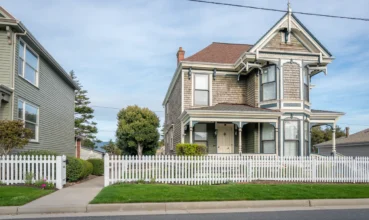
Jacksonville’s real estate market has shifted from the breakneck pace of the pandemic to a more balanced, sustainable environment, offering new opportunities for buyers and sellers who understand the region’s current dynamics. Homes now sell at an average of 93.5% of list price, a notable decline from the 100–105% premiums seen during the height of the seller’s market. This adjustment marks what many local experts describe as a healthy correction, with price growth and transaction activity settling into a more stable rhythm.
Terry Sadowski, a realtor with RE/MAX Specialists who has worked through multiple market cycles since 1986, sees this shift reflected in his daily work. “Today, buyers have breathing room to see several homes and make a decision. It’s no longer a panic where you have to make an offer immediately or risk losing out,” he says.
This greater balance represents a clear break from the recent past, when buyers routinely faced bidding wars and listings often sold within days, if not hours. Now, buyers can move more deliberately, while sellers must adopt smarter pricing and marketing strategies to compete.
A Career Navigating Market Highs and Lows
Sadowski’s insights are rooted in nearly four decades in Jacksonville real estate, including 15 years focused on new home sales before moving to general brokerage in 2007. He started his career with Mercedes Homes in 1992 and later joined Arvida Corporation, working on developments such as St. John’s Golf and Country Club.
His move from new home sales to general real estate was motivated by family needs. “My daughter was into sports, and with new home sales, you work every weekend, so I was missing all her games,” Sadowski recalls. “There are more important things, and general real estate gave me more control over my schedule.”
Sadowski’s adaptability has helped him weather multiple market cycles, and much of his current business comes from repeat clients and referrals. “Helping a first-time buyer get their home or assisting someone selling their last house still gives me a rush,” he says.
Distinct Markets Across Northeast Florida
Sadowski serves three main counties in Northeast Florida: St. Johns, Duval, and Clay. Each area displays its own market characteristics. About 60% of his business comes from St. Johns County, 30% from Duval, and 10% from Clay.
St. Johns County remains the most competitive, with homes averaging 72 days on the market, compared to 85 days in Duval. “St. Johns is still the hottest area because of strong population growth and some of the best school systems in Florida,” Sadowski explains.
Clay County offers similar school quality at lower prices, while Duval County’s appeal lies in its urban amenities and accessibility. Despite these differences, all three counties are seeing homes sell at similar percentages of list price, reflecting consistent market conditions across the region.
Builders Adjust to Slower Pace
The new construction sector has responded to the market’s cooling by offering substantial incentives. Builders are now providing interest rate buydowns and home upgrades to attract buyers—benefits rarely seen during the peak of the seller’s market.
“Builders are definitely offering incentives, like 3-0 and 2-1 interest rate buydowns, plus upgrades in the house,” Sadowski says.
This approach has influenced the resale market as well. Sellers now compete with builders by offering similar incentives, such as 2-1 buydowns, to attract buyers.
Despite these changes, pricing and presentation remain critical. Homes that are priced competitively and show well still draw multiple offers and can sell above list price. Overpriced or poorly presented listings, however, linger on the market.
Creative Financing and Affordability Strategies
With interest rates around 6.25%, buyers and sellers are using creative strategies to address affordability. Seller-assisted buydowns, where sellers contribute $8,000 to $15,000 to temporarily lower the buyer’s interest rate, have become common.
“Sellers are offering 2-1 buydown incentives to help first-time buyers get in at a lower rate,” Sadowski says. “They can refinance if rates drop in a year or two.”
Despite higher rates than during the pandemic, first-time buyers remain active in Jacksonville. “Historically, 6.25% is still a reasonable rate. There are incentives for first-time buyers that help them get into the market,” he notes.
Growth Corridors and Buyer Demand
Several areas in Northeast Florida are seeing strong growth and attracting both local and out-of-state buyers. The north side of Jacksonville, near the airport, stands out for its affordability and an increasing number of new communities. “There’s good value and growth potential up there,” Sadowski observes.
The Intracoastal West area, close to Ponte Vedra Beach, remains consistently popular due to its beach proximity and established reputation. Migration from higher-cost markets like Miami, New York, and Washington D.C. continues, though Sadowski says his business is still driven primarily by existing relationships and local referrals. When out-of-state buyers do arrive, they are frequently drawn by Jacksonville’s mix of urban amenities, outdoor recreation, and cultural offerings.
Timing and Strategy in Today’s Market
The current market offers specific advantages depending on the participant. For buyers, the end of the year is particularly favorable. “It’s a great time to buy now, especially toward year-end when there are fewer buyers and sellers are more willing to negotiate,” Sadowski advises.
Sellers, on the other hand, must be more strategic than during the pandemic boom. “You have to price your home competitively from the start and make it stand out, because there’s more competition now,” he says.
Essential preparation steps for sellers include fresh paint, landscaping, decluttering, depersonalizing, professional photography, and flexible showing schedules. “You have to take every showing seriously, because you never know which one will lead to a sale,” Sadowski emphasizes.
Positive Outlook for 2026
Market fundamentals suggest growing momentum for 2026. Inventory levels are at a healthy 4.9 months of supply, and many potential buyers are waiting for a more favorable lending environment. Even a modest drop in interest rates could prompt significant buyer activity.
“There are a lot of buyers on the sidelines. If rates drop even half a percent, I think you’ll see a surge of buyers entering the market,” Sadowski predicts. “We’re set up for a strong 2026.”
Jacksonville’s continued appeal—year-round outdoor activities, beaches, the St. Johns River, professional sports, and a revitalizing downtown—remains a draw for residents and newcomers alike. The market’s current balance rewards informed participants and maintains the fundamentals that have driven steady growth in Northeast Florida.
For real estate professionals and investors, Jacksonville offers a stable, growing environment where expertise and relationships matter more than quick speculation. In this market, experienced agents like Sadowski continue to find success by adapting to changing conditions and focusing on long-term value.