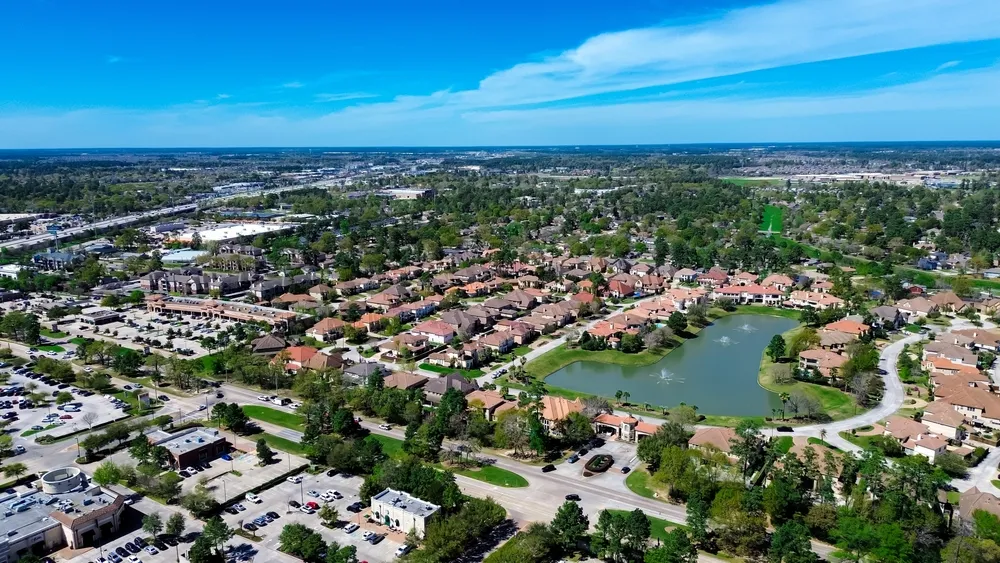
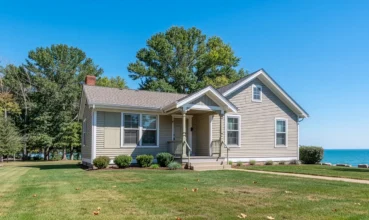
The Houston metro area keeps expanding outward, with thousands of new homes rising in communities west, north, and south of the city center. That growth is creating a specific problem for homeowners in the $450,000 to $700,000 range: their properties are competing against brand-new builds that come with lower prices, builder-subsidized mortgage rates, and covered closing costs. The result, according to Bryan Lillis, team lead at Luxe Realty Houston with RE/MAX Grand, is a market where entry-level and luxury homes are moving but the middle is stalling.
Lillis works across Katy and Houston’s western suburbs with buyers and sellers spanning first-time purchasers, relocating professionals, and investors. He sees the pressure on mid-range resale homes as a direct consequence of builder economics.
“Right now I’m seeing buyers sometimes get a 4.99 rate when on the open market, if they went to a bank or a broker, they’d be paying in the sixes,” Lillis says. On a $400,000 home, he estimates that rate difference could mean roughly a thousand dollars a month in additional interest cost. “Why wouldn’t you buy a new home?”
A Market Split
The dynamic playing out in Houston’s western suburbs is not a uniform slowdown. It is a three-tier split. New construction aimed at first-time buyers continues to sell. Homes above $750,000 to $800,000, what Lillis defines as the entry point for luxury in west Houston, are still drawing multiple offers and cash buyers. But properties in the $450,000 to $700,000 range are sitting 60 to 90, even 100 days on market.
Large national builders like DR Horton, Lennar, and MI Homes operate their own lending arms, buying down rates across their entire portfolio of buyers. A resale seller in Cinco Ranch or similar established communities cannot match that financing advantage, even if the home itself is well-maintained.
“It’s more incentivizing for somebody to go buy a brand new home for cheaper and get what you’re gonna get in the four or five hundred to seven fifty range,” Lillis says.
For sellers in that middle tier, the competitive disadvantage is not cosmetic or locational; it is financial. Buyers comparing monthly payments between a new build with a bought-down rate and a resale home at conventional rates face a gap large enough to change their decision entirely.
Subdivision-Level Variation
Houston’s market resists broad generalizations. Lillis describes each subdivision as “its own living, breathing organism.” Homes in Cross Creek, Fulbrook, or Western Lakes are selling quickly, sometimes with multiple offers. Parts of Cinco Ranch – a large master-planned community historically known for fast sales due to top-rated schools – are now sitting longer.
The reason ties to infrastructure expansion. As the West Park Tollway has extended further out, buyers can access comparable school zones in newer communities ten minutes further from the city center, at similar or lower prices. The tollway expansion has widened the geography of desirable school access, redistributing demand that once concentrated in a handful of established neighborhoods.
“We really truthfully have four or five A-list school zones now,” Lillis says. “The schools in this little niche community in Katy are incredible; they’re all A-plus, 10 out of 10 schools.”
For buyers, this means the premium once attached to specific established neighborhoods has eroded. A family that would have paid more to be in Cinco Ranch three years ago can now find equivalent schools further out, in newer homes, at similar or lower cost.
Sellers Adjusting
Price corrections have been modest. Lillis estimates an 8 to 10 percent pullback after valuations peaked and plateaued in 2023, following annual increases of up to 20 percent during 2020 through 2022. He sees the market now returning to a healthier 4 to 5 percent annual appreciation rate.
The challenge is seller expectations. Some homeowners are still pricing based on 2023 comps, when multiple-offer situations were common, and rates sat near 3 percent. “I’m seeing sellers in some neighborhoods saying, well, my neighbor sold for this. I’m like, well, this is 2026, this isn’t 2023,” Lillis says.
He characterizes the current environment not as buyer-favored but as balanced, a return to normal after an anomalous seller’s market. Concessions and price cuts are more common, but homes priced and presented correctly from the start are still selling without issue. Lillis says pricing accurately at listing is the most important decision a seller can make in this market.
Presentation as Competitive Advantage
With inventory higher than it has been in years, marketing and home preparation have become essential rather than optional. During the pandemic-era shortage, sellers could list with minimal effort and attract dozens of offers. Now, with surplus inventory and builder competition, a resale home needs fresh paint, proper landscaping, and professional presentation to compete.
“There are more listings now than there have been in years. The marketing of the house, how you present the house, is more important than it’s ever been,” Lillis says.
He points to a recent listing in Spring Branch, priced at $1.25 million, that drew a bidding war and sold roughly $100,000 over asking. Lillis attributes the result to strong presentation, correct pricing, and location in a desirable school zone near the energy corridor. In a market where mid-range homes are languishing, well-positioned and well-marketed properties at higher price points are still generating competition.
What Comes Next
Lillis owns a mortgage brokerage alongside his real estate practice and watches rate movements closely. He describes 2026 as volatile, driven by geopolitical uncertainty and a new Fed chairman. Many prospective buyers at his mortgage company have stayed on the sidelines, waiting for relief.
He does not expect a return to 3 percent rates but sees a possible path to rates in the fives once conditions stabilize. “If we do, I think it’s going to create a flurry of buyers and sellers,” Lillis says. “I think the market’s going to heat up even more and go nuts.”
Meanwhile, job growth continues to support demand. A new Tesla Gigafactory is opening in Brookshire in west Houston, and Apple has committed to a manufacturing facility in north Houston. Combined with existing hubs for oil and gas, United Airlines, and Southwest Airlines, the employment base continues drawing relocation buyers into the market, many of them arriving from higher-cost states like California with no state income tax as an added incentive.
For mid-range sellers waiting for conditions to shift in their favor, the calculus is straightforward: until rates drop enough to neutralize builder buy-downs, presentation and pricing discipline are the only tools available to compete.
About the Expert: Bryan Lillis is team lead at Luxe Realty Houston with RE/MAX Grand, serving Katy and Houston’s western suburbs across residential buyers, sellers, and investors. He also owns a mortgage brokerage alongside his real estate practice.
This article is based on information provided by the expert source cited above. It is intended for general informational purposes only and does not constitute legal, financial, or real estate advice. Readers should conduct their own research and consult qualified professionals before making any real estate or financial decisions.