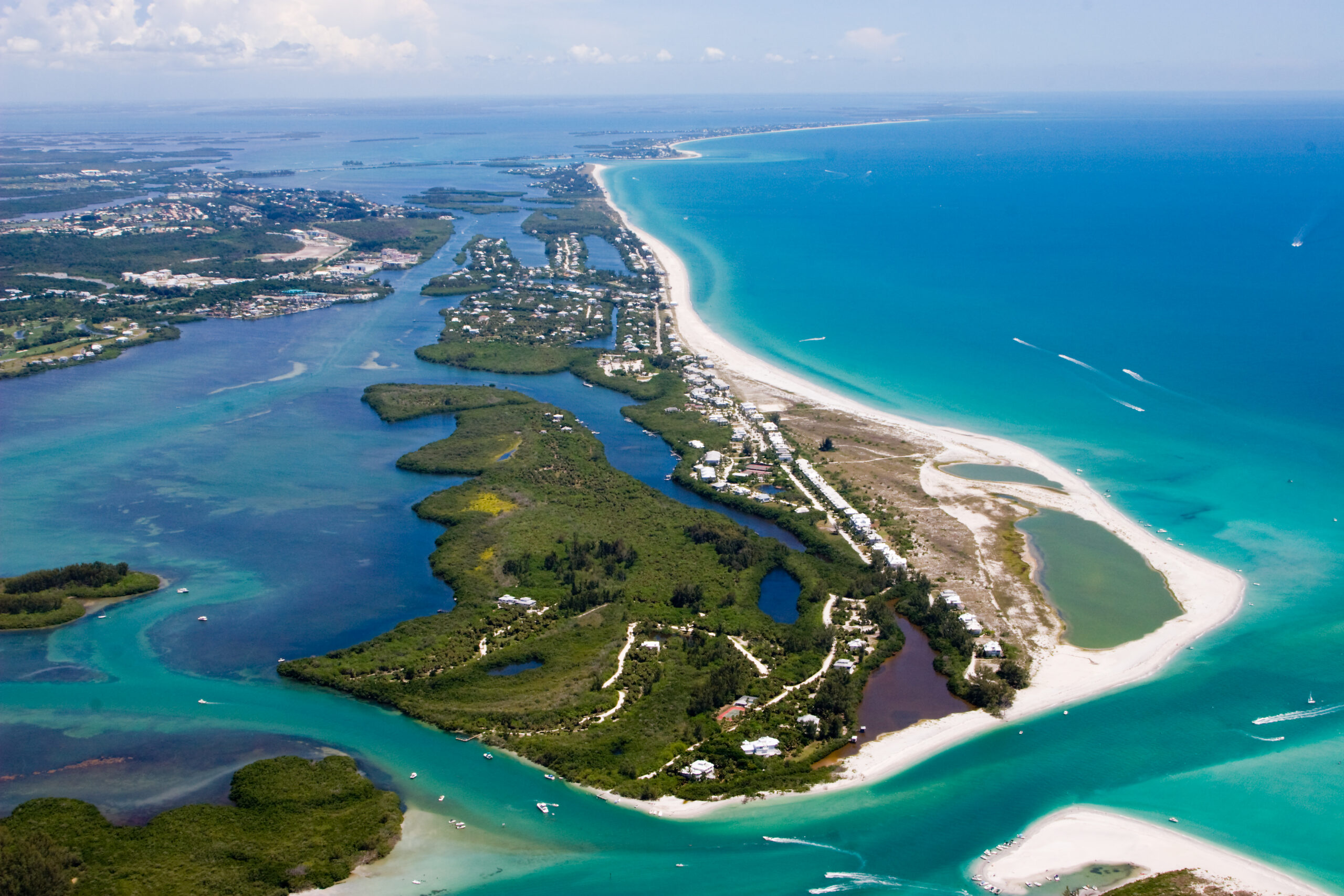
Buyers assume a barrier island in hurricane-prone Southwest Florida must be one of the most expensive places to insure a home. On at least one island near Placida, Florida, the opposite may be closer to the truth – and the reason comes down to elevation and flood zone classification, not marketing.
Robin Madden, owner of Islander Properties on Knight Island, has spent nearly 20 years selling and managing properties on a small barrier island accessible only by a four-and-a-half-minute ferry ride. She handles about 30 high-end vacation rentals and works exclusively on the island. The insurance narrative buyers hear, she says, does not match what she sees in actual quotes.
The disconnect comes down to how the island is built. Most structures sit on stilts – a requirement of local building codes for flood zones. Madden’s own home sits 13 feet above base flood elevation, with another seven feet of living space above that. Even older buildings tend to be elevated nine feet or more.
How Elevation Affects Premiums
That elevation directly affects flood insurance pricing. Higher structures above the base flood level generally receive lower premiums. Madden points out that the island’s base flood elevation is actually higher than Englewood and some areas on the nearby mainland – a comparison that surprises most buyers.
Englewood, the closest mainland town, sits lower, with more water exposure than its inland location suggests. Charlotte County, which contains both the island and the mainland, is laced with intercoastal waterways, canals, and low-lying areas that flooded during the same storms that hit the island.
The island also sits in a standard flood zone rather than the V zone – the highest-risk coastal designation – that has driven extreme premiums in some Florida beach communities. That zoning distinction, combined with the elevation, puts the island in a different insurance category than many buyers expect.
Madden acknowledged that island properties likely cost more to insure than a typical mainland home. But she pushed back on the idea that coverage is hard to find or prohibitively expensive. “Insurance is affordable,” she said.
Why the Quote Source Matters
Buyers who receive alarming quotes are often working with insurers unfamiliar with the local market, according to Madden. She described a recent buyer who received an unusually high flood insurance quote but was not using a local insurer. Madden’s approach is to work with insurance companies that know the island’s specific elevation data and building characteristics.
That familiarity does not eliminate the underlying risk. Three hurricanes in four years left real damage on this island. Hurricane Ian – a nine-hour, 180-mile-per-hour storm – hit four years ago, followed by Hurricanes Helene and Milton, which Madden described as water hurricanes. Her own office had water eight feet up the front door during the worst of it.
The insurance market’s wariness of coastal Florida is a response to documented losses, not speculation. But Madden says conditions have stabilized since the storms. The state government worked to attract additional carriers to the region, and “things have kind of leveled off,” she said.
What the Recovery Looks Like
The storms reshaped the island’s housing stock in ways that affect both insurance and property condition. Hurricane Ian damaged interiors, so most homes have had full interior repairs – new finishes, replaced roofs. Helene and Milton damaged ground-level infrastructure, so air conditioning units, electrical hookups, and other equipment underneath the elevated homes have been replaced. Buyers purchasing a home built in 1989, Madden says, are getting what amounts to a substantially renovated property.
Property values remain down 25 to 30 percent from pre-hurricane levels, according to Madden, which means insurance costs are being calculated against lower assessed values. The island has recorded 35 sales so far this year, compared with a peak of 115 in 2021. Madden says she expects values to begin climbing again next year.
What Buyers Should Weigh
For buyers considering a barrier island property in Southwest Florida, the insurance question is worth investigating rather than assuming. The premiums that dominate Florida coastal insurance headlines often reflect V-zone properties at sea level – not elevated structures on islands with higher base flood elevations.
Hurricane season returns every year, and a single bad storm can reset the insurance landscape. Buyers who purchase here should expect costs to fluctuate and should budget for the possibility that premiums rise after future storms, even if current rates feel manageable.
The question for any specific property is whether the insurance cost reflects its actual risk profile – its elevation, its construction, its zone classification – or a generalized fear of anything labeled “barrier island.” On Knight Island, where structures sit well above flood level, and the zone classification is more favorable than many mainland waterfront properties, Madden says the numbers are less alarming than the headlines suggest.
About the Expert: Robin Madden is owner of Islander Properties in Placida, Florida, serving the barrier islands off Englewood in Charlotte County, including Don Pedro Island, Knight Island, and Palm Island Resort. She has owned the firm for nearly 20 years.
This article is intended for informational purposes only and does not constitute legal, financial, or investment advice. The views and opinions expressed herein reflect those of the individuals quoted and do not represent an endorsement of any company, product, or service mentioned. Readers should conduct their own due diligence and consult qualified professionals before making any investment decisions.