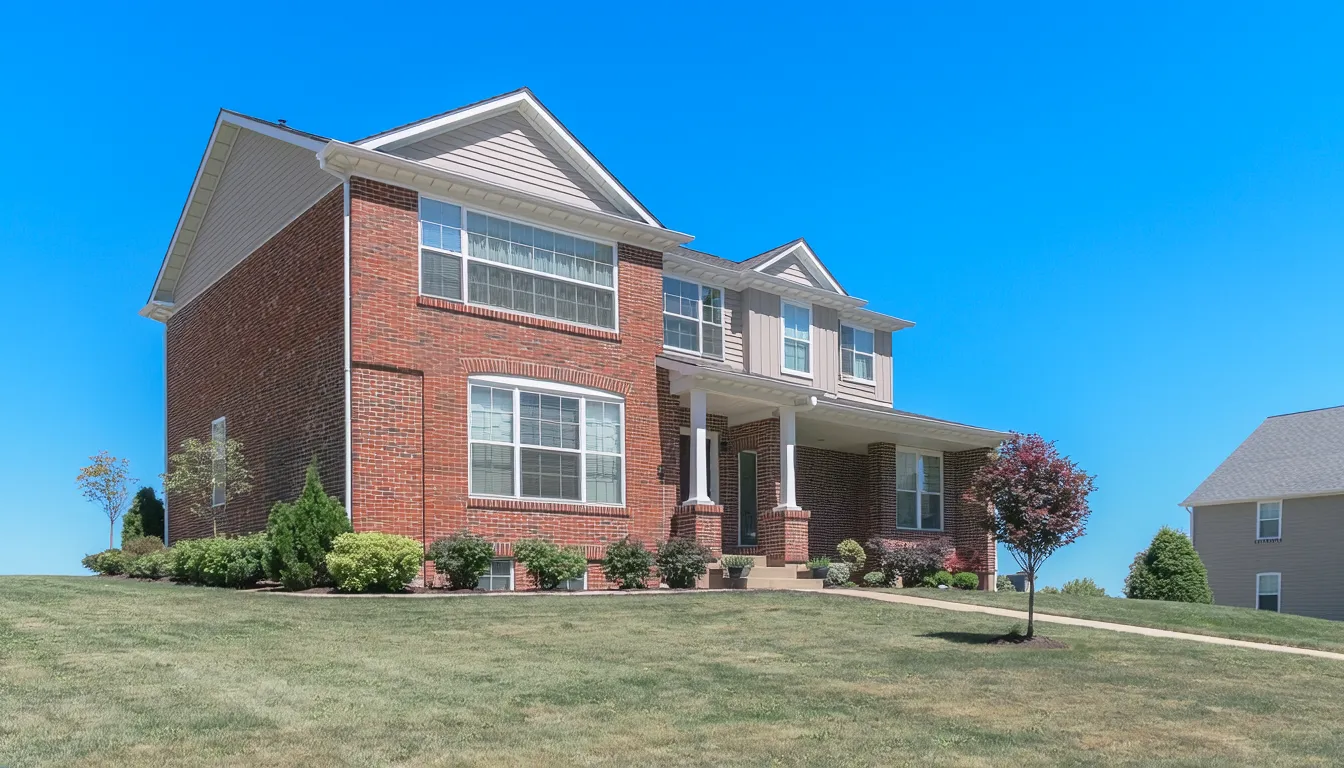
Today’s mortgage rates in the Columbus, Ohio, metro sit around seven to seven and a quarter percent, according to Barbara Gale, who leads the Gale Group in Dublin, Ohio, and has sold residential real estate in the market for decades. Buyers treat that figure as a dealbreaker. Gale sees it differently: the average mortgage rate over the past 30 years has been 7 percent, she said, which makes today’s rates ordinary, not elevated.
The period that felt normal to recent buyers – the sub-three-percent window of 2020 and 2021 – was the outlier. “People got very spoiled when the interest rates went down to 2 and a half and 3%,” Gale said. That era, driven by emergency monetary policy, created an anchor point that now distorts how buyers in Columbus evaluate affordability.
For buyers who entered the market during that window, seven percent feels punishing. For anyone who bought a home in the 1990s or early 2000s, it feels familiar. Gale herself remembers a far harsher environment. “I was in the business when the rates were 15, 16%,” she said. People still bought homes then.
A Tight Market Behind the Hesitation
Buyer reluctance has not loosened Columbus’s supply constraints. Gale said central Ohio has fewer than 6,100 active listings serving a metropolitan area of 2.23 million people. A healthy market, in her view, would carry between 10,000 and 15,000 listings at any given time. That gap puts upward pressure on prices regardless of where rates sit.
The result is a market where well-priced homes in good condition continue to sell quickly. Most of Gale’s Dublin listings this year have sold at or above asking price. But those sales depend on condition, she said. “There always has been and always will be three reasons the house doesn’t sell: price, location and condition. The price fixes all three every time.”
For sellers, that means homes that are staged well and priced accurately still draw strong offers. For buyers, it means the homes that do come to market at the right price are not waiting around.
Hesitancy Beyond Rates
Mortgage rates are not the only drag on buyer confidence in Columbus. Gale pointed to broader unease about the economy, stock market volatility, and geopolitical tensions as factors keeping people cautious. Real estate tends to follow the stock market’s mood, she said – when stocks are up, buyers feel bolder; when stocks wobble, they pull back.
That layered hesitancy means even a modest rate dip might not restore buyer enthusiasm. Gale said the market was “absolutely frantic” from the pandemic through roughly six months ago, with buyers paying $50,000 to $100,000 above asking price to secure homes. That frenzy has cooled. Listing inventory has risen, and buyer demand has dropped.
Owners who locked in rates at two and a half or three percent during 2020 and 2021 have little incentive to sell and take on a new mortgage at more than double their current rate. That dynamic further limits the number of homes reaching the market.
Where Construction and Teardowns Fill the Gap
New construction is absorbing some of the demand that the resale market cannot meet. Gale said Dublin still has available land to build on, and new homes are drawing buyers who might otherwise compete for existing inventory. “Everybody now wants something new if they can have it,” she said.
In Upper Arlington, a landlocked community south of Dublin, the dynamic plays out differently. With no vacant land available, buyers who want to live there are purchasing older homes and tearing them down to build new ones. Gale described selling a home in Upper Arlington in poor condition for $600,000 to a builder who already has the replacement home under contract to build for $2.2 million – on a street where existing homes sell for $700,000 to $800,000.
The pattern persists because Upper Arlington is landlocked and its schools are highly regarded, Gale said. Buyers view the area as exclusive precisely because supply cannot expand. “There’s no more building down there because there’s no more places to build,” she said.
For buyers deciding whether to act now or wait for lower rates, the inventory numbers in Columbus suggest that delay carries its own cost. Fewer than 6,100 active listings for 2.23 million residents leave little room for the market to soften meaningfully on price, even as rates hold steady.
About the Expert: Barbara Gale is with the Gale Group at Keller Williams Consultants Realty, who has worked the Columbus and Dublin, Ohio markets since the 1970s.
This article is intended for informational purposes only and does not constitute legal, financial, or investment advice. The views and opinions expressed herein reflect those of the individuals quoted and do not represent an endorsement of any company, product, or service mentioned. Readers should conduct their own due diligence and consult qualified professionals before making any investment decisions.