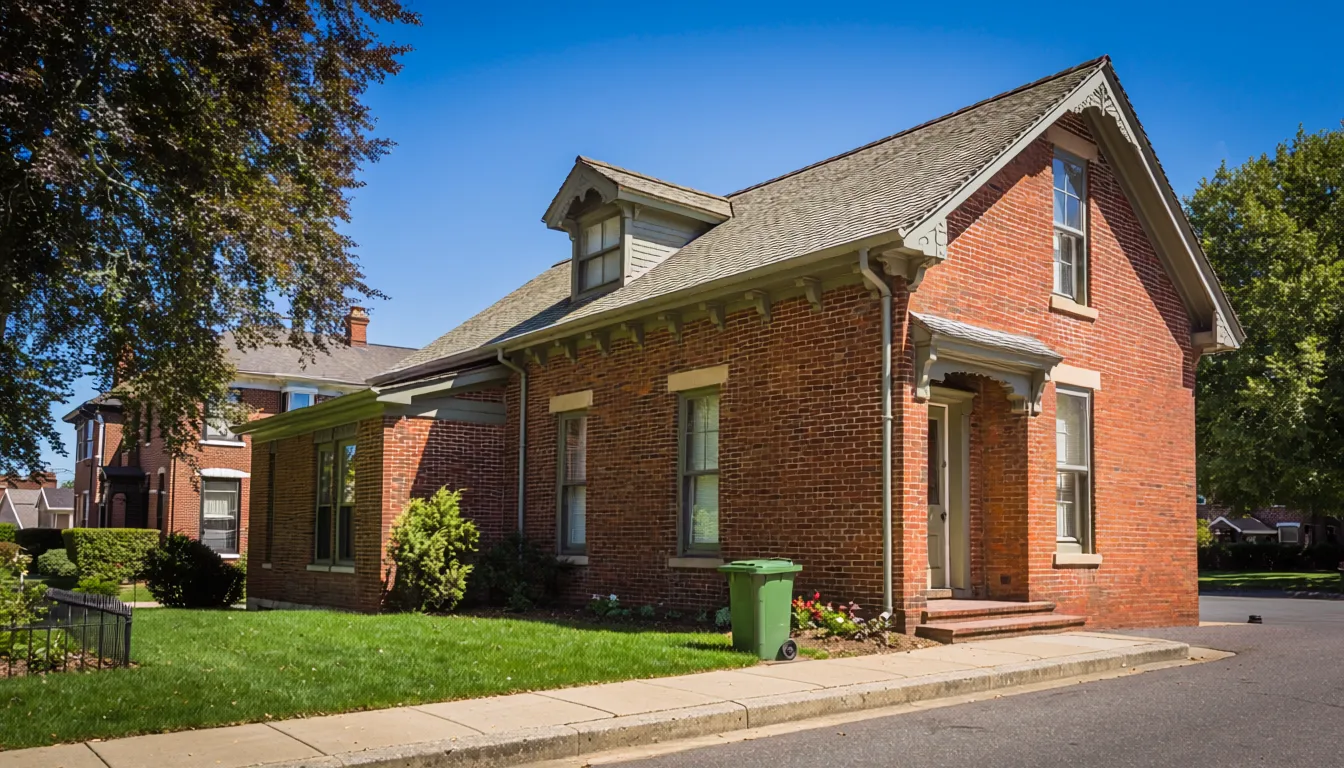
Most of Cincinnati’s housing was built before the 1930s. That used to be a selling point: charming Italianate architecture, walkable historic neighborhoods, character that newer suburbs couldn’t replicate. But that aging stock is now colliding with a harder insurance environment, rising material costs, and buyers who increasingly refuse to take on renovation work. The result, according to Erin Fay, a real estate agent with Close to Home Consultants at Keller Williams who has been selling homes full-time since 2011, is a market that has fractured into two distinct tiers: move-in-ready homes that still draw multiple offers, and everything else, which is sitting longer and seeing price cuts.
“It’s like a tale of two markets,” Fay says. A listing she wrote an offer on recently drew 11 competing bids. Meanwhile, properties with deferred maintenance, outdated systems, or unusual floor plans are piling up in inventory, technically expanding supply without meaningfully expanding choice.
Insurance Has Become a Deal Breaker, Not Just a Cost
The clearest example of how Cincinnati’s older housing stock is reshaping transactions involves insurance on knob-and-tube wiring, common in homes built before the 1930s, which describes a large share of the city’s inventory.
Fay recently represented a seller whose 1920s home had knob-and-tube wiring. The buyer contacted roughly 30 insurance brokers. Every one of them refused to write a new policy. Existing homeowners with the wiring get grandfathered in, but new buyers cannot obtain coverage. The seller ultimately had to fund the electrical upgrade to keep the deal together.
“Insurance companies, they’ll grandfather you in, they won’t drop you, but they will not write a new policy on knob-and-tube wiring,” Fay says.
That dynamic creates a problem sellers in older markets may not anticipate. A homeowner who has lived in a pre-war house for years may not realize that the systems their insurer tolerates are now disqualifying for the next buyer. And the cost of remediation has climbed sharply. Fay notes that replacing a roof now costs roughly three times what it did five years ago, a figure that affects both what sellers net and what buyers are willing to pay.
Pre-Inspections as a Pricing Strategy
In response, Fay and her team have started pushing pre-listing inspections more aggressively. The logic is straightforward: identify problems before going to market so sellers can either fix them, price around them, or at minimum disclose them transparently, rather than discovering them mid-negotiation when leverage shifts to the buyer.
“You cannot just stick a sign in the yard, and it’s going to sell,” Fay says. “Sellers have to be much more aware of what they’re putting on the market and that there are going to be potential challenges.”
The strategy is particularly relevant in a market where buyers have grown resistant to taking on post-closing work. Fay describes a shift in buyer expectations she attributes to the combined weight of high interest rates, elevated material costs, and difficulty finding reliable contractors. “They don’t want to do work more than I’ve ever seen,” she says. “They find it to be costly. They don’t know who they’re going to hire.”
For sellers listing older homes, the practical consequence is clear: unresolved condition issues that once got negotiated at the inspection stage are now killing deals outright, or forcing sellers to absorb costs they didn’t plan for, as Fay’s knob-and-tube transaction illustrates.
Where the Floor Is Holding
Cincinnati’s market split also has a geographic dimension. The east-side neighborhoods of Hyde Park, Oakley, and Mount Lookout, which combine strong public schools, walkability, and well-maintained older housing stock, continue to hold pricing better than the city’s western neighborhoods. Fay describes them as somewhat insulated from the broader softening.
“These three neighborhoods don’t typically dip as low as other markets around the Cincinnati area,” she says. The west side, by contrast, tends to soften earlier in a downturn, though buyers’ dollars go significantly further there.
The inventory increase Fay is tracking is concentrated in the weaker tier. The supply of well-located, well-maintained homes remains tight. “Yes, the inventory is rising, but the inventory of solid homes that buyers really want is not rising,” she says. The listings accumulating are overpriced, need significant work, sit in less desirable locations, or have unusual floor plans, supply on paper, but not supply that matches what active buyers are seeking.
Fay says she has also heard short sales beginning to surface in office conversations, something she notes she had never encountered in her career until now. “We are definitely seeing the market soften here and the inventory rise,” she says. “But then the good houses that show well, that are priced correctly, that don’t have any big drawbacks or challenges are still attracting strong competition”.
Buyer Demand Is Narrowing, Not Disappearing
The broader pattern Fay describes is not a market in retreat but a market where demand has concentrated. Buyers are still active across Cincinnati: first-time buyers, move-up buyers, investors, and transplants from higher-cost cities drawn by walkable neighborhoods and relative affordability. But those buyers are increasingly filtering for homes that won’t require significant post-purchase investment.
Fay says community and connectivity are the primary drivers for buyers she works with inside Cincinnati’s 275 loop. They want walkability, access to grocery stores, running groups, and neighbors in a similar life stage. That demand hasn’t softened. What has changed is how much tolerance those same buyers have for work once they find the right neighborhood.
The result is a market where location alone no longer guarantees a sale. A well-located home with outdated electrical, a failing roof, or deferred maintenance now competes poorly against a comparable property down the street that has been updated, even if the asking price reflects the condition gap. Sellers who price correctly and address major systems before listing are still seeing competitive offers. Those who don’t are joining the rising inventory count.
Fay puts it simply: the spring market will likely be strong again, but the undercurrent of uncertainty around the economy, interest rates, and costs is real. In a city defined by its older housing stock, the sellers who succeed will be the ones who understand what their homes look like through a buyer’s eyes, not just what they’re worth on paper.
About the Expert: Erin Fay is a real estate agent with Close to Home Consultants at Keller Williams, covering Cincinnati, Ohio, and has been selling homes full-time since 2011.
This article is based on information provided by the expert source cited above. It is intended for general informational purposes only and does not constitute legal, financial, or real estate advice. Readers should conduct their own research and consult qualified professionals before making any real estate or financial decisions.