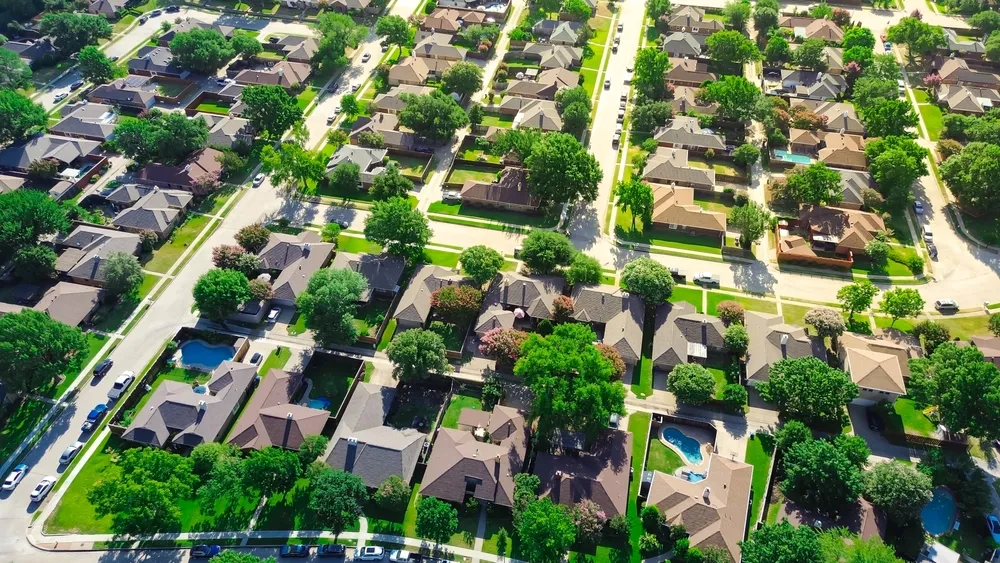
The Dallas–Fort Worth housing market is often discussed in aggregate, but the headline numbers conceal a more specific problem: buyers and sellers are stuck in a standoff driven by mismatched expectations, and the standoff plays out differently from one neighborhood to the next.
Kristyn Fuston, a residential agent with eXp Realty who focuses on VA buyers across DFW and the Texas Panhandle, describes a market where both sides feel shortchanged. Buyers who are well-qualified and ready to purchase are underwhelmed by what their budgets can get them. Sellers, meanwhile, are mostly transacting out of necessity, job relocations, family changes, financial pressure, and cannot afford to accept the discounts buyers are pushing for.
“I wouldn’t really call it a buyer or a seller’s market right now,” Fuston says. The result is a market where homes sit longer without necessarily becoming bargains.
The Price Band That’s Still Moving
Within the broad $300,000 to $500,000 range that defines much of DFW’s middle market, Fuston sees the $350,000 to $400,000 segment selling noticeably faster. She attributes this to the concentration of first-time and move-up buyers whose household income aligns with that price band. Above $450,000 to $500,000, homes tend to sit longer, not because something is wrong with the properties, but because the buyer pool narrows. She points to a listing in the Midlothian area, priced close to a million dollars, that has been on the market for over a year and a half. “We got to find the right person with that budget to want to go to Midlothian,” she says. “A little bit harder to come by.”
The stalemate is sharpest when buyers misread days on market as desperation. One of her current listings keeps receiving offers roughly $100,000 below asking from the same individual. The seller, she notes, would have to bring money to the table at that price, making the offer a nonstarter regardless of how long the home has been listed.
New Construction Is Winning on Incentives, Not Just Product
Builders in DFW’s expanding outer suburbs are pulling buyers away from resale inventory through financial terms individual sellers cannot match: rate buydowns, closing cost coverage, and agent compensation. Fuston points to Furst Ranch in the Flower Mound area, a development she says spans approximately 2,300 acres with nine homebuilders participating.
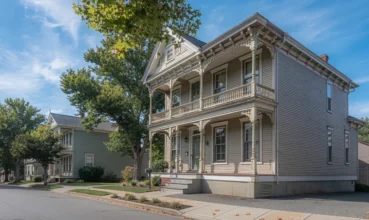
Resale homes still draw buyers who want character, older neighborhoods with distinctive architecture, established trees, and layouts that differ from what Fuston calls “cookie-cutter” new builds. Areas like Hurst, Euless, Bedford, and North Fort Worth attract that preference. But on the financial side, builders have an edge most individual sellers can’t match. “A seller doesn’t have that type of pocket change to help buy down the rate and offer you a 3.99 interest rate and cover your closing costs,” Fuston says.
For buyers choosing between new construction and resale, the decision often comes down to whether character and location outweigh the builder incentives that lower their upfront costs.
Buyers are paying much closer attention to property taxes as a component of their monthly payment, according to Fuston. A $400,000 home in North Fort Worth and a comparable home in the Dallas and Collin County area can produce meaningfully different monthly obligations once taxes are factored in. “The home buyers are now being educated on how much that can impact their purchasing power,” she says. That education is changing which cities and counties buyers are willing to consider, making tax rates a driver of where demand concentrates across the metro, not just price per square foot.
Data Centers Are Straining Housing Supply
The Amarillo and Canyon area presents a sharply different picture from DFW’s expectation standoff. Data center construction has been expanding there over the past decade, according to Fuston, bringing thousands of workers into a market that was not built to absorb them quickly. Housing has gotten sparse enough that Fuston describes residents renting out cots in garages to accommodate the influx. Hotels and traditional rentals have been insufficient.
Despite the influx, buyers in the Panhandle are not settling for whatever is available. Fuston says many incoming workers will rent rather than buy a home they may not be able to resell at a reasonable price, particularly manufactured or hastily built housing that does not match what the local market values long-term.
For investors considering the Panhandle, Fuston recommends looking at land on the outer edges rather than interior flips. Buyers native to the area prefer space between neighbors and are accustomed to longer drives. Half-acre to acre lots positioned for development, she says, align better with what the local market actually wants.
VA Buyers Are Counting Themselves Out Too Early
Fuston, whose husband served ten years in the Air Force, says the most common mistake VA-eligible buyers make is assuming they do not qualify before they even start. She attributes this to misinformation, one person’s negative experience becoming received wisdom. With the right lender, she says, credit requirements are more flexible than many buyers expect, and the appraisal and regulatory process closely mirrors FHA lending.
She describes helping a buyer who had been turned down across multiple states over two years due to a high debt-to-income ratio. He ultimately purchased a six-bedroom home on ten acres. As a veteran with a 100% disability rating, he pays no property taxes on it because Texas exempts a qualifying residence homestead for eligible veterans at that rating. For VA-eligible buyers, the practical step is finding a lender and agent experienced with VA loans before assuming the answer is no.
Buyer Reluctance on Representation
Looking ahead, Fuston says she is watching one trend closely: more buyers declining agent representation. She connects this to confusion following the NAR settlement roughly two years ago, which changed how buyer agent compensation is handled. Many buyers, she says, are unclear on what representation now involves or who pays for it. In a market already defined by mismatched expectations, that uncertainty adds another layer of information that buyers need to sort out before they make an offer.
In a market where neither side is getting what it expects, buyers who navigate without representation risk compounding the information gap that is already driving the standoff.
About the Expert: Kristyn Fuston is a residential agent with eXp Realty, focusing on VA buyers across Dallas-Fort Worth and the Texas Panhandle.
This article is based on information provided by the expert source cited above. It is intended for general informational purposes only and does not constitute legal, financial, or real estate advice. Readers should conduct their own research and consult qualified professionals before making any real estate or financial decisions.