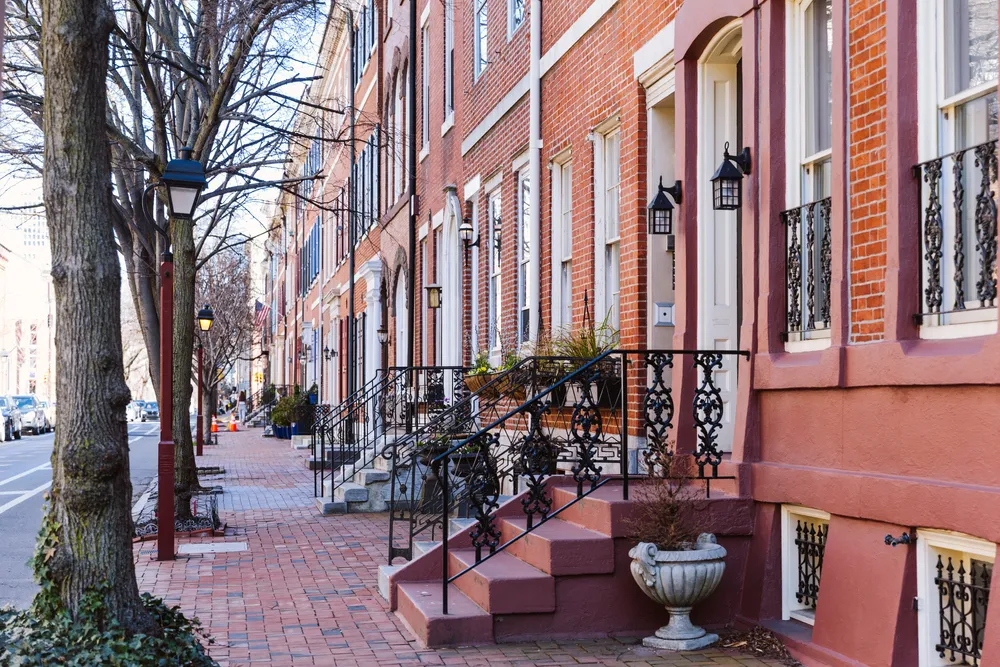
Philadelphia’s median sale price continues to inch up one to two percent annually across most zip codes, a statistic that suggests a stable, readable market. For investors entering the city’s fix-and-flip space, that number is misleading. According to Aziz Dali, a real estate investor and agent at Realty Mark Cityscape who has completed close to ten flips in the city over the past two years, Philadelphia’s pricing logic operates block by block, not neighborhood by neighborhood. Comparable sales from two or three blocks away can be functionally useless.
“You have to know the city very specifically, especially block by block, street by street,” Dali says. “Your house sale from two, three blocks away, it’s not going to be compared to a house because the block can be completely changed.”
That granularity creates both risk and opportunity, and it explains why Philadelphia keeps attracting out-of-state capital even as the broader transaction pace has slowed.
Why Out-of-State Investors Keep Showing Up
Philadelphia’s appeal to investors, particularly those priced out of New York and New Jersey, starts with the entry cost. Properties can be acquired starting at $50,000 to $60,000, and renovated homes sell for $250,000 to $400,000 depending on the block. The city’s population of 1.5 million, six million including the suburbs, supports steady end-buyer demand.
Dali’s most recent flip illustrates the math. He purchased a home in West Oak Lane for $120,000, spent close to $100,000 on renovation, and sold it for roughly $330,000. The buyer, a first-time homeowner, received nearly $20,000 in city grants and purchased with almost no money down.
That grant infrastructure matters. Philadelphia offers substantial down payment and closing cost assistance for first-time buyers, and Dali says those programs keep his buyer pipeline active. “My buyers are mostly first-time home buyers who like to see the house fully renovated,” he says.
Century-Old Housing Stock Changes the Renovation Equation
Much of Philadelphia’s housing was built between 1900 and the 1960s. For flippers, that age translates directly into renovation scope. Dali says nearly every house he has worked with has required new plumbing, new electrical, and a new roof, regardless of how the property looked on the surface.
“When you buy the house, you go inside, you start opening up the walls – almost every single house, you have to have new plumbing, new electrical. There’s almost no skipping that,” he says.
This is where new investors get caught. Dali says the most common mistake is underestimating the renovation budget, assuming that cosmetic updates, a new bathroom, kitchen, and paint, will be enough to command top after-repair value. In a market full of hundred-year-old homes, mechanical systems are the real cost driver, and buyers hiring inspectors expect those systems to be new. Homes where sellers cut corners on renovation sit on the market longer than usual, according to Dali.
His most recent West Oak Lane flip shows what thorough renovation looks like in practice. The house was built in 1925 and had only one bathroom. Dali’s team added a master bathroom and a basement bathroom, bringing the total to three. They finished the basement and replaced all mechanical systems. The buyer told Dali days later that her family loved the house; she had children and needed the space.
A Slower Market With Persistent Demand
Since 2024, Philadelphia’s transaction pace has slowed. Dali attributes the drag to rising interest rates and broader economic and political uncertainty. Homes are harder to sell than they were two years ago, even though median prices continue their modest annual climb.
What is selling, Dali says, are fully renovated homes in neighborhoods with strong sales volume. He names West Oak Lane, West Philadelphia, Strawberry Mansion, and Fishtown as areas with consistent activity. His process for selecting neighborhoods is straightforward: he looks for zip codes where homes sell quickly, and he sticks to areas where he already has experience and data.
For distressed properties, the buyer pool is almost exclusively other investors. For finished, renovated homes listed on the MLS, first-time buyers, typically younger families with stable jobs who want to stay close to the city center, are the primary audience. “They already grew up in the two-bedroom apartment; they don’t want to rent anymore,” Dali says.
Vacant Land and the Multifamily Opportunity
Dali also acquires vacant land in Philadelphia, with plans to build multifamily rental housing. He describes North Philadelphia as a typical market for this strategy, where two-bedroom, one-bathroom rental units serve Section 8 tenants.
Analyzing a vacant lot deal is harder than analyzing a flip, Dali says. The renovation budget for new construction is significantly higher, the permitting process involves more surveys and approvals, and the financing terms – higher loan amounts and higher interest rates – add risk. “It’s harder but still doable,” he says. “You need to have the right people, right team.”
The buyer profiles for flips and rentals differ. Flip buyers tend to be in their thirties and forties, families looking to settle down and needing more space than a two-bedroom apartment. Rental tenants in the multifamily segment skew younger and want proximity to the city center and their workplaces.
What Investors Should Watch
Dali says the variable he is tracking most closely is interest rates. He notes that after the most recent election cycle, properties that had been sitting on the market went under contract once uncertainty eased. If rates decline, he expects more activity and upward price pressure. If they continue rising, the current slow pace persists.
His advice to investors considering Philadelphia is practical: visit the property, drive the surrounding blocks, verify that comparable sales are genuinely comparable to the specific block in question, and budget conservatively for renovation. Contractor reliability is another risk Dali flags from personal experience – he lost money early on to contractors who took payment and disappeared.
“You got to know your numbers, your neighborhood, and you still can be successful in the market,” he says.
About the Expert: Aziz Dali is a real estate investor and agent at Realty Mark Cityscape, focused on residential fix-and-flip projects and exploring multifamily investment opportunities in Philadelphia.
This article is based on information provided by the expert source cited above. It is intended for general informational purposes only and does not constitute legal, financial, or real estate advice. Readers should conduct their own research and consult qualified professionals before making any real estate or financial decisions.