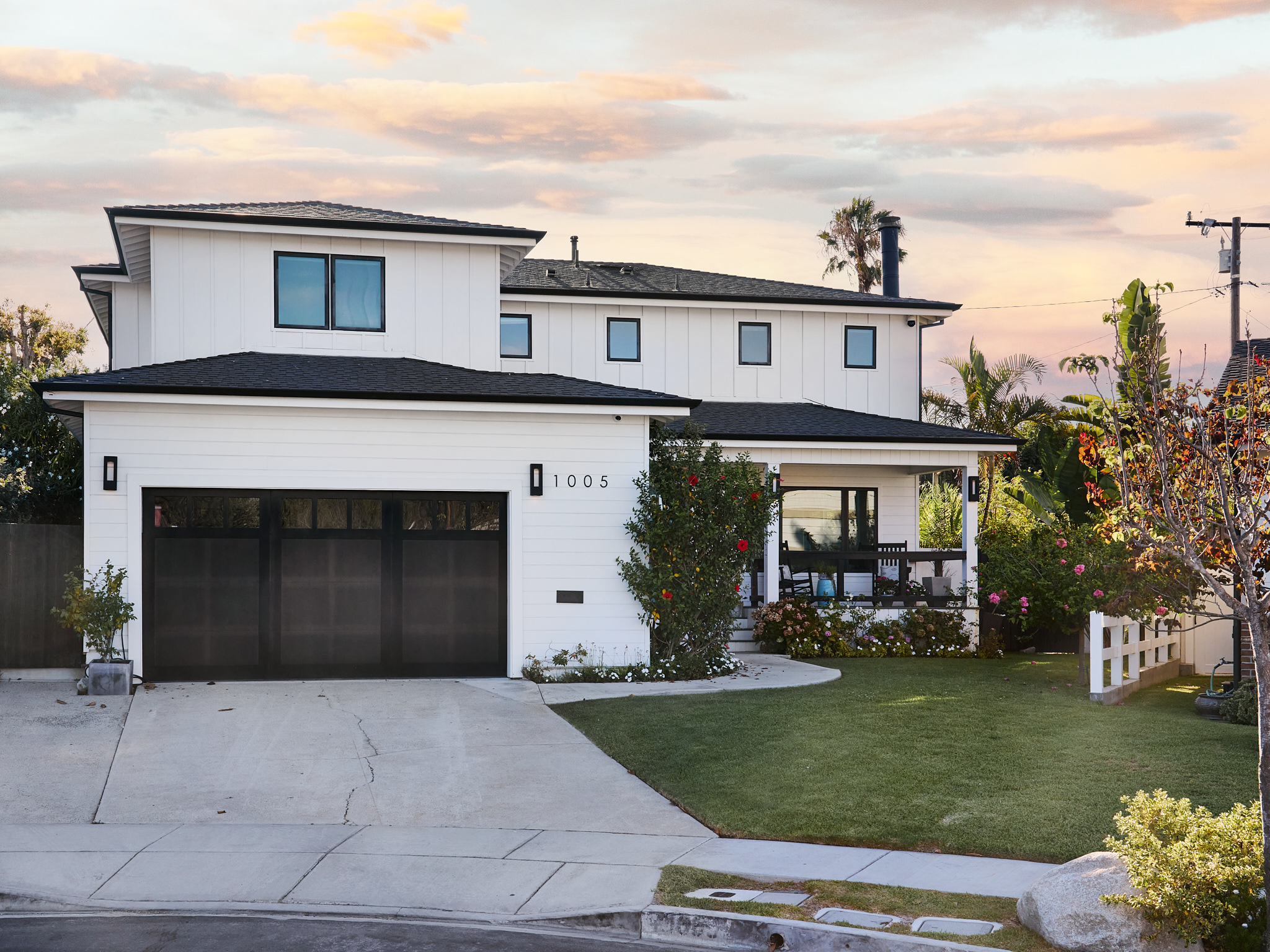
El Segundo, California, sits just south of Los Angeles International Airport – a municipality of roughly 17,000 residents in a single zip code. The city has adopted mixed-use and residential overlays meant to open the door to new housing, but little has been built under them. Interest rates climbed almost as soon as the city approved a redevelopment along Pacific Coast Highway, and developers who need a return on capital have largely stayed on the sidelines.
The gap between planning approval and actual construction is not unique to El Segundo, but the city’s small scale makes the pattern unusually visible. That project, Pacific Coast Commons, has not moved forward since. “The project got approved based upon a lower interest rate and a lower cost of construction,” says Scot Nicol, an agent with Nicol Real Estate Group at Compass who previously served on the El Segundo City Council. “And so the project is sitting stagnant. It has not put shovels in the ground yet.”
A second site faces a different hurdle. Its owner holds a residential overlay, but the overlay does not grant residential use by right: changing the site’s industrial zoning would require approval from the planning commission and city council. The owner “continues to socialize their project,” Nicol says, but no application has been filed.
Nicol pushes back on the idea that the rezoning exists only on paper. As he sees it, the city’s role is to set the rules and create the opportunity, not to finance construction. “We’re never going to spend tax dollars to build new units,” he says. That leaves the next move to private capital, and private capital is waiting for better math.
Where the Density Economics Break Down
State laws like SB9 lot splits were designed to enable infill housing across California. In El Segundo, exactly one SB9 project has been completed – a four-unit development that initially listed units around $1.45 million. The units did not sell at that price. One eventually traded at $1.225 million, and the smallest unit dropped its asking price to $999,000 the morning of the interview.
Nicol draws a distinction between El Segundo and the city of Los Angeles, where SB9 splits are far more common. “The consumer is more accustomed to living in density” in Los Angeles proper, he says. “Whereas in the South Bay, that consumer doesn’t desire the same density. And so the marketability of those projects, it just doesn’t land the same.”
ADUs follow a similar pattern. Developers working in El Segundo will sometimes get ADU permits approved during a remodel but won’t actually build them, because the data doesn’t show a meaningful price premium. “Until it’s established that if you have a one- or two-bedroom ADU on your property, your property is worth $300,000 more – that’s not established,” Nicol says. Instead, developers offer permit-ready plans as an option for buyers who want to build one themselves.
For buyers considering density-oriented housing in the South Bay, the takeaway is direct: the housing formats California is encouraging do not yet carry the market acceptance or pricing support that would make them competitive with traditional single-family homes in this area.
Schools Are the Market’s Engine
What drives demand in El Segundo is its public school system, which carries a far stronger reputation than the sprawling Los Angeles Unified School District that serves much of the surrounding city. That gap is a consistent pull for young families working across the west side of Los Angeles.
Nicol describes a typical buyer path: professionals move to LA for work, start families, then discover their neighborhood’s school scores. Many end up weighing private school costs against the price of relocating to a stronger public district. “Some people are just not wired to pay for private school,” Nicol says. “And so a lot of times that’s when I’ll be contacted.”
A recent transaction illustrates the dynamic. Two physicians living in the Mar Vista area spent six months competing for homes in El Segundo, losing out on four properties before finally getting an offer accepted. They viewed the listing “as a scarce commodity,” Nicol says – it was in the specific pocket of town they wanted, and they feared few comparable homes would follow. Their offer came in above what they had hoped to spend, though still within their budget, and they plan to stay 20-plus years as they raise their family through the school system.
Single-Family Homes Carry the Investment Case
Roughly 98 percent of Nicol’s business involves primary-residence buyers. But for the small number of investors considering El Segundo, he points to a striking divergence: multifamily buildings – duplexes, triplexes, and four-unit properties – are trading at roughly the same prices they were eight or nine years ago, despite a decade of inflation. Single-family homes, by contrast, have appreciated meaningfully. Vacant lots now trade for a minimum of $1.5 million, up from around $1.2 million over the same period, and new construction on that land can sell for approximately $4 million.
The buy-build-sell math still works for single-family: acquire land at $1.5 to $1.6 million, build for roughly $1.5 million, and sell for around $4 million. “That’s a nice margin,” Nicol says.
For buy-and-hold investors, the school district creates a reliable rental market. About 51.5 percent of El Segundo’s residents are renters – many of them families who want access to the schools but cannot afford to purchase. “Single-family home market would not be a terrible place to park some money, get a decent return on the rent, and then get to play the appreciation game a bit,” Nicol says.
Multifamily’s stagnant pricing means investors looking for appreciation are better served by single-family assets in this market.
Consumer Confidence Is the Variable to Watch
Nicol frames the near-term outlook around consumer confidence rather than any single economic indicator. Active buyers in his market tend to be families with stable careers who plan to stay for a decade or more. “They’re buying because they know they’re going to be here for 10-plus years and they believe their job and their industry is solid,” he says. More hesitant buyers track the news cycle closely – engaged when sentiment is positive, pulling back when it turns negative.
Cash investors, for their part, are largely sitting still. With rates elevated, they see patience as leverage. Nicol advises them to let overpriced inventory age. “Some of the stuff that’s left on the market for the summer, those are leftovers,” he says. “If nobody eats them in the fall and we head towards the holidays, that’s where you can likely pick some stuff up under market, without competition.”
That patience cuts both ways. If borrowing costs drop, Nicol expects the development pipeline to accelerate quickly. “As soon as the interest rates flip and money is cheaper, all of a sudden we’re going to have too many projects to keep up with,” he says. Until then, El Segundo’s housing supply will depend less on what the city permits than on whether developers can earn a margin at the current cost of capital.
About the Expert: Scot Nicol is an agent with Nicol Real Estate Group at Compass, covering El Segundo, California. He previously served on the El Segundo City Council.
This article is based on information provided by the expert source cited above. It is intended for general informational purposes only and does not constitute legal, financial, or real estate advice. Readers should conduct their own research and consult qualified professionals before making any real estate or financial decisions.