Most commercial real estate investors still treat Arkansas as a flyover state. The numbers suggest otherwise: office, retail, and industrial properties across the state are running at 3 to 6...

Flood Elevation, Not Renovations, Drives Home Values on Sarasota, Florida Barrier Islands

Written by:
Date:
02 Aug 2026
Share via Facebook

Share via Linkedin

Share via X

Copy to clipboard

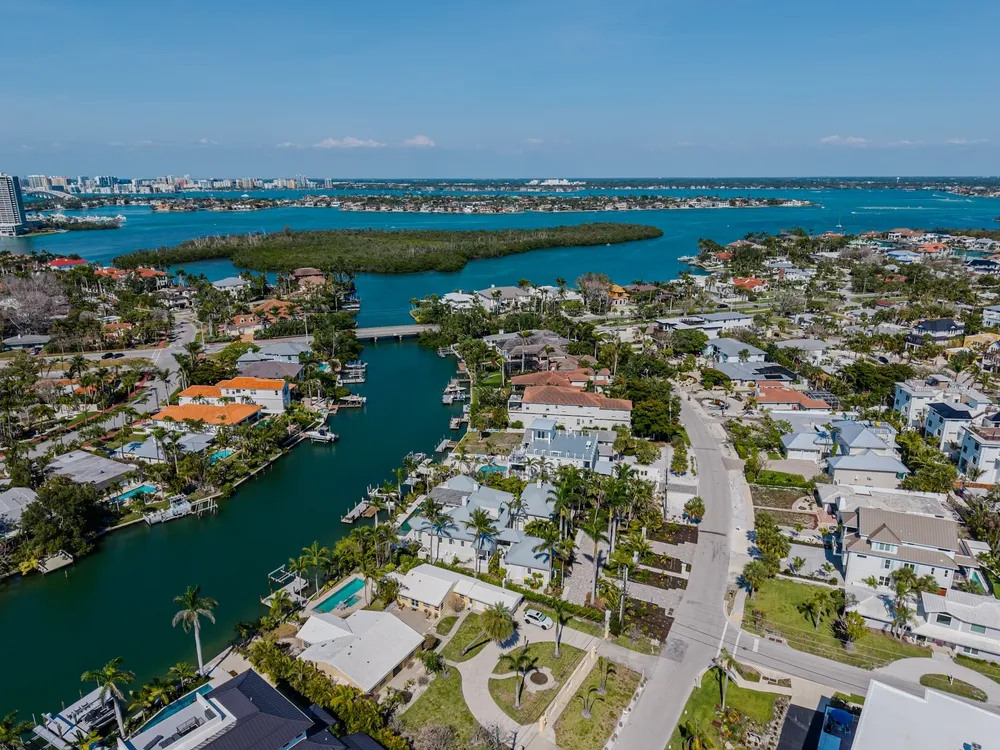
A beautifully renovated home on a barrier island might seem like the safest bet in coastal Florida. But in Sarasota, buyers are learning that a home’s elevation relative to the base flood line matters far more than its kitchen counters or square footage. According to Tom Cail, Co-Founder of the Cail Grande Group at RE/MAX Alliance Group in Sarasota, the same home elevated to current flood code “probably gets a million dollars more” than one sitting below it. That gap, Cail says, is one no amount of cosmetic upgrades can close.
Cail and business partner Jason Grande have worked together for 18 years. They focus primarily on Siesta Key, while also covering Casey Key and Longboat Key. That work is part of Cail’s more than three decades in the Sarasota market. He says the post-hurricane market has made one lesson unavoidable: on the barrier islands, “new construction is definitely king.”
The Elevation Premium
Cail describes a clear ceiling on what buyers will pay for older homes in flood zones, regardless of condition. Even a gorgeously finished property below the base flood elevation hits a price wall. Buyers factor in the possibility of future flooding, the cost of elevated insurance, and the knowledge that the structure itself is a depreciating asset built on valuable land.
That million-dollar premium reflects storm safety, insurability, and long-term carrying costs. A home above flood elevation qualifies for dramatically lower flood insurance rates. That difference compounds year after year.
What Storms Proved
The hurricanes that hit Sarasota’s coast roughly a year and a half ago provided a real-world test. Cail says the newer homes built to current elevation and wind codes came through largely unscathed: “The new homes didn’t sustain any damage.” Landscaping was about the only casualty. Older homes below elevation flooded, confirming the fear that had already suppressed their values.
This does not mean older homes are worthless. Many cash buyers purchase below-elevation properties for the land underneath. They plan to tear down and rebuild within four or five years. In the meantime, they self-insure and treat the existing structure as a temporary asset, a vacation spot to enjoy while land values appreciate. But that strategy requires buyers who can absorb a total loss on the structure, not someone stretching to afford a primary residence.
Cail says these buyers recognize that the markets they are coming from will not appreciate at the same rate as coastal Sarasota, so they secure the land now with plans to build later.
Where Sellers Miscalculate
The trap for sellers of older barrier-island homes is overvaluing their improvements. A renovation on a home that sits below current flood elevation does not recoup dollar for dollar at resale. Buyers discount the structure because they know, from recent experience, that it is vulnerable. Cail notes cases where owners over-built relative to their lot size, squeezing too much house onto too little land. Those properties struggle to sell.
As older homes are torn down and replaced with elevated new construction, the barrier islands become accessible only to buyers with deep resources. Cail acknowledges this openly. He says the redevelopment “changes the character of the island” and “makes it less affordable for people to live out there.” That is a real loss, even as it makes the housing stock more resilient.
What Buyers Should Seek
For anyone considering a barrier-island purchase in Sarasota, Cail’s observations suggest a clear hierarchy. A property built to current flood elevation on a strong piece of land holds its value best. A below-elevation property on excellent land can work as a long-term play for a cash buyer who intends to rebuild. A below-elevation property on a marginal lot, one with small frontage and no water access, carries the most risk. Neither the structure nor the land commands a premium in that case.
Cail frames the underlying logic simply: “The value of real estate is always the dirt.” The structure depreciates from the day it is completed. The land does not. On Sarasota’s barrier islands, where no vacant land remains and redevelopment is accelerating, that principle is playing out lot by lot, teardown by teardown.
About the Expert: Tom Cail is co-founder of the Cail Grande Group at RE/MAX Alliance Group in Sarasota, with over three decades of experience in the Sarasota County market dating back to 1992.
This article is intended for informational purposes only and does not constitute legal, financial, or investment advice. The views and opinions expressed herein reflect those of the individuals quoted and do not represent an endorsement of any company, product, or service mentioned. Readers should conduct their own due diligence and consult qualified professionals before making any investment decisions.
Similar Articles
Explore similar articles from Our Team of Experts.

Perspectives, Residential Real Estate, Market Analysis & Policy, Real Estate Investment, Industry News
The real estate development industry has a predictable problem, according to Erik Hayden, founder of Urban Catalyst, when market conditions shift, the biggest players move in lockstep, ...