Most commercial real estate investors still treat Arkansas as a flyover state. The numbers suggest otherwise: office, retail, and industrial properties across the state are running at 3 to 6% vacancy across most asset classes, according to Bryce Richardson, president of commercial sales at Brick Real Estate in Faulkner County, Arkansas. National office vacancy hovered near 20% earlier this year. Arkansas office vacancy sits around 12%, a gap Richardson attributes to structural advantages in secondary markets rather than a temporary anomaly.
“We are not a primary market from a national standpoint, and that is actually to our advantage,” Richardson says.
The Cap Rate Spread
That vacancy gap is showing up directly in pricing. A deal in Nashville might trade at a 5 cap, Richardson notes, while a comparable asset in Arkansas could trade at a 6 to 7 cap, a 100 to 200 basis point premium that matters when financing costs are elevated.
For investors underwriting deals today, that spread produces a meaningful difference in cash-on-cash returns. Richardson says once out-of-state buyers understand the return profile available in Arkansas, most begin actively seeking deals there rather than treating the state as a fallback option.
“The investors that hear about the things and the returns that we are having here compared to national markets, most people start trying to put their money in the deals here,” Richardson says.
Being Overlooked Became an Advantage
The same characteristics that caused institutional investors to overlook Arkansas for decades – smaller population, lower profile, limited national media coverage – are now working in the market’s favor. Because Arkansas was never flooded with speculative capital during the low-rate era, Richardson argues, its commercial real estate fundamentals were never stretched to the same degree as primary markets.
Richardson suggests pricing has not yet fully adjusted to reflect the underlying performance data, meaning investors entering now may still capture the spread before it compresses.
The state’s industrial base is also expanding. Multiple data center projects have been announced across Little Rock, Conway, West Memphis, and Texarkana. Richardson notes that Google has been among those staking out positions in the state and that economic development partnerships between data center operators and local governments are funding workforce training programs for electricians, plumbers, and HVAC professionals.
Value-Add Deals
Richardson identifies a counterintuitive pattern in transaction velocity: stabilized, fully renovated assets are sitting longer than properties that need work. Investors are gravitating toward value-add opportunities where they can identify a clear margin between acquisition cost and post-renovation value.
He describes a typical scenario: a property listed at $1 million that requires $100,000 in renovations to reach a $1.2 million valuation gives the buyer $100,000 in created equity. Those deals, Richardson says, are trading faster and with fewer seller concessions than comparable stabilized assets at full price.
For sellers of fully renovated properties, this means longer marketing periods and more concession requests than they would have faced two years ago.
The Missing Middle Driving Demand
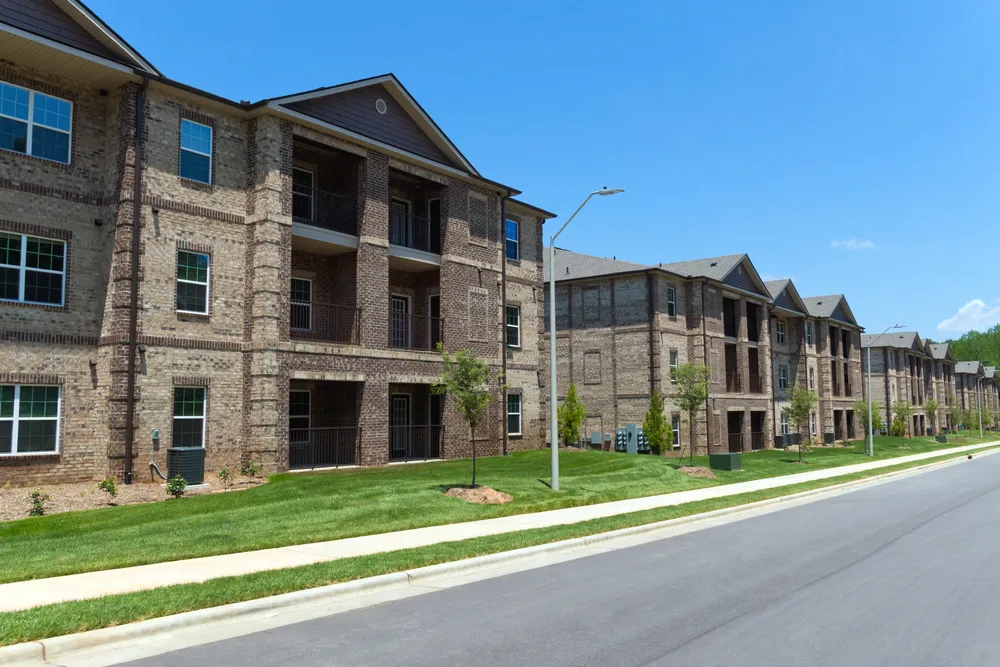
Properties in the $1 million to $3 million range – typically 8 to 20 unit apartment complexes – represent one of the scarcest asset classes in the market, according to Richardson. These assets attract investors trying to scale from single-family portfolios into larger holdings, often using 1031 exchanges.
Richardson recently closed a 64-unit apartment complex in Conway at $4.8 million – roughly $70,000 to $75,000 per door – at a 7.5 cap rate. He describes it as a value-add deal with potential to reach approximately $6 million in value within three to five years with a 20 to 30% expense load.
Arkansas recently passed state legislation allowing accessory dwelling units, a policy change Richardson says is intended to address this missing middle gap and create more development opportunity in the small multifamily space. He sees this category getting a significant development push if financing becomes more accessible.
“If we can figure out the finance piece as interest rates increase, I think we’ll see a lot more development in specific cities that will increase the missing middle,” Richardson says.
Local Presence Supports Out-of-State Investors
Brick Real Estate handles multifamily, office, retail, and industrial transactions across central Arkansas, with roughly 40 to 50% of Richardson’s deals completed off-market. For retail assets, the firm offers leasing services alongside acquisition support, allowing investors to acquire strip centers and rely on the firm to fill vacancies at market rates.
Richardson says this full-cycle approach is particularly relevant for out-of-state investors who want value-add exposure without managing tenant relationships from a distance. The combination of tight vacancy, wider cap rates, and expanding industrial infrastructure gives investors entering Arkansas today a fundamentals profile that most primary markets no longer offer at comparable pricing.
About the Expert: Bryce Richardson is president of commercial sales at Brick Real Estate, serving Faulkner County and central Arkansas across multifamily, office, and retail assets. He has completed 37 transactions in the past six months spanning leases, sales, and active listings.
This article is intended for informational purposes only and does not constitute legal, financial, or investment advice. The views and opinions expressed herein reflect those of the individuals quoted and do not represent an endorsement of any company, product, or service mentioned. Readers should conduct their own due diligence and consult qualified professionals before making any investment decisions.