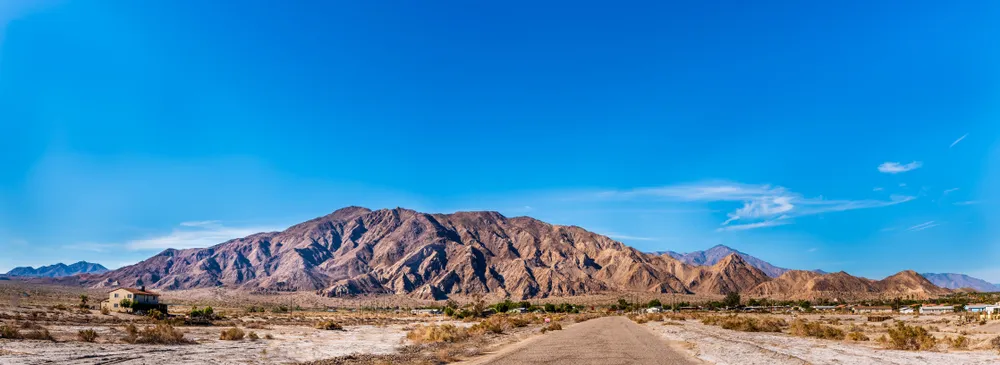
In parts of the eastern Coachella Valley, parcels that look like obvious development opportunities on paper are worth far less than their location suggests – because they cannot be connected to the electrical grid. The local utility serving that portion of the valley is at capacity, according to Troy Kudlac, Broker – President of KUD Properties, Inc., a brokerage and development firm active across the region. Until infrastructure expands, land that would otherwise attract builders sits idle.
Kudlac’s firm builds homes, handles commercial and residential brokerage, and evaluates development sites from Palm Springs down through La Quinta and beyond. He calls the power constraint one of the most significant headwinds facing the region heading into 2027.
Grid Capacity Reaches Limit
The constraint is straightforward. The Imperial Irrigation District, which provides power to eastern portions of the valley, is overloaded. Kudlac says developers are effectively “handcuffed because there is no power available.” The result is land that checks every other box – location, zoning, access – but cannot support construction. “They have land that’s great land to build on, but no power,” he says. “It’s not worth much without power.”
Kudlac describes the effect on development directly: the power limitation is “stunting development and becoming a problem for a lot of areas that developers would proceed in developing.” Sites that would otherwise move forward sit waiting for utility capacity that has no announced timeline.
Labor Shortage Adds Caution
This is not the only constraint Kudlac flags. He points to a shortage of specialized trade workers – electricians, HVAC technicians, plumbers, framers – as a parallel challenge. The valley needs those workers to build the homes that growing demand requires, and Kudlac says the pipeline of people entering those trades has thinned. “We’ve kind of been slowing down on the amount of workforce wanting to get into those kinds of trades,” he says. For anyone planning to build in areas where power is available, finding and scheduling qualified tradespeople adds time and cost to any project.
These constraints have changed how developers evaluate opportunities. Kudlac says, “developers are being very picky about what they want and what makes sense.” Four or five years ago, he says, developers were willing to take on more risk, accepting some uncertainty and trusting they could work through problems during the process. “Now developers are pretty picky about everything and getting down into the nuts and bolts of every single thing before they move forward and buy a lot,” he says, “instead of going a little more on the side of taking more risk.”
Caution Guides New Projects
Kudlac’s own firm illustrates the caution. He says KUD Properties is close on a couple of projects involving its Desert Eichler homes – a line of mid-century-inspired new construction that has sold well. Still, the same infrastructure constraints are determining which sites make sense. “Can we find the right site where we have power, and we have all the things that we need to make it make sense?” he says. That question now precedes every other consideration.
For the broader market, the practical effect is limited new construction in the east valley as long as the power issue persists. Kudlac’s view is that the Coachella Valley’s growth depends on resolving both constraints – grid capacity and workforce supply – and that neither has a clear resolution in the near term. As the valley expands, the gap between developable land and land that is merely available will continue to define which areas attract investment and which remain stalled.
About the Expert: Troy Kudlac is Broker and President of KUD Properties, a brokerage and development firm active across the Coachella Valley in Southern California.
This article is intended for informational purposes only and does not constitute legal, financial, or investment advice. The views and opinions expressed herein reflect those of the individuals quoted and do not represent an endorsement of any company, product, or service mentioned. Readers should conduct their own due diligence and consult qualified professionals before making any investment decisions.
After a historic run of rapid appreciation, the South Florida real estate market is beginning to cool. Larry Mastropieri, Broker and Owner of The Mastropieri Group, a boutique luxury brokera...
If you’ve been watching the Mount Olive, New Jersey, housing market, you’ve likely seen a new pattern: sellers in certain price ranges are cutting prices by $25,000 or even $50,000 after...
Rising insurance costs in coastal markets are fundamentally reshaping commercial real estate investment strategies, with some property expenses reaching unprecedented levels, according to Jo...
The Pacific Northwest’s small communities face a complex balancing act: maintaining their historic charm while addressing modern housing needs and state mandates for increased density....
Your home has been on the market for three weeks. You’ve dropped the price once, staged the living room, and still – no offers. Meanwhile, the new construction development down the stree...
During the pandemic, Big Bear vacation rentals became unusually profitable. The Southern California mountain town surged to the top of Airbnb’s global rankings in 2020 and 2021, as city dw...