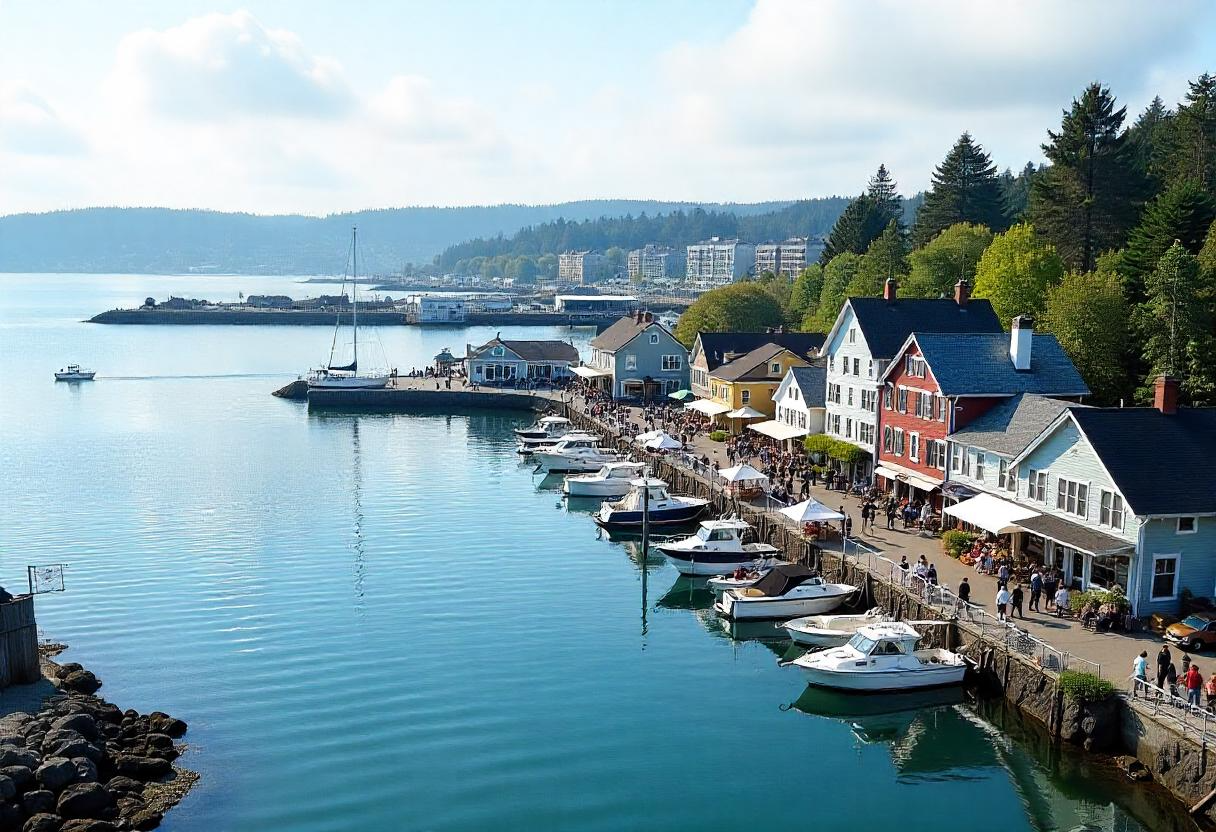
The Pacific Northwest’s small communities face a complex balancing act: maintaining their historic charm while addressing modern housing needs and state mandates for increased density. Gig Harbor, Washington, a picturesque waterfront city of 13,000 residents, exemplifies this challenge as it works to shift from a single-family residential enclave into a more diverse housing market.
Eric Baker, Community Development Director for the City of Gig Harbor, brings a unique perspective to this transition. With 34 years of experience in Kitsap County’s planning department and as deputy county administrator, Baker has witnessed firsthand how communities evolve under pressure from both regulatory requirements and market forces.
The State Mandate Reality
Like most Washington jurisdictions, Gig Harbor is working with state directives to remove barriers to housing diversity. “The state has indicated that we need to provide, we need to remove barriers, both in regulation and policy, to allow more missing middle housing as well as multifamily housing,” Baker explains.
This mandate presents particular challenges for a community that has historically embraced its single-family residential character. The city is working through its centers of local importance to find ways to increase housing density without compromising the downtown waterfront district’s “small, historic Croatian fishing village feel.”
The approach involves strategic code modifications to make certain housing types more attractive to developers while preserving the community’s valued characteristics. One key area of focus is the Judson subway plan, located in the downtown business district across from the Tides Tavern.
Public-Private Partnership Innovation
Gig Harbor’s strategy includes exploring partnerships to address multiple community needs. The city faces significant parking challenges, particularly during its busy event season, when downtown events occur almost weekly, including farmers markets and celebrations like Pride Day.
“We are looking at developing a public-private partnership on this site. We do have a need for public parking,” Baker notes. The city seeks to provide greater development opportunities for private developers in exchange for long-term public benefits, such as parking or public facilities.
This reflects a trend among smaller communities: leveraging private investment to address infrastructure needs while encouraging the housing diversity required by state mandates.
The Economics of Growth
Baker argues for increased density on fiscal sustainability grounds. Single-family developments, while popular, don’t generate enough revenue to cover infrastructure costs. “Those types of developments don’t pay for themselves. They usually have to be subsidized by greater development somewhere else,” he explains.
The city has identified a potential 200-unit development in Gig Harbor North, including a grocery store and commercial features. This project follows a common small-city strategy: annexing areas and creating commercial components to help fund historic preservation downtown.
Major capital improvements—wastewater treatment upgrades and transportation projects—must be funded regardless of population growth. “It’s usually better to have more people breaking that up than fewer people breaking that up,” Baker observes.
Workforce Housing and Aging in Place
The housing diversity challenge extends beyond state compliance. Few who work in Gig Harbor can afford to live there—only five city employees reside within city limits due to affordability constraints.
Baker frames the discussion around two benefits: enabling workforce housing and allowing residents to age in place. Many longtime residents own large homes that become impractical as they age, but lack suitable alternatives within the community.
“Eventually people can’t—even if they can afford to maintain their 3,200-square-foot view property—it is not necessarily constructed in a way that is up to their physical or mental abilities as they age,” Baker explains. The city aims to provide options that allow residents to remain in their community as their needs change.
Regional Draw, Local Impact
Gig Harbor faces a challenge common to small communities with regional amenities. Despite its 13,000-person population, the city serves as a regional hub with a hospital, YMCA, and the only movie theater between the Narrows Bridge and Silverdale.
This draw creates infrastructure pressures without corresponding revenue. “Unless they’re buying a taxable good, they don’t leave any money behind to fund those impacts,” Baker notes.
The situation is complicated by psychological barriers—such as the Narrows Bridge toll—that prevent people from accessing similar services in Tacoma, concentrating demand on Gig Harbor’s facilities.
Overcoming Community Resistance
Baker acknowledges implementing housing diversity changes requires extensive outreach. Many residents appreciate the current single-family character and view density increases with skepticism.
The city’s messaging strategy emphasizes benefits: state mandate compliance, workforce housing, aging-in-place options, and fiscal sustainability. Baker addresses concerns about affordability for lower-income residents, acknowledging that currently, “Gig Harbor is not a place that folks making 50% or less of annual median income can find a home.”
The outreach effort aims to address “perceived fear of density” by highlighting benefits to existing residents, especially regarding major capital facility costs.
Looking Forward
As Gig Harbor updates its development codes this year, Baker expects significant interest from developers waiting for density opportunities, reduced setbacks, and greater building heights. While he anticipates being “super popular” as the face of these changes among skeptical residents, he maintains that growth is essential for sustainability.
“My opinion is, I don’t think it could maintain its quality of life without growth,” Baker states, encapsulating the central challenge facing many small communities: evolving to meet modern needs while preserving the qualities that make them desirable places to live.
Gig Harbor’s experience offers insights for other small communities navigating similar transitions. Success depends on strategic planning, effective public engagement, and partnerships that leverage private investment for public good.
The city’s approach, balancing state mandates with community character, addressing workforce housing alongside aging-in-place needs, and using partnerships to fund infrastructure, provides a roadmap for other communities facing similar pressures to grow thoughtfully while maintaining their essential character.