
A dramatic migration pattern is reshaping the New York metropolitan area’s real estate landscape as residents seek more affordable alternatives to Manhattan and Brooklyn, according to ...

Sussex County, Delaware, Has One of the Largest Affordability Gaps in the Country
Share via Facebook

Share via Linkedin

Share via X

Copy to clipboard

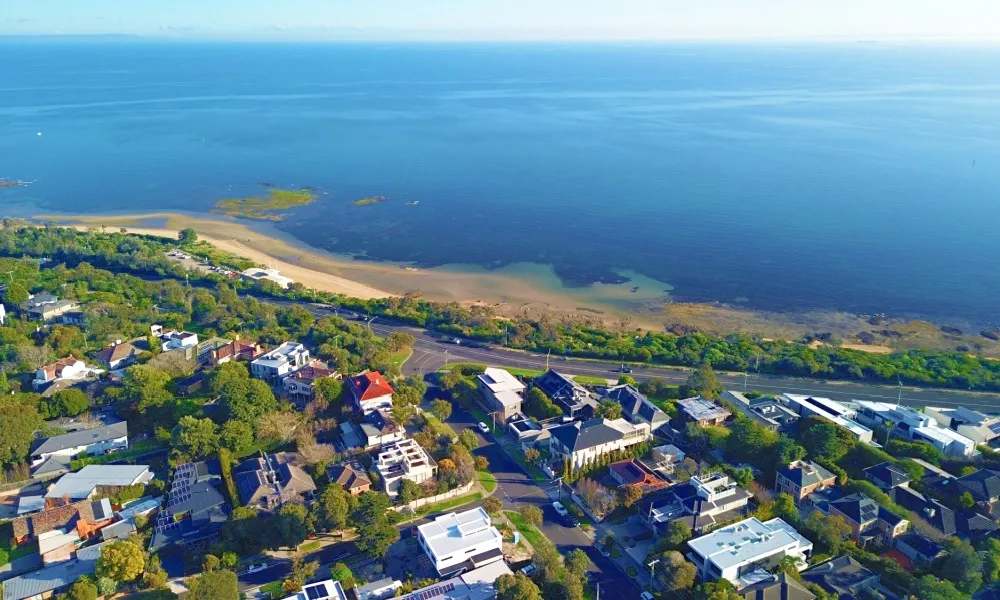
Sussex County, Delaware, is frequently cited as one of the most tax-friendly places to live in the United States. Property taxes are among the lowest in the nation, and the overall cost of living compares favorably to neighboring states like New Jersey and Maryland. Yet according to Dustin Parker, Founder and CEO of The Parker Group, a residential brokerage covering all of Delaware and Maryland’s eastern shore, those advantages are not reaching the people who need them most.
Parker argues that Sussex County has developed one of the most pronounced affordability gaps in the country, not because the market is expensive by coastal standards, but because local wages have not kept pace with prices driven up by out-of-state demand. “We have the county that we live in has one of the biggest affordability gaps in the country,” Parker says. “We have this local market of people that have lived here for generations, and plenty of them just can’t afford the housing that exists currently.”
The geography makes this dynamic particularly stark. Roughly 80% of buyers along the Delaware coast, according to Parker, are arriving from New Jersey, New York, Washington D.C., and surrounding Maryland counties. Many are retirees or second-home buyers with significant accumulated wealth, purchasing at price points that reflect their origin markets rather than local income levels. The result is a coastal housing market that functions almost independently from the inland economy it sits beside.
A Two-Speed Market With One Price Tag
Parker describes a clear geographic and demographic split within his own business. Closer to the coast, buyers tend to be older, wealthier, and from out of state. Further inland, the market is more local, more price-sensitive, and more reflective of what Delaware residents actually earn. Coastal pricing pressure, however, does not stay contained to the coast.
Entry-level homes – the segment most critical to local buyers – are showing the sharpest price sensitivity in the current market. Parker notes that correctly priced entry-level properties still move quickly, signaling genuine demand from local buyers actively trying to purchase. But inventory at those price points is limited, and sellers anchored to higher valuations are sitting on the market for extended periods. “If a home is priced correctly and it’s in that entry-level market, then it’s moving very quickly,” Parker says. “If it’s not, then sellers just need to be prepared to sit on it for some time.”
Days on market across Sussex County have reached what Parker characterizes as all-time highs, hovering between 60 and 90 days on average. That figure reflects the broader market, not just entry-level inventory, but for local buyers with limited flexibility on price, extended timelines, and seller resistance to negotiation make an already difficult situation harder.
Market Forces
The conventional expectation is that affordability problems eventually self-correct: prices soften, inventory builds, and buyers re-enter the market. Parker is skeptical that this mechanism will be sufficient in Sussex County’s case. The structural mismatch between local incomes and coastal-influenced pricing, he suggests, may require intervention beyond what rate movements or seller price reductions can provide.
“I think it’s going to require probably some government intervention to alleviate some of that, and just new market dynamics to help support that,” Parker says. He does not specify what form that intervention should take, but the implication is that the gap has grown too wide for organic market adjustment to close on a reasonable timeline.
This concern is not unique to Sussex County. Desirable secondary markets – particularly those attracting retirees and remote workers from high-cost metros – are experiencing a form of demand importation that local policy tools are poorly equipped to handle. Zoning reform, subsidized workforce housing, and income-linked assistance programs are among the approaches being tested in similar markets. However, none has produced a clear model for communities in Sussex County’s position.
The Parker Group Responds
While the structural affordability gap requires policy-level solutions, Parker’s firm is addressing what it can control: reducing the friction that causes deals to fall apart mid-process, a problem he sees as particularly acute in a market where buyers are cautious, and sellers are still adjusting expectations.
The firm has developed what it calls a “home intelligence” offering, which goes beyond a standard pre-listing inspection to score the individual systems and components of a home. The goal is to give buyers a complete picture of a property’s condition before they commit to an offer, reducing the likelihood that inspection findings will derail a transaction after both parties are already invested. Parker says this approach has helped sellers avoid last-minute renegotiations and deal collapses that have become more common as buyer scrutiny has increased.
“We’re really coaching our sellers to get in front of that,” Parker says. The firm also operates adjacent businesses in mortgage, insurance, title, and property management, which Parker argues give The Parker Group greater visibility into where transactions break down and greater ability to intervene before problems escalate.
Tools like home intelligence may help individual transactions close more smoothly. Still, the structural divide between local purchasing power and cost-driven pricing operates at a scale beyond any single brokerage’s reach. If Parker’s read on the market is correct, Sussex County’s affordability challenge is likely to intensify as similar dynamics play out in coastal and resort-adjacent markets across the Mid-Atlantic. The question facing policymakers is whether intervention can arrive before another generation of local families is priced out entirely.
About the Expert: Dustin Parker is the founder and CEO of The Parker Group, an independent brokerage covering the full state of Delaware and the Eastern Shore of Maryland, with nearly 50 agents and staff. Adjacent businesses include Mustache Mortgage, Canopy Insurance, and a technology operation.
This article is intended for informational purposes only and does not constitute legal, financial, or investment advice. The views and opinions expressed herein reflect those of the individuals quoted and do not represent an endorsement of any company, product, or service mentioned. Readers should conduct their own due diligence and consult qualified professionals before making any investment decisions.
Similar Articles
Explore similar articles from Our Team of Experts.