Not every Boston suburb that rezoned for new apartments will actually get them. The towns that treated a recent state mandate as a genuine opportunity are already attracting developers. The ones that found ways to comply while limiting real change technically are likely to stay largely the same, and that distinction matters if you are thinking about where to buy.
That is the argument made by Max Woolf, Public Policy and Government Affairs Manager at the Charles River Regional Chamber, a business association covering five inner-western suburbs of Boston. Woolf has tracked how each of the chamber’s towns responded to the MBTA Communities Act. This state law required municipalities served by transit to rezone for multifamily housing near their stations. His conclusion: the plans look similar on paper, but their likely outcomes are not.
What Real Compliance Looks Like
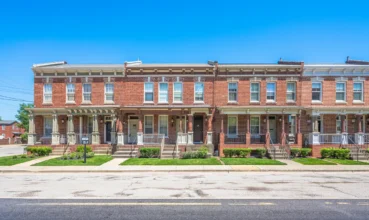
Watertown is Woolf’s clearest example of a town that leaned into the mandate. The city rezoned its downtown aggressively and made much of that new zoning “by right,” meaning a developer who meets the requirements can build without going through a discretionary approval process. That certainty matters. When a developer knows what they can build and how long the process will take, the financial model becomes easier to underwrite.
Watertown has already seen substantial residential construction alongside growth in its biotech sector, and Woolf credits the town’s willingness to streamline approvals as a direct factor.
How Towns Game the Mandate
Other communities took a different approach. Some rezoned parcels that had already been recently redeveloped, making new construction on those sites financially unlikely. Others drew their rezoning maps around properties with complicated ownership structures or physical constraints that make building difficult. The result is a plan that satisfies the letter of the state law while minimizing the chance that anything actually gets built.
Woolf does not single out specific towns. “Every community has its own idiosyncrasies and challenges,” he said. But he is direct about the consequence: towns that limited the scope of their rezoning plans will see slower, more incremental change than towns that embraced them.
A Tale of Two Suburbs
This creates a real divergence in the near-term supply picture across suburbs that appear, from the outside, to be doing the same thing. A buyer comparing two towns in the same price range, both of which passed compliance plans, may be looking at very different futures. One town may see a meaningful number of new units added over the next decade, putting some downward pressure on prices and expanding the range of available housing types. The other may see almost none.
There is one thing all five of the chamber’s communities have in common, though, and Woolf flags it as the region’s most significant unresolved constraint. Not a single town used the MBTA Communities Act to rezone single-family neighborhoods for higher density. In all five communities, those neighborhoods – which represent the majority of available land – were left entirely untouched. The new zoning is concentrated in a narrow band near transit stations and in existing commercial centers. That limits how much any of these plans can increase overall supply, even in the towns that embraced the mandate most fully.
What Has to Come Next
Woolf sees the single-family question as the next frontier. He does not expect local governments to take it on voluntarily. The pattern so far, he argues, is that meaningful change in this region comes from the state, not from individual municipalities. The MBTA Communities Act forced a conversation that local politics had blocked for years. Whatever comes next, and Woolf expects more assertive state or federal action within the next two to three years, will likely have to force the next one.
For buyers, the near-term read is this: pay attention to how a town rezoned, not just whether it rezoned. A plan that puts new multifamily zoning in areas with real development potential and makes that zoning by-right signals a town where supply is more likely to grow. A plan built around already-developed parcels or constrained sites signals a town where the status quo is likely to hold, and where prices are unlikely to soften from new construction.
When the Process Works
The two large Newton projects Woolf points to – roughly 900 units along the Charles River and about 700 units near an MBTA rail line – show what is possible when proposals clear the process. But both took years to approve and faced significant opposition. They are not representative of what most rezoning plans will produce. They are the outliers that illustrate what the region could build if more towns made it easier to try.
About the Expert: Max Woolf is the Public Policy and Government Affairs Manager at the Charles River Regional Chamber, a business association representing Brookline, Watertown, Newton, Needham, and Wellesley, Massachusetts. His work focuses on housing policy, zoning advocacy, and municipal affairs across the inner western suburbs of Boston.
This article is intended for informational purposes only and does not constitute legal, financial, or investment advice. The views and opinions expressed herein reflect those of the individuals quoted and do not represent an endorsement of any company, product, or service mentioned. Readers should conduct their own due diligence and consult qualified professionals before making any investment decisions.