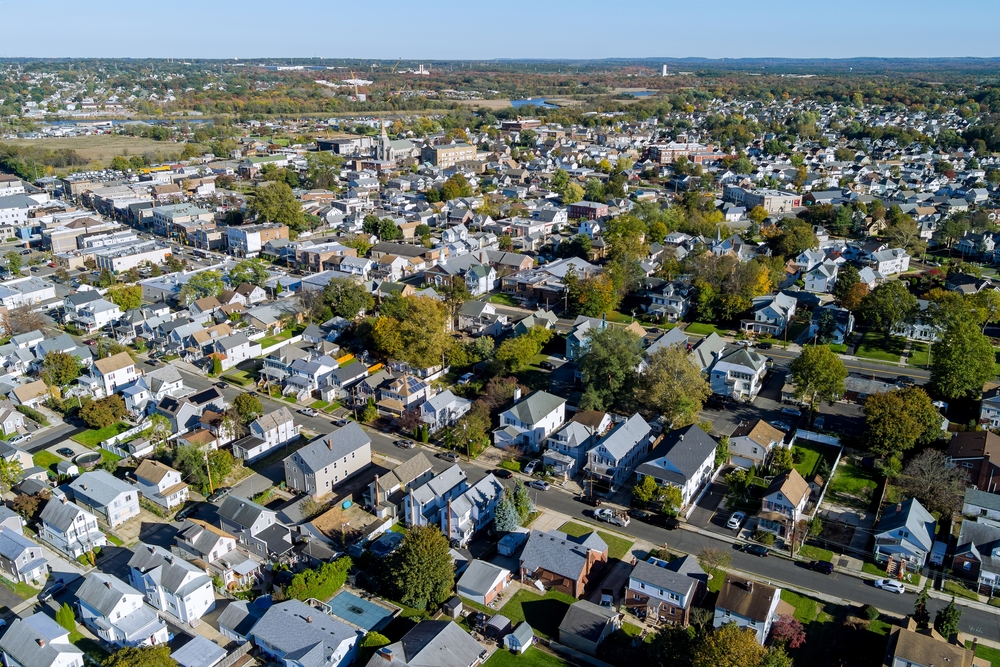
While national real estate coverage focuses on inventory surpluses and market corrections, Central New Jersey’s residential market continues to operate under very different conditions. Inventory levels remain about 40 to 50 percent below 2019 benchmarks, according to Robert Webb, broker associate at RE/MAX Supreme and lead agent of the Destination NJ Home Selling Team. This supply shortage contradicts the widespread narrative that higher interest rates and economic uncertainty have uniformly reset buyer and seller dynamics across the country.
“We’re still at about 40 to 50 percent less inventory than 2019, which, in recent memory, would be the most balanced market,” Webb says. “Markets like Austin, Texas, and parts of Florida have an overwhelming surplus, back to 2008 inventory levels. We don’t have that. We’re still almost half in the other direction.”
This disconnect between national reporting and local realities creates confusion for buyers and sellers who rely on broad headlines to guide their decisions. Clients often reference articles about market downturns and inventory surpluses, only to discover those conditions do not apply in Central New Jersey’s seven-county region, which includes Somerset County and neighboring areas.
National Data Misses Local Realities
The gap between national trends and Central New Jersey’s market stems from structural differences in housing supply that interest rate changes alone cannot explain. While Texas and Florida have seen inventory surge, sometimes approaching 2008 crisis levels, Central New Jersey’s limited geography and development restrictions prevent similar growth in available homes.
Real estate professionals and investors who base decisions on national data risk misunderstanding local dynamics, Webb cautions. Articles referencing “2008 levels of supply” or “market corrections” often focus on particular cities or national averages that do not reflect Central New Jersey’s constraints. “Real estate is local, not national,” Webb says.
This dynamic affects individual buyers, investors, and institutional players who may assume local markets will follow national trends. The result is a persistent gap between perceived market conditions and actual transaction realities.
Sellers Still Hold Market Edge
Central New Jersey’s inventory shortage continues to give sellers an edge, even as other markets have lost this advantage following Federal Reserve rate hikes. Well-priced properties routinely attract multiple offers. According to Webb’s transaction data, average sale prices have been running 2 to 3 percent above list price. Webb recently listed a property that received two offers within days, with more expected.
Webb disputes the notion that Central New Jersey has experienced a slowdown comparable to other markets. “On a national level, there’s been some slowdown due to high rates. Yes, we’ve seen a slowdown compared to 2021 and 2022, but our market hasn’t really changed over the past 12 months.”
These conditions challenge the assumption that interest rate policy affects all markets equally. While Central New Jersey saw a brief dip in activity during the fourth quarter of 2025, driven mainly by buyer fatigue, holiday timing, and lease renewal cycles, activity rebounded in the first quarter of 2026. This resilience suggests that when inventory is sufficiently tight, supply constraints can outweigh the impact of higher borrowing costs.
Webb also identifies the timing of rental leases as a key factor in market cycles. Buyers who must provide 60 to 90 days’ notice before renewing a lease often pause their search until the next cycle. “If your lease ends on May 30, you need to let them know by April 1 whether you’re staying or moving. Buyers have to put their search on hold until the next quarter.”
What This Means for Investors
The gap between national narratives and local realities carries real consequences for investment decisions and policy. Investors evaluating Central New Jersey opportunities through a national lens may underestimate local demand or overestimate supply risks. Policymakers relying on aggregate data may misdiagnose the causes of housing shortages in specific regions.
Markets with geographic constraints, strong employment, and limited room for new development may continue to favor sellers even as national indicators point to a slowdown. Central New Jersey’s combination of suburban space, top-rated schools, and commutability to New York City keeps demand high, and new construction alone cannot meet it.
The Destination NJ Home Selling Team focuses on localized education, helping clients distinguish relevant national trends from those that do not apply regionally. The approach reflects a broader industry shift toward hyperlocal expertise, as agents who clearly explain local market realities gain a measurable edge amid generalized national coverage.
Why Local Analysis Matters
As real estate news increasingly focuses on national trends and aggregate statistics, Central New Jersey’s experience reveals the limits of broad-based analysis. Markets with structural supply shortages may continue to deviate from the national norm, requiring investors, buyers, and policymakers to adopt a more granular approach.
Whether Central New Jersey’s current conditions are sustainable will depend on factors such as land availability, development costs, and migration patterns, variables that national data cannot fully capture. For now, the region’s persistent inventory shortage and strong demand distinguish it from the national picture, making local knowledge essential for anyone looking to buy, sell, or invest.