
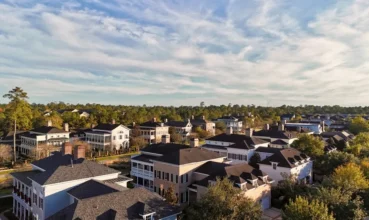
As uncertainty weighs on housing markets across the country, Houston is showing a familiar pattern: steady demand, selective buyers, and pockets of genuine competition in the right neighborh...

How Los Angeles Residential Real Estate Is Split by Price, Neighborhood, and Buyer Profile

Written by:
Date:
25 May 2026
Share via Facebook

Share via Linkedin

Share via X

Copy to clipboard


The Los Angeles residential market in mid-2026 is neither frozen nor fully recovering. It is segmented by price point, property type, neighborhood identity, and buyer profile, each behaving according to its own logic. For professionals working on the ground, reading those signals accurately has become the job.
Tamar Asken, Founder and Broker at Parasol Realty Group, has spent more than a decade watching the LA market cycle through booms, corrections, and everything in between. Her dual background as a licensed realtor and certified financial planner gives her a perspective that extends beyond transaction mechanics into the broader financial context, shaping buyer decisions. What she sees today is a market where certain segments are quietly active while others have stalled.
A Market of Distinct Segments
The condo market is one area drawing consistent attention, though not for encouraging reasons. Rising HOA fees, driven largely by increased insurance costs and deferred maintenance from recent heavy rains, have made the math less attractive for entry-level buyers. Many prospective condo buyers are concluding that spending a million dollars on a single-family home – even in a less central location – makes more sense than absorbing unpredictable monthly fees. “The thought is, well, maybe just buy a single-family house,” Asken explains. “Maybe not in an A-plus location, but at least not have that fee and own the land.”
That reasoning has concentrated demand at the entry level of the single-family market, where competition remains surprisingly strong. A basic house in a well-regarded neighborhood recently drew 18 offers. Meanwhile, larger custom properties priced ambitiously by developers are sitting longer, and the ultra-luxury segment moves on its own timeline, driven by cash buyers largely insulated from interest rate pressure.
The buyer profile itself has changed. Where younger households once dominated purchase activity, Asken is seeing a notable increase in buyers aged 60 to 80, many of whom have accumulated substantial equity over decades of ownership. These buyers often transact in cash, making them less sensitive to elevated borrowing costs and more decisive in a hesitant market. “Their needs are changing, and maybe they no longer want the two-story house that they raised their kids in,” she notes.
Insurance as a Structural Constraint
Beyond pricing dynamics, insurance has become one of the more consequential and underappreciated constraints on the LA market. Following the wildfires that devastated sections of Pacific Palisades and Altadena, obtaining coverage has become more difficult, more expensive, and in some areas effectively limited to the California FAIR Plan, a public insurance pool that does not cover full replacement cost.
California contracts now include a standalone insurance contingency, allowing buyers to exit if they cannot secure adequate coverage. Insurers are conducting property inspections before writing policies, flagging issues ranging from overhanging branches to outdated electrical panels. “It used to be that you would just call and they would write the policy,” Asken says. “Now they have people that go out and look at the property.”
For hillside properties and high-fire-risk zones, buyers are often layering the FAIR Plan with a supplemental wraparound policy, treating the combination as a temporary measure while awaiting legislative relief. Newer construction is faring better, partly because fire-resistant materials and defensible space requirements are now built into the development process.
Neighborhood Divergence
Broad market statistics obscure what is actually a highly localized picture. The San Fernando Valley, long considered the more affordable alternative to the Westside, is seeing increased activity as buyers prioritize space, suburban character, and value. Culver City, once a quiet backwater, has become a competitive submarket following an influx of technology and entertainment companies, strong restaurant development, and a more defined urban identity.
By contrast, some south and central LA neighborhoods that were generating excitement five or six years ago have quieted considerably. The anticipated revitalization has moved more slowly than buyers expected, and appetite for transitional areas has cooled. Downtown Los Angeles presents a similar story: a recovery that was gaining momentum before the pandemic and remote work patterns pulled residents toward neighborhoods offering outdoor access and more space.
“It’s a huge city that’s sort of like one neighborhood after another,” Asken observes. “They each have a really unique identity and personality.”
The Investor Calculation
For capital looking to enter the LA residential market, the conditions have grown more complex. Tenant protections have made income property ownership less predictable, and many smaller investors are exiting, with their properties increasingly absorbed by institutional buyers. “A lot of people are selling income properties because it’s becoming very expensive and not very profitable for them,” Asken notes.
The more compelling opportunity, in her view, lies in selective renovation and resale at the higher end. The era of quick cosmetic flips on low-cost properties has largely passed. Rising material and labor costs have compressed margins, and entry-level buyers are less willing to pay a premium for surface-level improvements. Higher-end properties on valuable land can support the kind of resale price that justifies investing in quality materials and craftsmanship. “Get good quality materials, spend on good quality craftsmanship, make those choices that a buyer is going to say, ‘Yes, I will pay you that $10 million because this is a really beautiful and unique property,'” she advises.
Buyer Sentiment and the Long View
The mood among buyers is cautious but not absent. Younger households are doing the rent-versus-buy calculation more carefully and often concluding that renting remains the more practical short-term choice. The urgency that characterized the sub-3% rate environment has dissipated. Some sectors of the local economy, particularly entertainment and its surrounding industries, have shed jobs, adding another layer of hesitation.
Yet Asken pushes back on the idea that waiting is necessarily prudent. “I’ve been watching people do this for the last 13 years, saying ‘I’m not going to buy now, now is the top, I’m going to wait till it crashes,’ and it doesn’t crash,” she says. Her advice centers on time horizon: buyers who can hold for five years or more are likely to look back favorably on purchases made in a quieter market, when competition is lower, and pricing reflects less enthusiasm.
Legislative Factors to Watch
Several policy developments could alter the market’s trajectory in the near term. A proposed federal measure to double the capital gains exclusion for primary residences, from $500,000 to $1 million for married couples, could unlock inventory from long-term homeowners who have been reluctant to sell due to tax exposure. The current threshold was set in the 1990s and has not kept pace with appreciation in high-cost markets like Los Angeles.
Proposition 19, which allows homeowners over 55 to transfer their property tax base to a new purchase under certain conditions, has already provided some mobility at the older end of the market. Further insurance market reform and any easing of lending conditions would add to the list of potential catalysts.
Inventory remains the underlying constraint. Construction timelines are long, regulatory barriers are real, and meaningful supply additions are unlikely in the near term. That structural scarcity continues to support values even as transaction volumes remain below historical norms. For buyers willing to act during a quieter period, the combination of less competition and constrained supply suggests that time in the market, rather than timing the market, remains the more reliable path to building equity in Los Angeles.
About the Expert: Tamar Asken is Founder and Broker at Parasol Realty Group in Beverly Hills, with more than a decade of experience in the local market. She holds dual credentials as a licensed realtor and certified financial planner, with her practice spanning multiple LA submarkets, primarily focused on Beverly Hills, Beverlywood, Westwood, Brentwood, and the Westside.
This article is based on information provided by the expert source cited above. It is intended for general informational purposes only and does not constitute legal, financial, or real estate advice. Readers should conduct their own research and consult qualified professionals before making any real estate or financial decisions.
Similar Articles
Explore similar articles from Our Team of Experts.