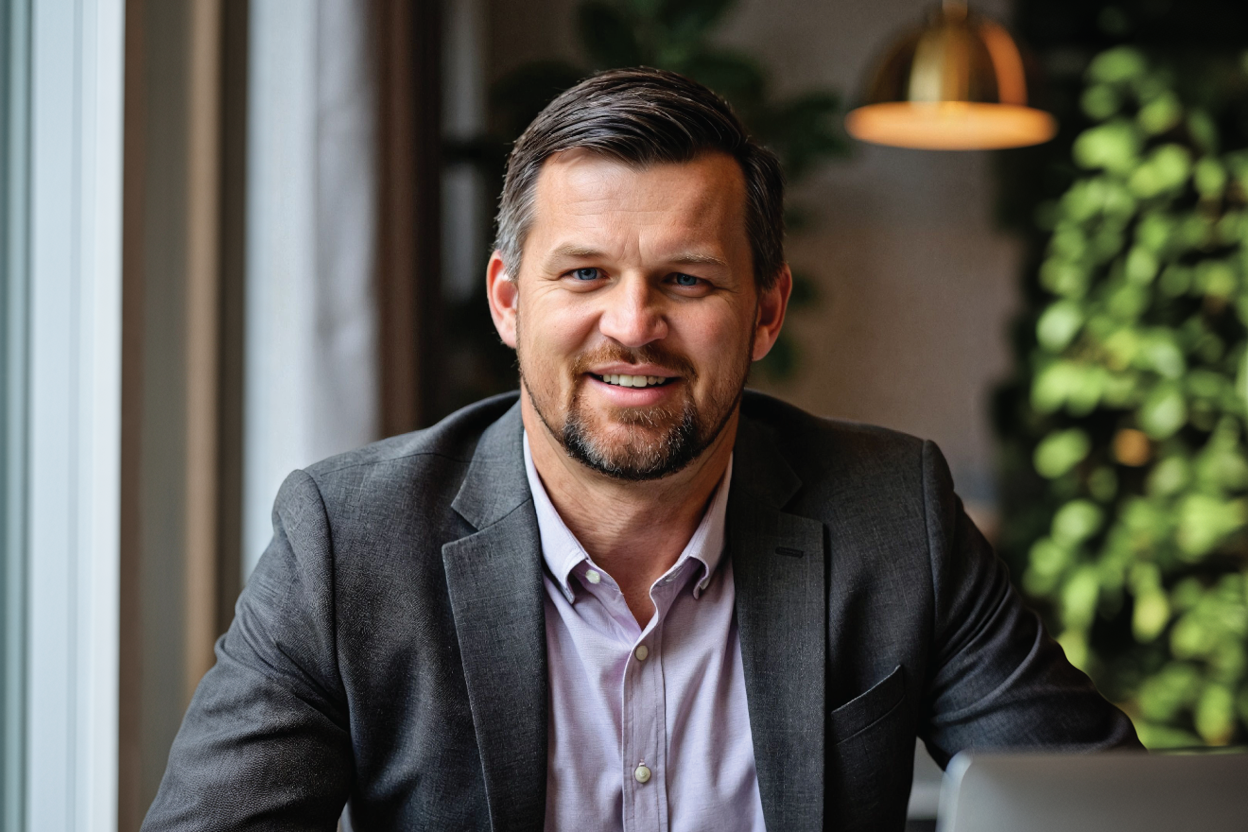
The commercial real estate industry has experienced significant change over the past two decades, with successful operators adapting their strategies to navigate shifting market conditions and capital requirements. Few leaders exemplify this progression better than Cameron Gunter, Executive Chairman of PEG Companies, whose journey from small-town Idaho farm kid to multifaceted real estate executive offers insights into both personal resilience and strategic business development.
Building from the Ground Up
Gunter’s path to real estate leadership began far from the industry’s traditional centers. Growing up in rural Idaho as a first-generation college student, he initially pursued accounting before discovering his true calling lay elsewhere. “I went to college to be a CPA. I thought that was the best route for me. And that didn’t last very long,” Gunter recalls. After a brief stint in public accounting focused on tax work, he transitioned into city management and public finance.
This early experience in municipal finance proved formative. Working as a city administrator, Gunter gained exposure to development projects and complex financing structures. One of his notable early achievements was helping to structure what he describes as “the largest tax increment deal in the western United States” for Micron Technology’s expansion in Lehi, Utah.
The transition from public sector to private development came naturally. In 2002, Gunter moved into business development for a commercial contractor, working primarily in multifamily and hospitality projects. This role involved helping clients navigate entitlements and financing challenges, laying the groundwork for what would become PEG Companies.
The PEG Companies Foundation
Founded in 2002 with a partner whom Gunter bought out in 2005, PEG Companies initially focused on raising capital from high net worth individuals and family offices while consulting on complex projects involving tax incentives. The company’s early success came from its ability to tackle difficult deals that others might avoid.
During the 2008-2010 financial crisis, PEG Companies continued developing multifamily properties and strategically paused hospitality development. “We saw an opportunity and jumped back into it, feet first, buying distressed assets and then developing new assets in downtown markets,” Gunter explains.
This period established a key differentiator for PEG Companies: treating multifamily development with a hospitality mindset. “We always said we’re going to build our multifamily properties with the hospitality mind, as we design it, as we operate it,” Gunter notes. This philosophy extended to operations, where the company aimed to treat residents with the same attention typically reserved for hotel guests.
Strategic Diversification and Growth
PEG Companies developed into a vertically integrated organization spanning multiple divisions: Capital Partners, development, construction, property management, and hospitality operations. At its peak, hospitality represented 40%-50% of the business, though this balance is shifting toward multifamily as market conditions change.
The company’s “dynamic duo” approach, developing hotels and multifamily properties together or designing standalone multifamily as resort-style properties, became a signature strategy. This integrated approach required building what Gunter describes as three foundational pillars: exceptional experiences for investors, residents and guests, and team members.
In 2019, PEG Companies launched a strategy focused on acquiring older extended-stay properties and converting them to Class B multifamily, targeting an underserved market niche. While COVID-19 presented challenges, particularly in hospitality, the overall strategy proved resilient.
Leadership Transition and Strategic Evolution
Recognizing the need for organizational evolution, Gunter recently transitioned from CEO to Executive Chairman, bringing in Garett Bjorkman to lead the company’s next phase. This transition reflects Gunter’s understanding of a fundamental shift in the business model.
“I started the company more as a development company, or I’m going to call it project driven. Now with where we are, we need to be more product driven as an investment firm versus development firm,” Gunter explains. “I’m a project guy. I always have been, but managing investments requires someone who knows that space better than me.”
This shift from project-driven to product-driven reflects broader industry trends toward institutionalization and scalability. While entrepreneurial deal-making skills built the foundation, accessing institutional capital requires different disciplines and processes.
Market Perspective and Current Conditions
Having navigated multiple real estate cycles, Gunter offers a nuanced view of current market conditions. Unlike the 2008-2010 crisis, which featured significant liquidity issues and widespread foreclosures, today’s challenges present differently.
“This cycle is different from the fact that nobody’s having to necessarily give their properties back like they did before,” Gunter observes. “There’s extended pretend, but it’s not the blood in the water like happened before. Banks don’t have liquidity problems. They may not want the asset on their books, but it’s not to the point where they’re foreclosing and selling.”
However, Gunter anticipates changes ahead. Market pressures are building, and even PEG Companies faces decisions about certain assets. “We have some stuff that we’re going to have to get rid of, just in order for us to move on and not keep throwing bad money after good,” he acknowledges.
He sees opportunities in distressed situations, noting increased activity from groups providing GP capital to struggling sponsors, particularly those who entered the market in 2020-2021. These “hope notes” at higher interest rates represent a new form of rescue capital that allows general partners to avoid full asset disposition.
Lessons in Capital Evolution
One of Gunter’s key insights involves the fundamental differences between capital sources and their implications for business strategy. “Raising capital from high net worth and family offices that have a longer-term perspective is much different than raising institutional capital,” he explains.
PEG Companies began by raising from high net worth individuals and family offices without defined end dates. The transition to institutional fund structures required different expertise and processes—a lesson Gunter wishes he had fully grasped earlier.
“If I were to do it again, I would make sure I’d spend the money today on the right people in the right seats to make us successful,” he reflects. Rather than bootstrapping and trying to build everything organically, he would hire experienced professionals from larger organizations who understand institutional processes and disciplines.
Looking Forward
As PEG Companies enters its next chapter under new leadership, Gunter remains optimistic about the company’s foundation and future direction. The vertically integrated platform, hospitality-minded approach to multifamily development, and strong operational capabilities provide a solid base for continued growth.
The transition also reflects broader industry maturation, where successful regional developers must evolve their approaches to access larger capital pools and achieve greater scale. For Gunter, stepping back from day-to-day operations allows the company to benefit from both his entrepreneurial foundation and new leadership’s institutional expertise.
The story of PEG Companies under Cameron Gunter’s leadership illustrates how successful real estate enterprises must continuously evolve their strategies, capital approaches, and organizational structures to thrive across different market cycles and growth phases. As the industry continues to institutionalize and consolidate, the lessons from this transition, particularly the importance of matching leadership skills to business requirements, offer valuable insights for other growing real estate enterprises.