After three decades in design and construction, Michael Miller’s vision for revolutionizing property art displays began in an unexpected place – luxury retail. “I really love the experience that I took from inspiration when I went into more of the retail establishments. If you went to Chanel and whatnot, you’d see a kind of a portrait display flipped on inside,” Miller recalls of his 2015 inspiration that led to founding Apollo Art, now spanning luxury hotels, office buildings, airports, and residential spaces across the globe.
Miller identified a fundamental challenge in the art world: “Art is very elusive. Art is not approachable. Everybody knows everything about music – if you hear a song right now, you could Shazam it, put it in your playlist. Nobody even knows where to start with art.” His solution merges technology with architectural design to create dynamic art experiences in built environments.
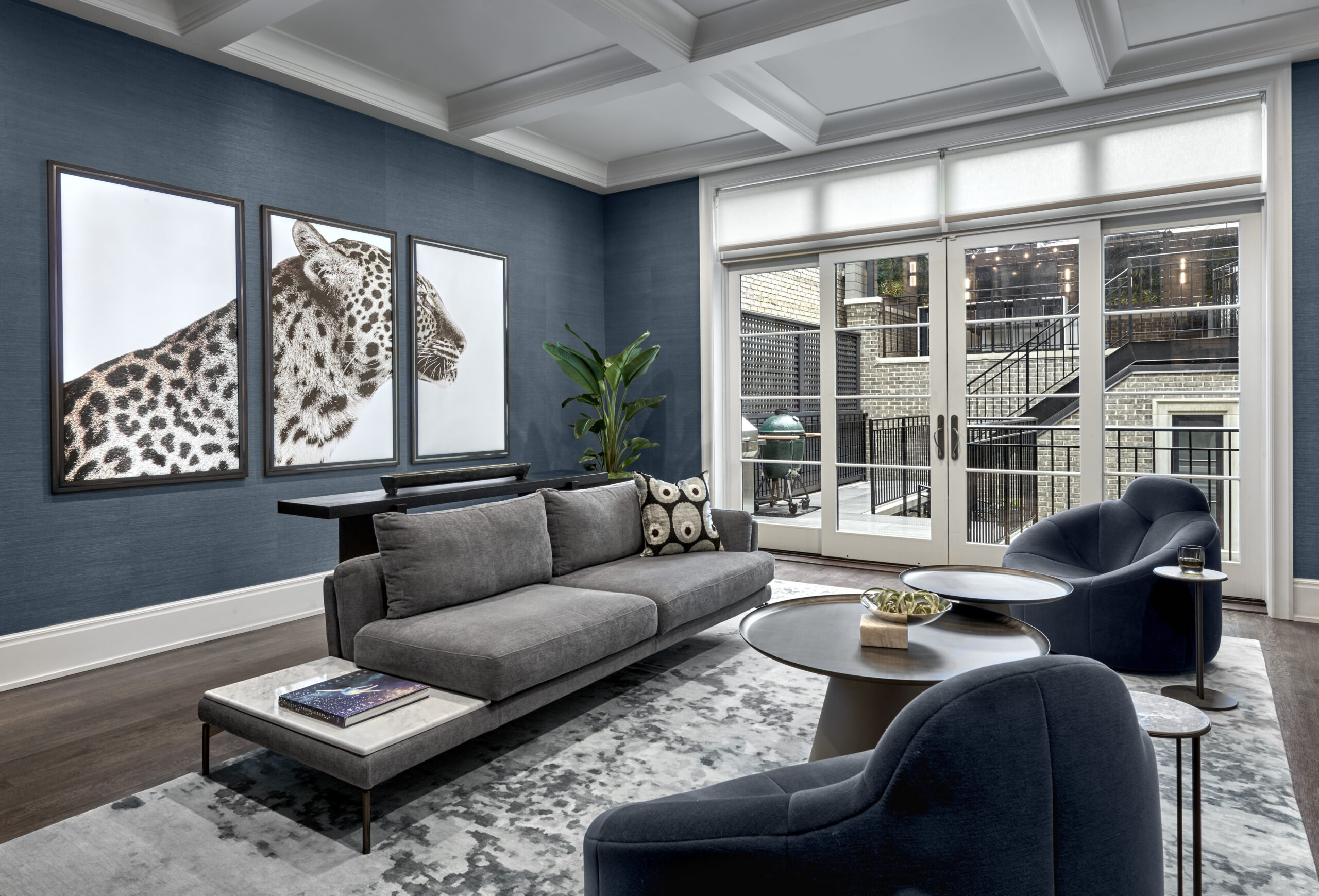
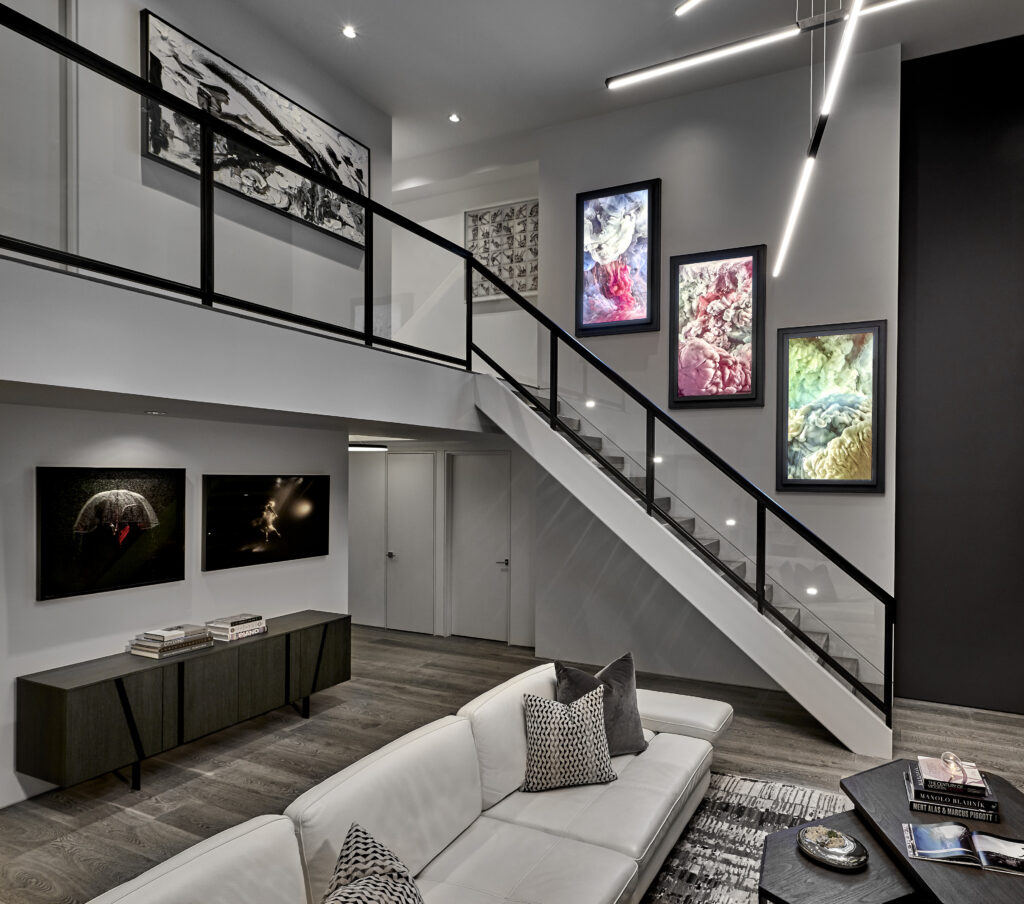
What distinguishes Apollo Art from typical digital displays is its seamless property integration. “Everything that we’re doing with the framing and in how it’s situated on the walls, or completely flush on the walls, it’s dialed into the DNA of the property, from millwork and finishes,” Miller explains. This attention to detail allows property managers to enhance spaces without traditional renovation constraints. “You’re doing it more in software, in technology based where you can change that experience out depending on what you’re looking to actually do with who’s going to be viewing this.”
The platform’s flexibility particularly resonates with commercial properties. American Century Investments implemented Apollo Art during a renovation with two primary goals: engaging employees and clients while showcasing local Midwestern artists. The project’s success has led to its third annual renewal, with plans to expand across their 1,000-person workforce.
In hospitality, the technology enables unprecedented customization. “If I’m at a hotel and I have the Super Bowl in one week, I could have Super Bowl inspired art. And then if I have an art show next week, I can have an artist launch their new collection there. You could change the dynamic feel of the hotel based on the visitors who are coming in, to make it a more personalized experience,” Miller notes.
The platform also solves practical challenges for properties managing valuable art collections. Major financial institutions traditionally keep their collections in secure storage. “They don’t really view or enjoy any of that art because of insurance reasons and purposes. They typically sit in free ports or more tax and climate control areas,” Miller explains. Apollo’s solution allows these institutions to display their collections digitally while maintaining secure storage.
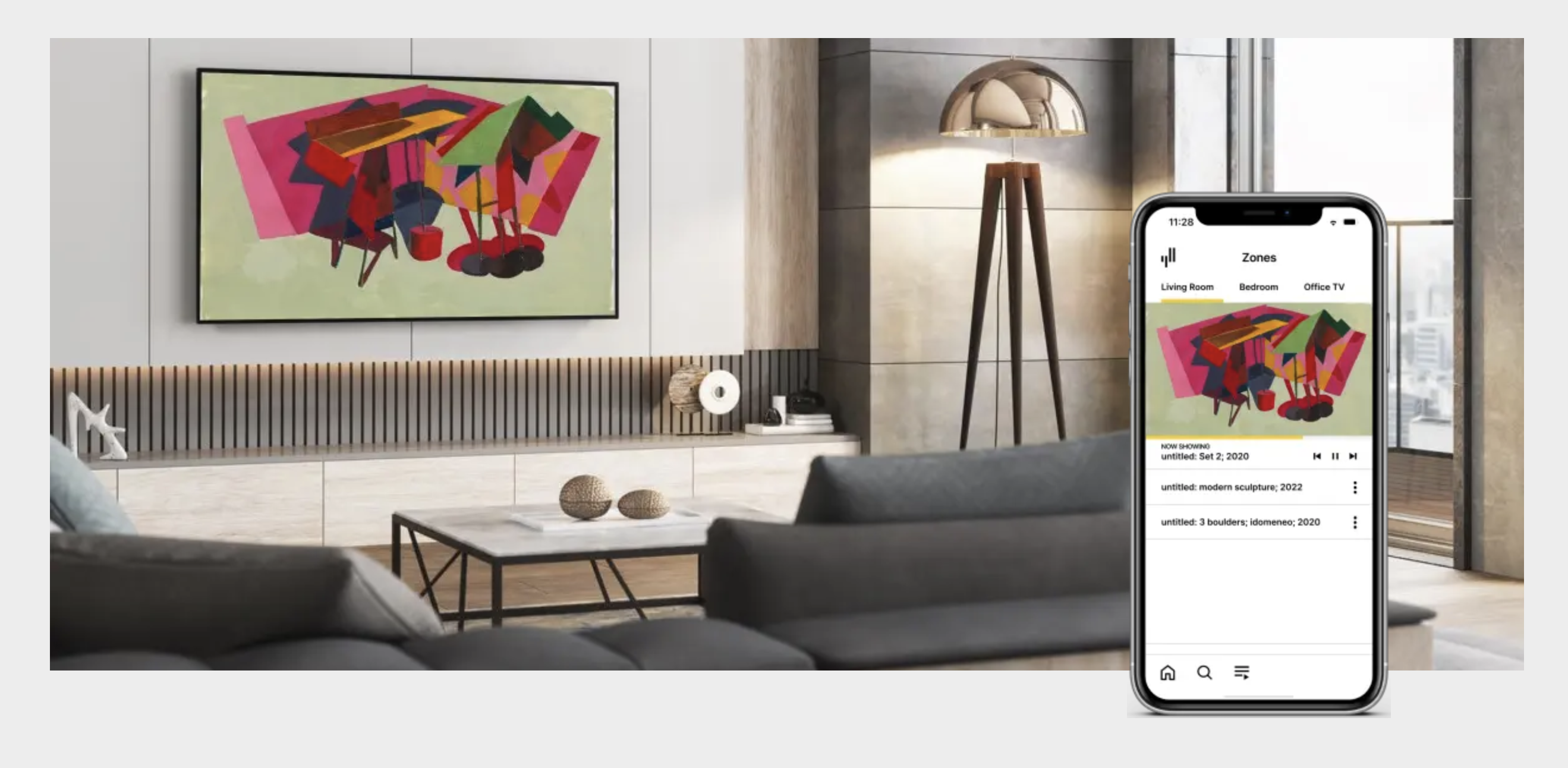
Properties can curate experiences much like music playlists. “We call them curations, but very similar to playlists that you have in your Apple Music or Spotify, where you have a different playlist for going to the gym, or different playlist for maybe chilling out at home,” Miller describes. This approach allows spaces to adapt their atmosphere based on time of day, events, or desired mood.
Looking ahead, Apollo Art plans to launch a consumer-focused product that will extend this technology to a broader audience. “Instead of just being in prevalent homes and beautiful hotels and lounges, we want to get this in everybody’s phone and everyone’s display in their home,” Miller shares.
For real estate professionals, Apollo Art represents more than just another amenity – it’s a tool for creating distinctive, adaptable environments. “Post pandemic, mental health, personal wellness is very prevalent in our society and very needed everywhere we go. And I think the more you can kind of support that with Apollo, the better life we can live.”
Through its focus on access, discovery, and experience, Apollo Art is establishing new possibilities for how we think about art in built environments. As Miller puts it, “We’re going to build the world’s largest art gallery, because anytime there’s Apollo displays in the wild playing art, it’s part of the Apollo gallery that’s constantly growing.”
This article was sourced from a live expert interview.
Every month we conduct hundreds of interviews with active market practitioners - thousands to date.
A sudden rise in mortgage rates has not landed evenly across Hampton Roads, Virginia. Over three weeks to a month, rates climbed almost a full percentage point, according to Bubba Hutchison, who leads Hutchison & Co. at RE/MAX Connect in Yorktown. Freddie Mac’s weekly survey tracked the same climb: the average 30-year fixed rate rose ...
For most of the past two decades, the conventional playbook for condominium buyers in San Francisco followed a predictable arc: buy a studio, sell in five to seven years, move up to a one-bedroom, repeat. Appreciation was reliable enough that buyers could treat each purchase as a stepping stone. That assumption no longer holds, according ...
Harford County, Maryland, never gave back its pandemic-era gains. Prices in the rural county 30 minutes north of Baltimore rose slowly and without a dip from 2020 until about May of this year, according to Lee Tessier, who leads the Lee Tessier Team of eXp Realty in Bel Air. Over the same stretch, he says, ...
Data center construction is pushing smaller buyers to the back of the line for sand, gravel, and stone. Wherever large campuses go up, they claim local supply before anyone else places an order. When a quarry commits its stock to one of those projects, the homeowner building a pool or the small developer pouring a ...
Brokers tend to talk about MLS fragmentation as a tax on growth – the cost of joining one more system every time a team pushes into new territory. For the brokerages large enough to pay their way around it, fragmentation also works as a competitive barrier against everyone who can’t. Close to 500 MLSs still ...
An inherited house arrives with decisions its new owners didn’t plan for: whether to fix it up, list it, or take a cash offer, and how much effort any of those paths is worth. Each option comes down to a tradeoff between the time a sale takes and the money it brings in. In greater ...