

Why Some North Texas Homes Sell in Weeks While Others Sit for Months


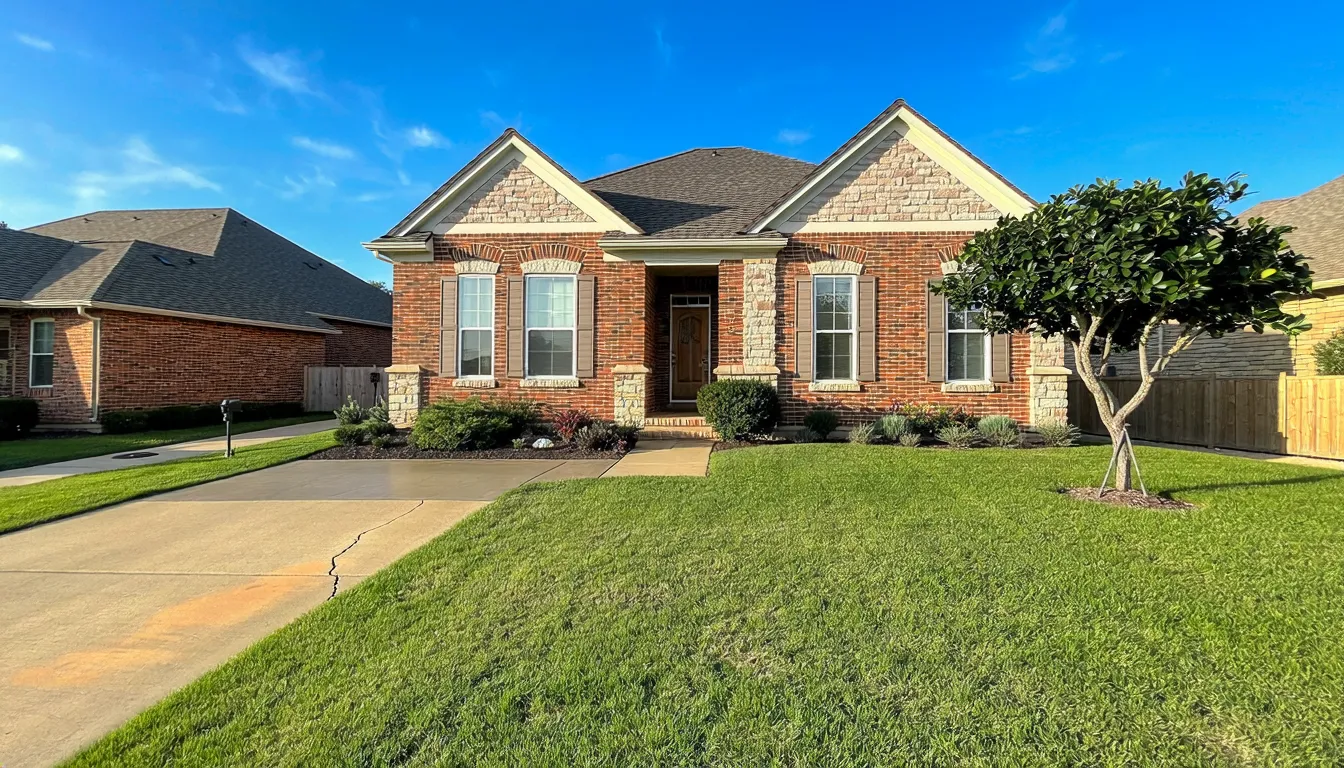
In the Dallas-Fort Worth suburbs, two houses on the same side of town can have opposite outcomes. One goes under contract in two or three weeks. The other sits for 90 or 100 days with barely a showing. The difference, according to Heather Gill, a residential agent with eXp Realty who works across Carrollton, Plano, Frisco, and McKinney, often comes down to what the seller believes the home should sell for – not the home itself.
Sellers look at what their neighbors got during the pandemic-era frenzy and assume their home should command the same number. But mortgage rates have pushed toward 7 percent, up from the 3 percent rates that fueled bidding wars in 2021 and 2022. Buyer demand has cooled and inventory has loosened. The competitive dynamics that produced over-asking offers have largely disappeared from the North Texas suburbs.
The result is a market where pricing psychology – not square footage, not curb appeal – is the single biggest factor separating a quick close from a stale listing.
The Nostalgia Trap
Gill describes a mindset she encounters often: sellers who begin the listing conversation anchored to prices from two or three years ago. “They get caught in the story of the past,” she says. That story usually involves a neighbor who sold high during the pandemic surge, and the assumption that the same result is still available.
Gill says she pulls market reports for her sellers and walks them through current comparable sales. Her message is direct: “It’s not the moment that your neighbors were in two or three years ago. This is the moment that you’re in right now.” When sellers accept that framing and price accordingly, she says, the results follow. When they don’t, listings stall – sometimes for 90 to 120 days.
Meanwhile, a Carrollton listing she handled recently went under contract in two to three weeks. That home was in good condition, zoned for a desirable school district, had no homeowners association, and was priced just below market value.
What Separates a Quick Sale from a Stale Listing
Gill points to a handful of variables that determine whether a home moves or languishes. Condition ranks high. Buyers arriving with potentially $80,000 or more at closing are not interested in spending additional money on repairs after they move in. They want move-in ready.
Location still matters, but in specific ways. Gill’s fast-selling Carrollton listing benefited from having no HOA – something she says buyers increasingly prefer – and from sitting in a desirable school zone. Those micro-factors created demand even in a slower market.
But condition and location only carry a listing so far if the price is wrong. Gill frames it plainly: good shape, desirable neighborhood, and priced in the sweet spot – that combination produces results. Remove any one element and the home sits.
Buyers in this market are also negotiation-minded. They are asking for concessions, including interest rate buydowns that help offset monthly payment costs. Gill says she advises sellers to consider offering buydowns as a way to compete with new construction builders, some of whom are advertising rates as low as 4.9 percent and design center credits of $60,000 to $80,000. Sellers who refuse to engage with buyer expectations – who insist on a firm number and won’t negotiate – risk watching the market move past them.
New Construction Is Reshaping the Competitive Landscape
The volume of new construction across North Texas is compounding the pressure on resale sellers. Gill says builders are offering aggressive incentives that resale homes cannot easily match. She describes a situation where a homeowner who bought during the pandemic cannot sell for what they paid because the same builder is now selling new homes nearby at lower prices with subsidized interest rates. The result, in that case, was a short sale.
For buyers, this environment creates options. New builds with rate incentives sit alongside resale homes where sellers are willing to negotiate. Gill says buyers should also look at homes that have been on the market for 90 or more days, where sellers may be more motivated to accept a lower offer.
McKinney’s Growth Adds a Forward-Looking Variable
McKinney stands out in the corridor for reasons beyond housing. Gill points to two developments: a $919 million manufacturing facility being built by Liteon that is expected to bring 600 jobs to the area, and a new national airport – McKinney National – scheduled to open in November with commercial service from an airline called O. If even half of those new workers relocate to the area, Gill says, the added demand for housing could shift local pricing dynamics.
The median home price in McKinney sits at $510,000, according to Gill. At that level, buyers have options and leverage. Sellers who acknowledge that leverage and price accordingly are the ones closing deals. Those who anchor to a number from two or three years ago are the ones watching their listings age.
About the Expert: Heather Gill is a residential agent with eXp Realty who has worked the North Texas market for nearly a decade.
This article is intended for informational purposes only and does not constitute legal, financial, or investment advice. The views and opinions expressed herein reflect those of the individuals quoted and do not represent an endorsement of any company, product, or service mentioned. Readers should conduct their own due diligence and consult qualified professionals before making any investment decisions.
Similar Articles
Explore similar articles from Our Team of Experts.


So you’re moving to a new city, and the research has already begun. You can learn a metro’s prices, tax rates, and school ratings from a thousand miles away. What the research can’t show you is which neighborhood fits the life you’ll actually lead there. Helping you close that gap is now central to a ...

The Department of Veterans Affairs has narrowed the list of property conditions that can hold up a VA-backed purchase. Under an update to the VA’s Lender’s Handbook, appraisals ordered from May 1, 2026, no longer require repairs for peeling paint on homes built in 1978 or later, or for defects in detached sheds and garages. ...
When 60 to 70 percent of buyers in a market are spending accumulated real estate wealth rather than current earnings, the market operates by different rules than national economic indicators suggest. In Santa Barbara, that disconnect between price levels and income-based affordability is not a temporary distortion – it is the market’s defining feature, according ...
In most of Bucks County, Pennsylvania, the housing market runs on familiar suburban logic: limited inventory, competitive bidding, and first-time buyers stretching to qualify. In Pipersville, at the county’s northern edge, the math works differently. Farms outnumber listings, acreage is measured in dozens rather than fractions, and the buyers who show up are coming from ...
Prospective homebuyers waiting for mortgage rates to fall may be waiting for conditions that only a major global crisis would create. Current 30-year fixed mortgage rates of about 7.25% are not an anomaly, according to Jason Huerkamp of Huerkamp Home Group in the Twin Cities. That figure matches the historic 50-year average. The low rates ...

