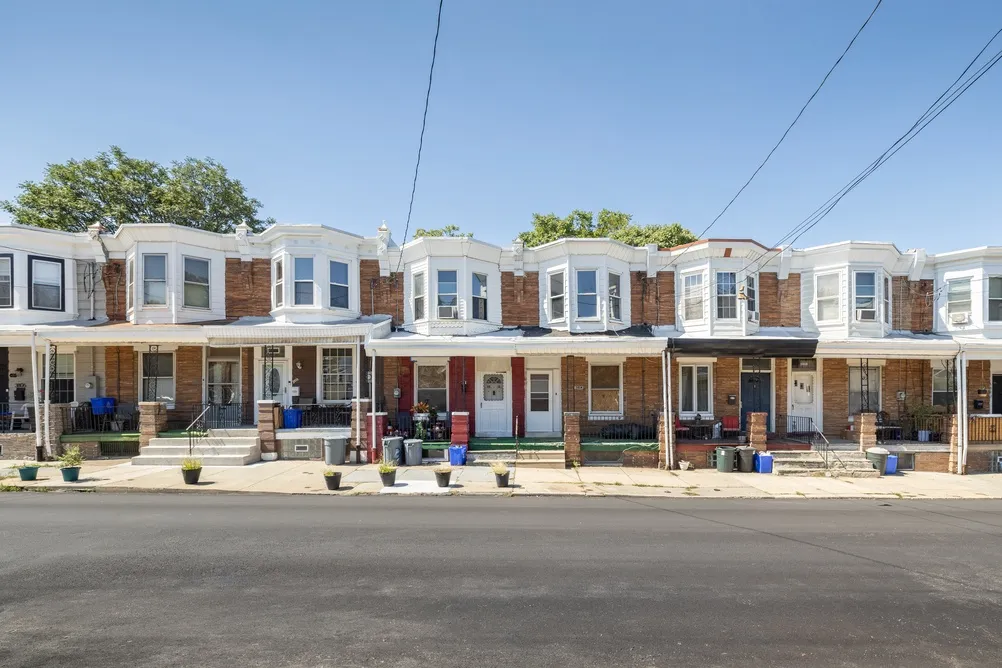
In Philadelphia’s residential market, the neighborhoods generating the most buzz are not necessarily the ones where buyers will see the strongest returns. Buyers willing to look past the most hyped areas and hold for at least five to seven years may do better in the less prominent blocks ringing Center City, according to Ariel Morgenstein, Director of Sales / Sales Operations Manager at JG Real Estate, a full-service brokerage handling sales, leasing, and property management in the city.
Morgenstein draws a clear line between what is popular and what is positioned for appreciation. Neighborhoods like Fishtown attract attention because of new restaurants and social energy. But she steers buyers focused on long-term value toward fringe markets closer to Center City, where she believes the upside is greater. Her logic is straightforward: in a hot neighborhood, much of the appreciation has already happened. In an adjacent area that has not yet caught the same wave, the gap between current prices and future value tends to be wider.
The Appreciation Case for Fringe Blocks
Morgenstein described the fringe-market buyer as someone looking for a home to live in “but that will appreciate quicker over time.” Neighborhoods on the edge of already-established areas benefit from proximity without paying the premium.
Graduate Hospital is one example she pointed to – an area that has grown sharply over the past 10 to 15 years and is now relatively stable. That stability benefits landlords and current owners, but it means the steepest part of the appreciation curve may have passed. For a buyer entering today, a neighborhood one or two steps behind that trajectory could offer more room to grow.
Fringe neighborhoods carry real risk. They may lack the walkability, restaurant density, or transit access that drives demand in more established areas. A block can sit on the edge of a hot market for years without crossing into it. In a slow market like Philadelphia’s in mid-2026, where buyer demand is already reduced, the timeline for appreciation to materialize could stretch beyond expectations.
Why the Hold Period Matters
Morgenstein was direct about the time horizon: buyers are “more likely to see a better return when you go to sell it in five to seven years.” That is not a short flip. For a first-time buyer who might need to relocate for a job in three years, or an investor who needs liquidity sooner, the fringe-market strategy may not fit.
Philadelphia’s market is also unusually hard to forecast right now. Morgenstein told her clients that “anything that I feel like I could predict today might be very different in a week,” pointing to how quickly federal policy shifts are reshaping economic conditions. That uncertainty cuts both ways – it could accelerate a fringe neighborhood’s rise if rates drop and demand surges, or it could stall the timeline if the economy weakens further.
For sellers, Morgenstein’s advice depends on urgency. Buyers exist, and properties are moving. But sellers who can hold for another five to seven years will likely see a stronger return by waiting for the market’s next upswing rather than selling into the current slowdown.
Matching the Neighborhood to the Buyer
Philadelphia’s block-by-block variation is both its strength and its complication. Morgenstein noted that conditions can change from one street to the next, which means a fringe-market purchase requires more local knowledge than buying in an established neighborhood where pricing is well understood.
The city’s buyer pool reflects this complexity. Young professionals buying starter homes before they have children, families looking to upsize within city limits, and retirees seeking walkable condos near Center City’s theaters and nightlife all cluster in different neighborhoods for different reasons. The city’s concentration of colleges and major hospitals also creates steady rental demand, which makes investment properties near those institutions more resilient.
For a buyer weighing a fringe purchase, the practical question is whether the block has the structural ingredients – transit access, proximity to employment centers like hospitals and universities, walkable retail – that drive demand over time.
Morgenstein recently sold a triplex in Graduate Hospital for its $700,000 asking price within days. That property benefited from high rental demand and a location convenient to major hospitals. But for a buyer entering today with a longer horizon, the blocks just outside those proven areas may offer a wider spread between entry price and eventual sale price – provided they can afford to wait.
About the Expert: Ariel Morgenstein is Director of Sales and Sales Operations Manager at JG Real Estate, a full-service brokerage handling leasing, sales, and property management in Philadelphia.
This article is intended for informational purposes only and does not constitute legal, financial, or investment advice. The views and opinions expressed herein reflect those of the individuals quoted and do not represent an endorsement of any company, product, or service mentioned. Readers should conduct their own due diligence and consult qualified professionals before making any investment decisions.