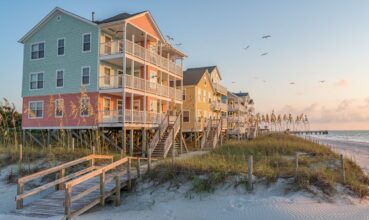
Along the 18-mile stretch of barrier island that makes up Long Beach Island, New Jersey, something quietly unusual is happening in the real estate market. While much of the country grapples with rate sensitivity, buyer hesitation, and softening demand, LBI continues to attract a steady stream of buyers willing to pay a premium, not just for property, but for a way of life.
A Market Built on Lifestyle, Not Just Location
Long Beach Island’s physical constraints – narrow, bounded by ocean and bay, surrounded by protected wetlands – have driven inventory sharply lower since the pandemic years. Where LBI once carried 600 to 800 active listings at any given time, the market now sees closer to 100. Beach Haven West, a popular lagoon-front community just off the island, has seen similar compression, with available listings falling from several hundred to between 30 and 50 during peak season.
“There’s just not nearly as many listings as there were before COVID,” says Jillian Cerbone, a RE/MAX agent based in Ship Bottom who works primarily across Long Beach Island and surrounding waterfront communities.
That scarcity, combined with persistent demand from buyers in New York, North Jersey, Philadelphia, and Bucks County, Pennsylvania, has kept the market active even as broader economic uncertainty weighs on buyer confidence elsewhere. The average sale price across Long Beach Island now sits around $2.2 million, a figure that reflects both the premium nature of the inventory and how far values have climbed since 2020.
Who’s Buying and Why
The LBI buyer profile is fairly consistent: families seeking a second vacation home, often with a personal connection to the area that stretches back generations. Many grew up vacationing here with parents or grandparents and are now in a financial position to make the purchase themselves. Others are drawn by the lifestyle priorities the pandemic accelerated: water access, open space, and a slower pace that urban living doesn’t easily provide.
Cerbone notes that buyers aren’t simply purchasing property; they’re investing in a way of life organized around the water. “Whether it’s the lagoon, the bayside, or the ocean, people feel connected to the water, and they want a place where they can bring their family for a week, two weeks, or even the whole summer,” she says.
Investors are part of the mix too, though the line between investor and personal user is often blurred. Many buyers rent the property seasonally while reserving time for their own family use, a model that helps offset carrying costs while preserving the personal enjoyment that motivated the purchase.
One notable post-pandemic development is the growth of year-round residency on the island. Remote work gave some buyers the flexibility to make LBI a primary residence, and while the market remains predominantly seasonal, it’s no longer exclusively so. Winter visits – for Thanksgiving, Christmas, and school breaks – have become more common, with homes staying occupied well beyond Labor Day.
Navigating the Inventory Gap
For buyers entering this market today, the conversation with an agent often starts not with price, but with priorities. North end or south end? Oceanside or bayside? Rental income potential or pure personal use? Each answer narrows the search considerably in a market where options are already limited.
The south end of LBI, particularly around Beach Haven, tends to attract buyers seeking rental income, given its proximity to shops, restaurants, and family amenities like Fantasy Island. The north end, including areas like High Bar Harbor near the Barnegat Lighthouse, offers more privacy, appealing to buyers who want to escape rather than engage.
Beyond location preferences, flood zone education has become a central part of the buyer conversation. Post-Hurricane Sandy regulations reshaped building codes across the island, and two adjacent homes can carry significantly different insurance costs depending on elevation and flood zone designation. For buyers considering properties that haven’t been raised to current standards, planned renovations may trigger a mandatory elevation requirement, adding substantial cost and complexity.
“You could have two houses right next to each other with completely different insurance situations,” Cerbone says. “I aim to guide buyers to be a lot more educated on flood zones, elevations, and insurance costs.”
Where Deals Break Down
When transactions fall apart on LBI, the causes tend to cluster around a few recurring issues. Financing surprises are common: buyers who expect primary-home mortgage rates are sometimes caught off guard by the higher rates applied to secondary and vacation properties, particularly at these price points.
Elevation and flood compliance questions represent another friction point, especially for investors targeting older properties. The calculation of whether planned improvements would trigger a mandatory raise, and what that raise would cost, can significantly alter the economics of a deal.
That said, Cerbone’s view is that motivated parties on both sides can usually work through the friction. “If we have a buyer who wants to purchase and a seller who wants to sell, we’re on the same team,” she says.
Pricing Realities and Seller Expectations
On the seller side, the current market requires careful calibration between aspiration and reality. Homes priced strategically – positioned to generate competition rather than set at the ceiling of estimated value – are still going under contract within seven to ten days, even in the $1 to $3 million range. Homes priced too aggressively are seeing reductions.
Cerbone’s approach with sellers involves walking through active comps, pending sales, and recent closings to establish a clear picture of where the market sits. Estate sales, where executors are motivated to minimize carrying costs, tend to price more conservatively. Family homes with no urgency sometimes test the upper range. Either way, the goal is to set realistic expectations before the listing goes live.
Long-Term Outlook
The structural case for LBI’s durability is straightforward: finite land, a large and emotionally invested buyer pool, and a lifestyle offering that has only grown in appeal as remote work and shifting priorities have changed how people spend their time.
Land alone in some LBI communities commands $800,000 to well over $1 million. One of Cerbone’s recent Harvey Cedars transaction illustrates this clearly – a lagoon-front property sold for $1.7 million, after which the buyers demolished the existing home and rebuilt for approximately $4.4 million. The land itself accounted for nearly half of the total investment.
Near-term headwinds are real. Economic uncertainty, ongoing layoffs across several industries, and general caution among higher-net-worth buyers have introduced hesitation even in a cash-heavy market. But the underlying demand drivers – scarcity, emotional connection, lifestyle value – appear durable enough to absorb those pressures.
“Despite any fluctuations with what’s going on in the world, I believe there’s always going to be strong demand for LBI,” Cerbone says.
For buyers still on the fence, the inventory picture alone may be the strongest argument for acting sooner rather than later. What was once a market with hundreds of options now offers dozens, and that gap is unlikely to close anytime soon.
About the Expert: Jillian Cerbone is a RE/MAX agent based in Ship Bottom, New Jersey, working primarily across Long Beach Island and surrounding waterfront communities, including Beach Haven West.
This article is based on information provided by the expert source cited above. It is intended for general informational purposes only and does not constitute legal, financial, or real estate advice. Readers should conduct their own research and consult qualified professionals before making any real estate or financial decisions.