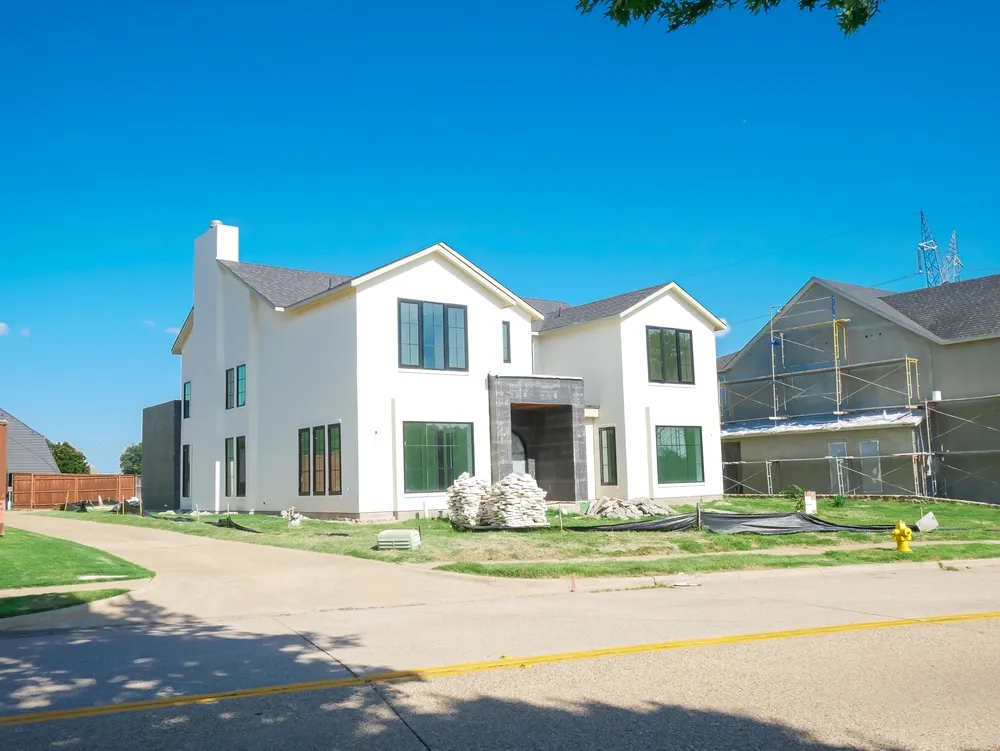
Most private owners in Dallas-Fort Worth (DFW) don’t learn the true cost of their custom home or renovation until the design is fully complete. By then, changing anything means starting over. This budget shock is largely preventable. Preventing it means adopting a practice that public infrastructure projects have used for years.
On public projects such as airports, transit facilities, and stadiums, an independent estimator is typically brought in when the design is only about 30 percent complete, according to Vamsi Emani, Chief Cost Estimator at Aguirre Project Resources (APR). This early review lets the owner weigh trade-offs while options are still open. Private developers and homeowners, by contrast, typically wait until the architect finishes a full set of drawings before asking anyone what it will cost to build. The gap between those two approaches is where surprises live.
The 100% Design Surprise
Emani describes the design process in four stages: roughly 10 percent, 30 percent, 60 percent, and 100 percent completion. At 30 percent, he says, the basic structure and systems are defined, but most finishes and details remain flexible. An estimator working at that stage can flag expensive choices, such as a particular facade system or a mechanical layout that requires extra steel. The architect can still pivot without a costly redesign.
Private owners rarely get that early warning, Emani says. “The private, they don’t know the price until they hit the 100% design,” he says. By that point, every specification is locked in. If the number comes back over budget, the owner faces a hard choice: secure additional financing, cut features already committed to, or accept thinner margins on a project that was supposed to pencil out months earlier.
The Aesthetics Trap
The most dramatic version of this problem involves finish-level choices that look minor on a drawing but carry enormous cost implications. Emani points to a common example: an owner who selects a glass elevator for a residence based on how it looks, without checking the cost relative to a standard unit. “A regular elevator costs around $100,000; a glass elevator costs about $400,000,” he says. That’s a four-times multiplier on a single design decision.
Owners “realize about the aesthetics first and not in terms of cost,” Emani says. They work with a designer to build a vision, but nobody in the room tracks the cumulative cost impact as each choice is made. The sticker shock arrives only after the full package is assembled.
This isn’t limited to elevators, Emani says. Exterior cladding systems, specialty glazing, and custom mechanical configurations each carry cost premiums that can be invisible to someone reviewing architectural renderings. Without an independent cost check at an intermediate stage, those premiums stack silently, he says.
How Public Projects Differ
On the public side, Emani says his team is typically engaged at 30 percent design and again at 60 percent. This creates two checkpoints where the owner can compare cost projections against available funding. If the numbers are running hot, the team identifies alternatives, such as a different material supplier, a simplified structural approach, or a phased delivery strategy, before the design is finalized.
This dual-check process doesn’t eliminate every surprise. Some risks remain genuinely unpredictable, Emani notes, such as a subcontractor filing for bankruptcy mid-project or a material supplier exiting the market. But in his view, the controllable portion of budget risk, the portion driven by design choices, gets managed early rather than discovered late.
Private owners in DFW could apply the same approach on a smaller scale, though few currently do. Options include independent quantity surveyors, cost-estimating firms that work on both public and private projects, or in-house estimators at larger architecture and construction firms. The specific route matters less than getting a cost opinion from someone other than the architect or builder before the design is locked.
Why Costs Are Rising
For anyone building custom or doing a major renovation in DFW, the cost of waiting is higher than it was a few years ago. According to Emani, material prices have risen sharply since 2022, ranging from 20 to 70 percent higher depending on the category. He cites structural steel as up roughly 20 percent and copper wiring for electrical work as up about 50 percent. As a result, the gap between what an owner expects a project to cost and what it actually costs has widened.
Emani says unit costs are currently shifting every month, which makes even recent project comparisons unreliable once they’re more than a few months old. A homeowner who budgeted based on a neighbor’s build completed last year may find that the same specifications now cost significantly more, particularly for electrical and steel-intensive work.
The pattern across public and private construction points to the same lesson: cost surprises largely depend on when in the design process an independent expert checks the numbers, not just on what gets built. For anyone entering a custom-build or major-renovation process, getting that outside check earlier, rather than waiting for full drawings, makes the difference between adjusting a plan and absorbing a shock.
About the Expert: Vamsi Emani is Chief Cost Estimator at Aguirre Project Resources (APR), a firm serving both public and private construction projects in the DFW area.
This article is intended for informational purposes only and does not constitute legal, financial, or investment advice. The views and opinions expressed herein reflect those of the individuals quoted and do not represent an endorsement of any company, product, or service mentioned. Readers should conduct their own due diligence and consult qualified professionals before making any investment decisions.