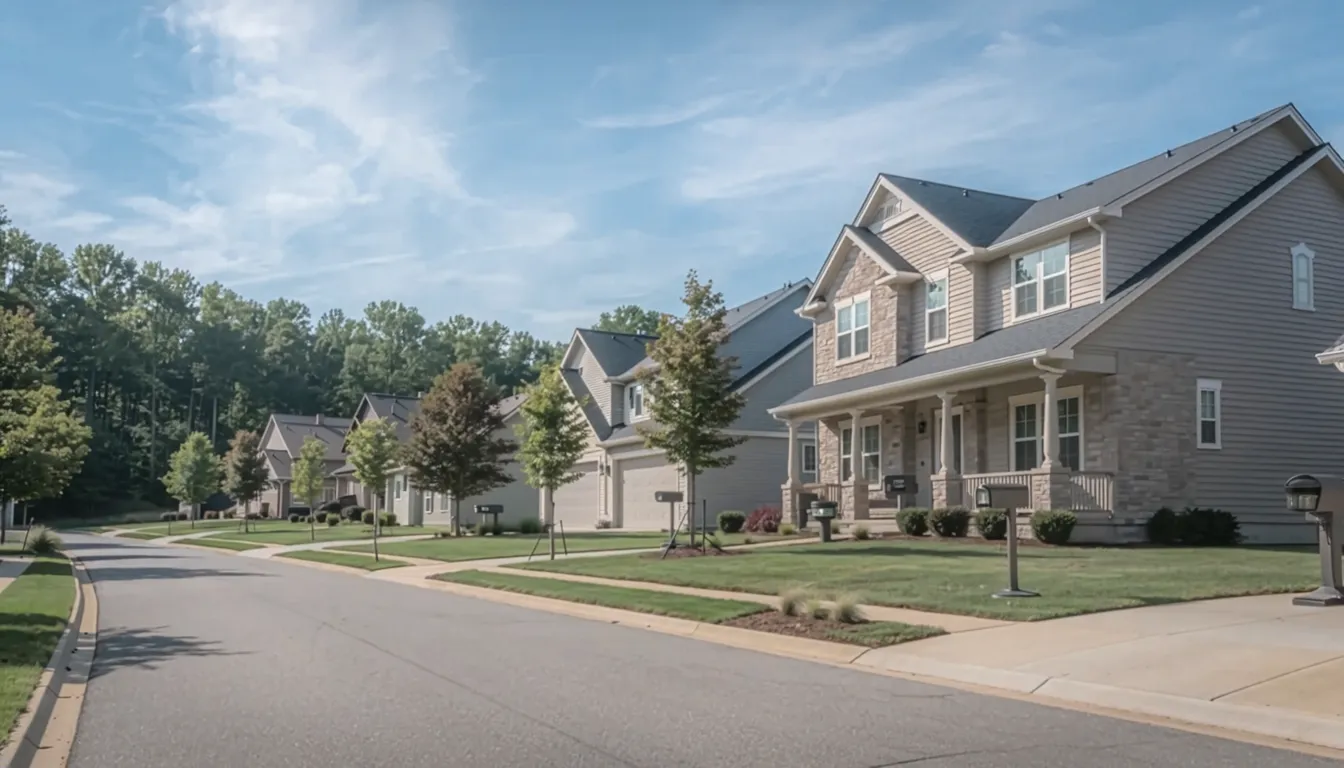
In most housing markets, a pipeline of several thousand new units would raise concerns about oversupply. In Chesterfield County, south of Richmond, that construction is being absorbed without visible pricing pressure – a dynamic that Matthew Henry, who leads the Henry Team and focuses on residential listings in the Chesterfield and South Richmond area, attributes to an employment base that coastal markets lack.
Military bases, government agencies, and manufacturing employers anchor household income across the county. According to Henry, that combination creates a stability that insulates the area from the boom-and-bust cycles affecting other regions.
“Our market doesn’t have the ebbs and flows like California or Florida does, where they have highs and lows,” Henry says. “Florida has thousands and thousands of homes sitting around not selling. That’s not the case here.”
Henry says Chesterfield occupies a productive middle ground – distant enough from Richmond’s urban core to avoid the price inflation that comes with dense city markets, but close enough to institutional employers to sustain consistent income and low unemployment.
Absorbing New Construction
The scale of new supply entering Chesterfield is substantial. According to Henry, the area currently has hundreds of apartment buildings and townhouses under construction, alongside an estimated 300 to 500 single-family homes being built right now – with another 5,000 to 7,000 homes planned over the next two years.
Henry says the county’s employment base is generating enough household formation to absorb that inventory without destabilizing existing home values. He points to low unemployment and a broad mix of employers as structural support.
This stands in contrast to parts of Florida, where Henry says inventory has accumulated without a corresponding buyer pool to clear it. The difference, in Henry’s view, is not temporary. It reflects a gap between the economic foundations of those markets and the demand they need to sustain pricing.
Buyers and Price Points
Henry says the majority of his clients are repeat buyers – people moving from a first or second home into a larger one, often in the $800,000 to $1.3 million range. The team also works with first-time buyers, though entry-level inventory is scarce. According to Henry, homes in Chesterfield generally start at $300,000 and up.
A $300,000 home in move-in condition can draw multiple offers within the first week. At $500,000, Henry says a well-presented home might receive one or two offers in the first week or two – still active, but with less competitive pressure.
About 80% of Henry’s business comes from local buyers. Among out-of-state relocations, he says the most common origin states are California, Colorado, Texas, and Florida.
Seasonal Dips, Steady Demand
Interest rate fluctuations and seasonal rhythms do affect transaction pace in Chesterfield. Henry says school calendars, holidays, and summer vacations produce predictable short-term dips – patterns he distinguishes from genuine market weakness.
“After two or three weeks it doesn’t change – people right back to buying again,” Henry says of the effect rate increases have on buyer behavior.
Henry says he advises sellers that spring is the strongest listing season, followed by summer and then fall. The window to avoid, in his view, runs from roughly two weeks before Thanksgiving through early January.
Presentation Over Seller Incentives
Henry and his wife co-lead the Henry Team, which operates primarily on the listing side. Henry says every home the team has listed has sold within 10 days or less, with at least one or two offers, at asking price or above.
His approach separates a home’s appraised value from where current market trends suggest it could sell – a distinction he says allows the team to price above what other agents recommend while still closing quickly. Henry says he learned this methodology from appraiser contacts and applies it systematically rather than relying on opinion.
Rather than offering closing cost assistance or buyer incentives – strategies he says other agents in the area use – Henry directs spending toward preparing the home for market. His reasoning is straightforward: buyers who tour multiple comparable homes will choose the one they connect with emotionally, and presentation drives that connection.
“We do not need to give up closing costs. We do not need to give up any extra bonuses to get your home sold,” Henry says. “What we need to do is spend the money on getting the house fixed up so it showcases really well.”
For sellers weighing how to allocate pre-listing dollars, Henry’s argument is that money spent on presentation generates higher offers than money given away at closing.
About the Expert: Matthew Henry leads the Henry Team at Keller Williams Metro Center, covering Chesterfield County, Virginia, just south of Richmond.
This article is intended for informational purposes only and does not constitute legal, financial, or investment advice. The views and opinions expressed herein reflect those of the individuals quoted and do not represent an endorsement of any company, product, or service mentioned. Readers should conduct their own due diligence and consult qualified professionals before making any investment decisions.