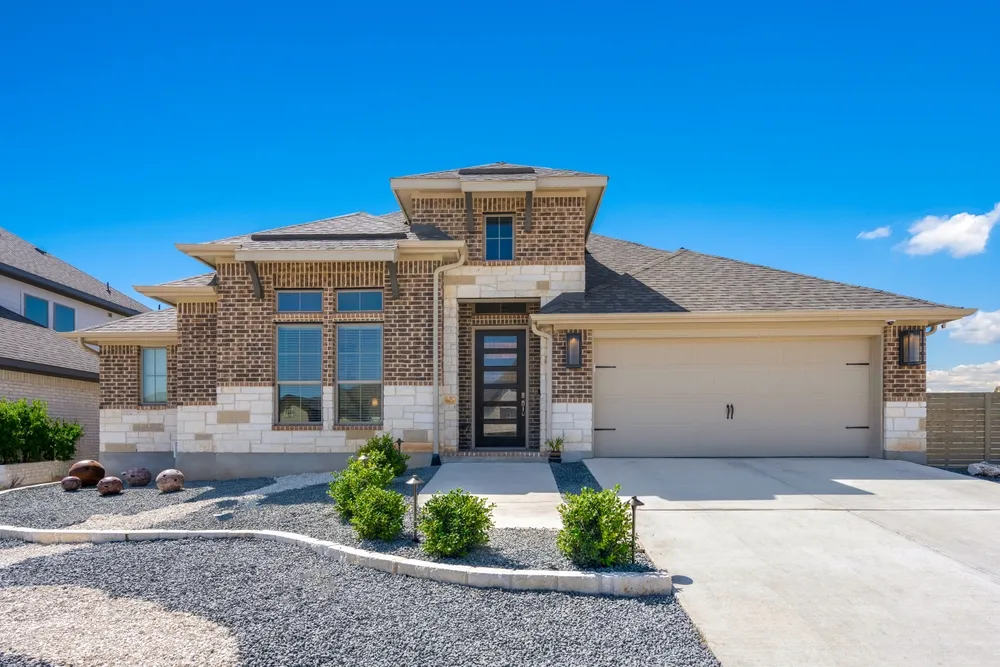
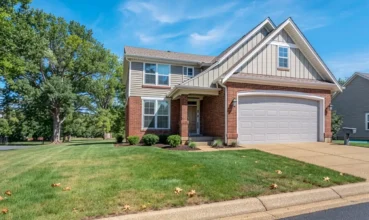
The conventional wisdom about empty nesters is simple: the kids leave, you sell the big house, you move somewhere smaller. In the Austin market right now, the opposite is happening. Retirees and late-career buyers are purchasing larger homes on the city’s outskirts – not to fill rooms with furniture, but to bring adult children and grandchildren under one roof.
Kelli Anderson, a Realtor with Gregg’s Team Real Estate Group at Keller Williams, works primarily with this demographic in communities like Lakeway, Kyle, and Leander – all within 30 minutes of central Austin. She says multigenerational living has become the dominant housing need among her empty-nester clients. Rather than scaling down, they want homes large enough for their children and grandchildren to move back in.
Younger Buyers Aren’t Filling the Gap
The reason empty nesters are driving suburban activity has as much to do with who isn’t buying as who is. Anderson says Austin’s younger population – roughly 20- to 28-year-olds living in the urban core – is hesitant to enter the market. “They’re very skeptical about buying right now,” she says. With interest rates approaching 7 percent, younger would-be buyers are more often signing leases than mortgages.
That leaves the suburban purchase market disproportionately shaped by older buyers with more equity, more urgency around family logistics, and different space requirements. A recently closed deal in Kyle illustrates the pattern: a $750,000 home purchased by empty nesters whose daughter and three grandchildren live with them. They needed square footage and affordability – and found both by looking south of the city rather than in it.
Central Austin Can’t Serve This Need
The mismatch is partly structural. Central Austin’s housing stock skews smaller and pricier. Anderson recently sold a $725,000 condo downtown that was 1,100 square feet – to a retiree who specifically wanted urban living. But she describes that buyer as an exception. Most of her clients need three, four, or five bedrooms, separate living areas, and space that functions as two households sharing one roof.
Central Austin doesn’t offer that at prices most families can absorb. Anderson notes that while Austin itself is costly, the growing communities around it provide the square footage these buyers need at lower per-foot costs.
Sellers who list in these outer-ring communities face a buyer pool that skews older and family-oriented. These buyers care about bedroom count, bathroom count, and main-floor living options. They are less interested in trendy finishes and more interested in functional floor plans that allow privacy within shared space.
Where the Opportunity Sits for Investors
Anderson says investor interest is concentrated around future employment centers. Tesla is building a facility in the Austin area, and other technology companies are planning large campuses. Investors are targeting housing near those sites, betting that the influx of workers will drive demand over the next five to ten years.
At the same time, new construction has slowed. Anderson says builders have largely paused because existing inventory is sufficient for current demand – and some are discounting remaining new-build stock to move it. That pause creates a secondary opportunity: homes built during the 2021–2022 pandemic boom are now hitting the resale market. Buyers can purchase a nearly new home at a lower cost than current new construction, which Anderson compares to buying a two-year-old car versus a brand-new one.
Pricing Pressure is Real
Sellers who anchor to peak pandemic valuations are running into resistance. According to Anderson, 40 percent of homes in Austin have experienced price reductions in the last month, with cuts ranging from 3 to 6 percent depending on days on market. Concessions are also standard: Anderson says she routinely requests up to $20,000 in concessions when representing buyers, and in the current market, sellers are granting $10,000 to $15,000.
Despite that pricing pressure, transaction volume tells a different story about overall demand. Anderson reports 3,259 sales in Austin so far in 2026 – 8.3 percent above the same period last year. Homes are selling. But they are selling at adjusted prices, in suburbs, and to buyers whose family needs dictate larger footprints rather than smaller ones.
For sellers in communities like Kyle or Leander, the practical implication is clear: a well-priced, spacious home aligned with multigenerational needs is positioned for the buyer pool that is actually active. A home priced above comparable sales data, regardless of condition, is likely to join the 40 percent that end up reducing.
About the Expert: Kelli Anderson is a Realtor with Gregg’s Team Real Estate Group at Keller Williams, working primarily in the Lakeway area northwest of Austin, Texas.
This article is intended for informational purposes only and does not constitute legal, financial, or investment advice. The views and opinions expressed herein reflect those of the individuals quoted and do not represent an endorsement of any company, product, or service mentioned. Readers should conduct their own due diligence and consult qualified professionals before making any investment decisions.