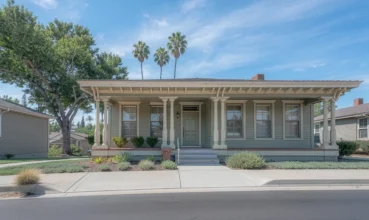
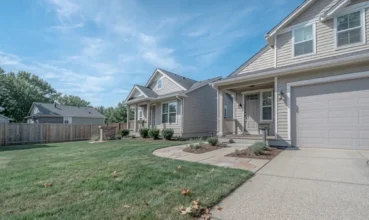
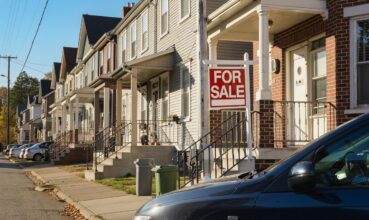
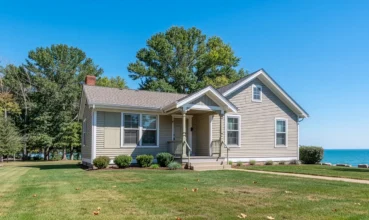
The New Jersey shore real estate market operates by its own rules. Seasonal rhythms, flood zone considerations, aging housing stock, and a fragmented landscape of distinct micro-markets make it one of the more nuanced corners of the Mid-Atlantic region. For buyers arriving from Philadelphia or New York with assumptions shaped by their primary markets, the learning curve can be steep and costly if navigated without the right guidance.
Jenya Parvanova, a real estate associate with RE/MAX Coastal in Brigantine, has spent her career working within this complexity. Her perspective offers a useful window into what is actually happening along the Atlantic County shoreline, and why the gap between outside perception and local reality continues to widen.
A Market Defined by Micro-Differences
One of the most persistent challenges Jenya encounters is buyers attempting to apply the logic of their home markets to shore up property values. “You cannot compare apples to oranges,” she says. “Anchoring in your primary market is not a good way to start your second home property search.”
The distinction matters because the shore is not a single market. Even among Brigantine, Ventnor, and Margate – the three largest shore towns in Atlantic County – the differences in buyer demographics, business environments, and community character are significant enough to affect both pricing and the overall ownership experience.
Brigantine, where Jenya is based, is an island with a single entry and exit point. That geographic reality shapes everything from the local business environment to the type of buyer the town attracts. The island’s layout naturally preserves a quieter, more insular atmosphere, and many buyers are drawn by childhood memories and a slower pace of life. “We are the shore town that changes with the slowest pace,” she explains. “Our buyers are people that are sentimentally connected to that town.”
Ventnor, by contrast, draws a different profile, largely New York buyers who value walkable variety, small restaurants, and a more active street environment. These distinctions are not just lifestyle preferences. They translate directly into how properties are priced, how quickly they move, and what buyers should realistically expect from their investment.
The Out-of-Market Agent Problem
Beyond pricing differences between towns, the mechanics of how transactions are conducted along the shore also vary in ways that catch outsiders off guard. Because many shore purchases are second homes, buyers often arrive with an agent they already trust, someone who helped them buy in Philadelphia or New York. The problem, Jenya notes, is that trust built in one market does not automatically carry over to another.
Shore transactions involve local flood zone classifications, HOA structures, and municipal rules that differ from town to town. When a buyer’s agent is unfamiliar with these specifics, it creates friction and sometimes failed transactions. “Nine out of ten times you will see a local listing agent,” she says, “and from county to county we operate differently.” The listing agent ends up spending time educating the buyer’s agent on basics that a local professional would already know.
Her advice to buyers is straightforward: spend time on the shore before committing. Renting in different towns, understanding how each community functions across seasons, and working with someone embedded in that specific market all reduce the risk of a mismatch between expectation and reality.
Shifting Buyer Psychology
After a year of hesitation, during which buyers waited for interest rates to fall or prices to correct, the mood along the shore has changed. The combination of persistent rate levels, geopolitical uncertainty, and the memory of post-pandemic price surges has recalibrated expectations.
Many who held back are now expressing regret. “A lot of people that were waiting are now saying, ‘I wish I bought a year ago,'” Jenya notes. Rather than searching for the perfect entry point, buyers are accepting current conditions and acting. “People are no longer waiting for the right moment because they know it’s not going to happen,” she observes. “They’re rather trying to navigate the rough seas.”
This shift in psychology is also producing better-prepared buyers. Jenya sees clients arriving with more research done, more questions ready, and a clearer sense of what they are looking for. Technology, including AI-assisted search tools, has contributed to this, even as it has complicated the agent’s traditional role as the primary information source.
The Evolving Role of the Local Agent
While buyers now arrive better informed, the proliferation of data has changed what local expertise looks like rather than diminishing its importance. Platforms like Zillow have shifted how buyers perceive property values before they ever speak to an agent. Cash buyer companies reach out directly to homeowners with estimates calibrated to their own acquisition goals. Buyers arrive with numbers in hand, but not always accurate ones.
Jenya describes the agent’s value as having moved from gatekeeper to interpreter, someone who can contextualize what the data means within the specific conditions of a local market. “We are still the people that are able to translate the market reality,” she says.
That interpretive role extends to financial literacy. Jenya points to a range of grant programs available to buyers in the region that even some local agents are not fully aware of. Beyond standard first-time homebuyer assistance, Atlantic County has employer-linked programs, including one tied to a major local hospital, that can provide additional funds toward a down payment for qualifying workers. In an environment where rate relief is unlikely in the near term, these programs represent a meaningful lever for buyers trying to reduce their monthly carrying costs.
A Gap in the Aging Housing Stock
A separate structural challenge is emerging around older properties. A recent executive order aimed at limiting large institutional investors in the single-family home market has removed a buyer category that, whatever its broader economic implications, played a practical role in absorbing aging properties that needed significant work.
Individual buyers are often unwilling or unable to take on full rehabilitations. “Not every individual buyer will be okay with purchasing a property and making it habitable again,” Jenya notes. That gap is compounded by a shortage of skilled labor across South Jersey, a problem visible not just in real estate but in the hospitality sector, where major employers are actively trying to encourage workforce housing purchases to stabilize their staffing pipelines.
How that gap closes remains an open question. But it is the kind of ground-level dynamic that shapes market conditions in ways that aggregate data rarely captures, and exactly the kind of intelligence that distinguishes a well-informed local agent from one simply working from a national headline.
For buyers considering a shore property purchase, the message from the ground is consistent: the market is moving, the window that felt like it would reopen has not, and the specifics of where and how you buy matter more than most outside observers appreciate.
About the Expert: Jenya Jenya is a Real Estate Associate at RE/MAX Coastal in Brigantine, New Jersey, focused on residential real estate in Atlantic County and the surrounding coastal New Jersey market.
This article is based on information provided by the expert source cited above. It is intended for general informational purposes only and does not constitute legal, financial, or real estate advice. Readers should conduct their own research and consult qualified professionals before making any real estate or financial decisions.