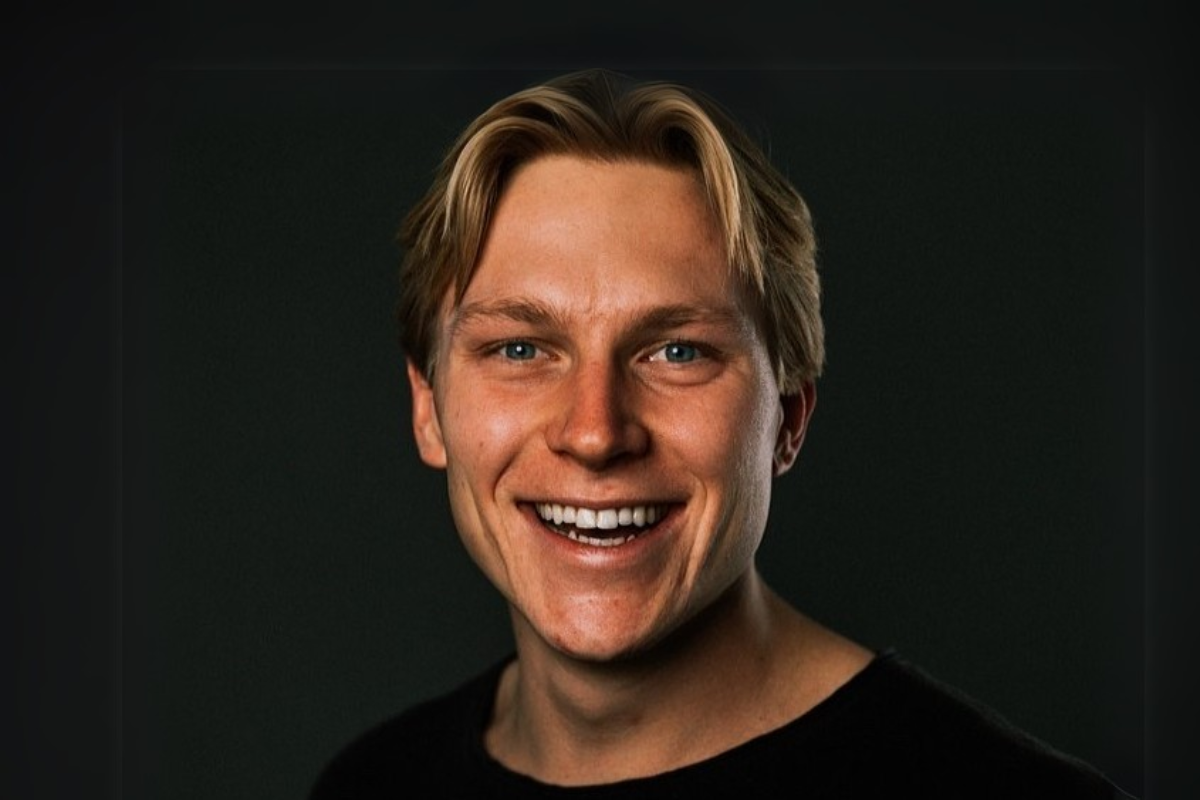
In an industry often criticized for its environmental impact, Nate Helbach is charting a different course. The founder and CEO of Madison-based Neutral isn’t just developing properties – he’s reimagining how buildings can harmonize with nature while delivering premium resident experiences.
Helbach’s journey into real estate began traditionally enough, working alongside his father in property management. “I distinctly remember him paying me a few bucks an hour to do turnovers and clean toilets,” Helbach recalls. “That was my initial intrigue – people pay to live places, and other people make money off it.”
But what started as a straightforward business idea grew into a much larger vision. While working for a Midwest developer on conventional multifamily projects, Helbach began exploring the intersection of real estate and sustainability at Harvard. His research culminated in a thesis that would later become the foundation for Neutral.
In early 2020, with support from two former pension fund managers as initial investors, Helbach took the leap. “I don’t have kids, I don’t have a wife, so the risks are low,” he explains of his decision to start Neutral. “If it fails, I’ll just go back to school, finish my degree, and go work somewhere else.”
That calculated risk is paying off. Neutral recently secured $133.3 million in financing for The Edison, set to be the largest mass timber tower in the Northern Hemisphere. The project isn’t just pushing architectural boundaries – it’s pursuing both Passive House and Living Building Challenge certifications, potentially making it the first Living Building Challenge-certified building in the U.S.
What distinguishes Neutral is its comprehensive approach to sustainability. “Anyone who tells you they’re carbon neutral is just lying,” Helbach states frankly. “The only way you’re going to be carbon neutral is if you build a building and then buy a bunch of offsets.” Instead, Neutral seeks what Helbach calls an “equilibrium with nature,” where natural resources consumed are equally replaced.
This philosophical approach is complemented by practical innovation. Starting in May 2025, Neutral will launch an integrated health and wellness program that features on-site medical facilities and comprehensive health assessments for residents. “It’s really looking at holistically how do we make people healthier and a little bit better,” Helbach explains.
The market is responding. While their rents remain competitive – just 2-3% above comparable properties – investors are drawn to the differentiation. “Equity investors love to see the differentiation in a product,” Helbach notes. “The market has not seen this type of product.”
Looking ahead, Neutral is expanding beyond its Wisconsin roots into the Fayetteville-Bentonville market, anticipating the region’s growth potential driven by Walmart’s headquarters expansion and healthcare developments. They’ve also launched a new investor portal, democratizing access to their projects, and recently secured listing on Charles Schwab’s alternative investment platform.
For a company that was founded only four years ago, Neutral’s progress is remarkable. What is even more impressive is how they are proving that sustainable development can be both environmentally friendly and financially successful. By doing this, they are not just constructing properties but also creating a model for the future of real estate development.